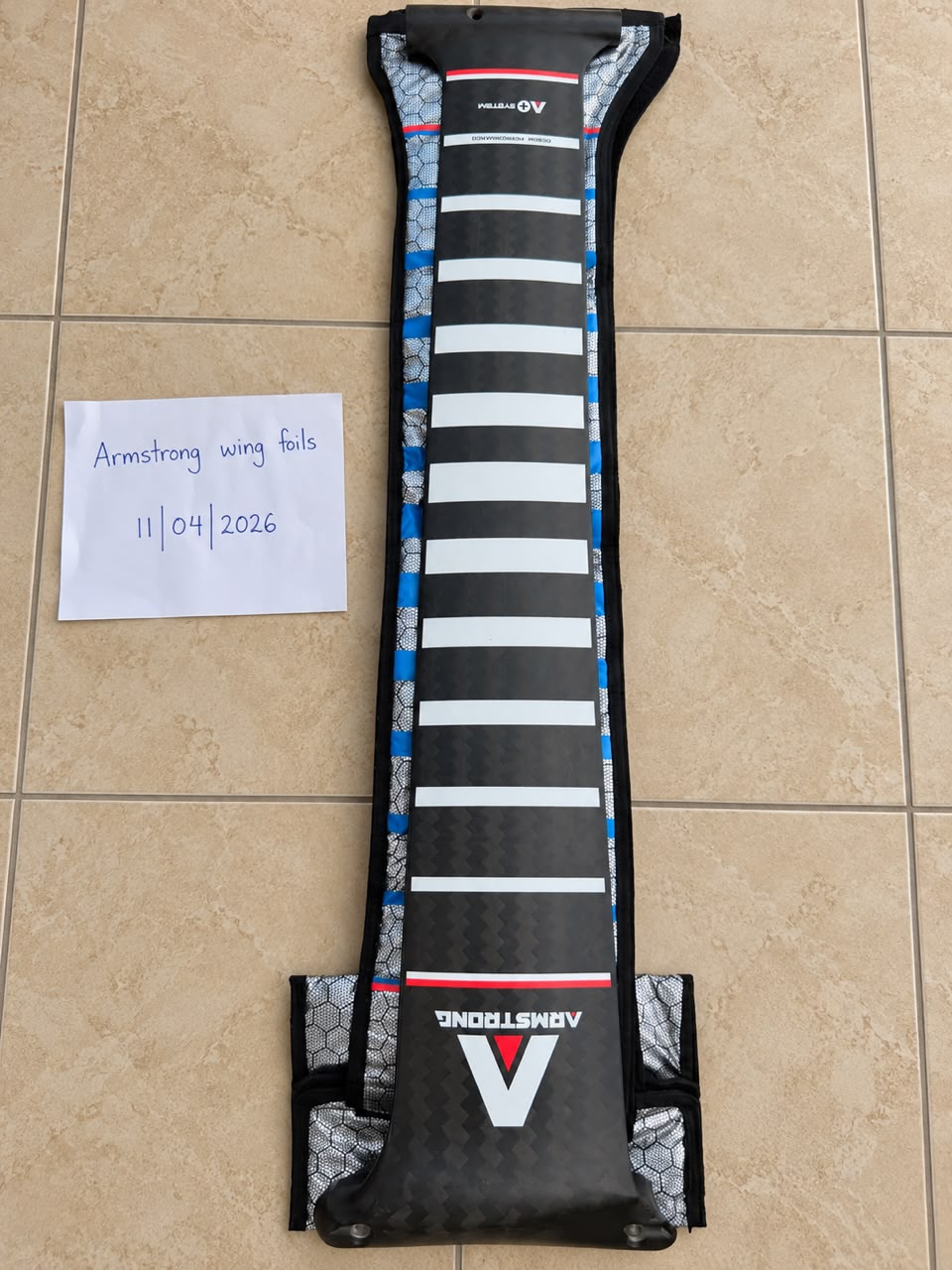

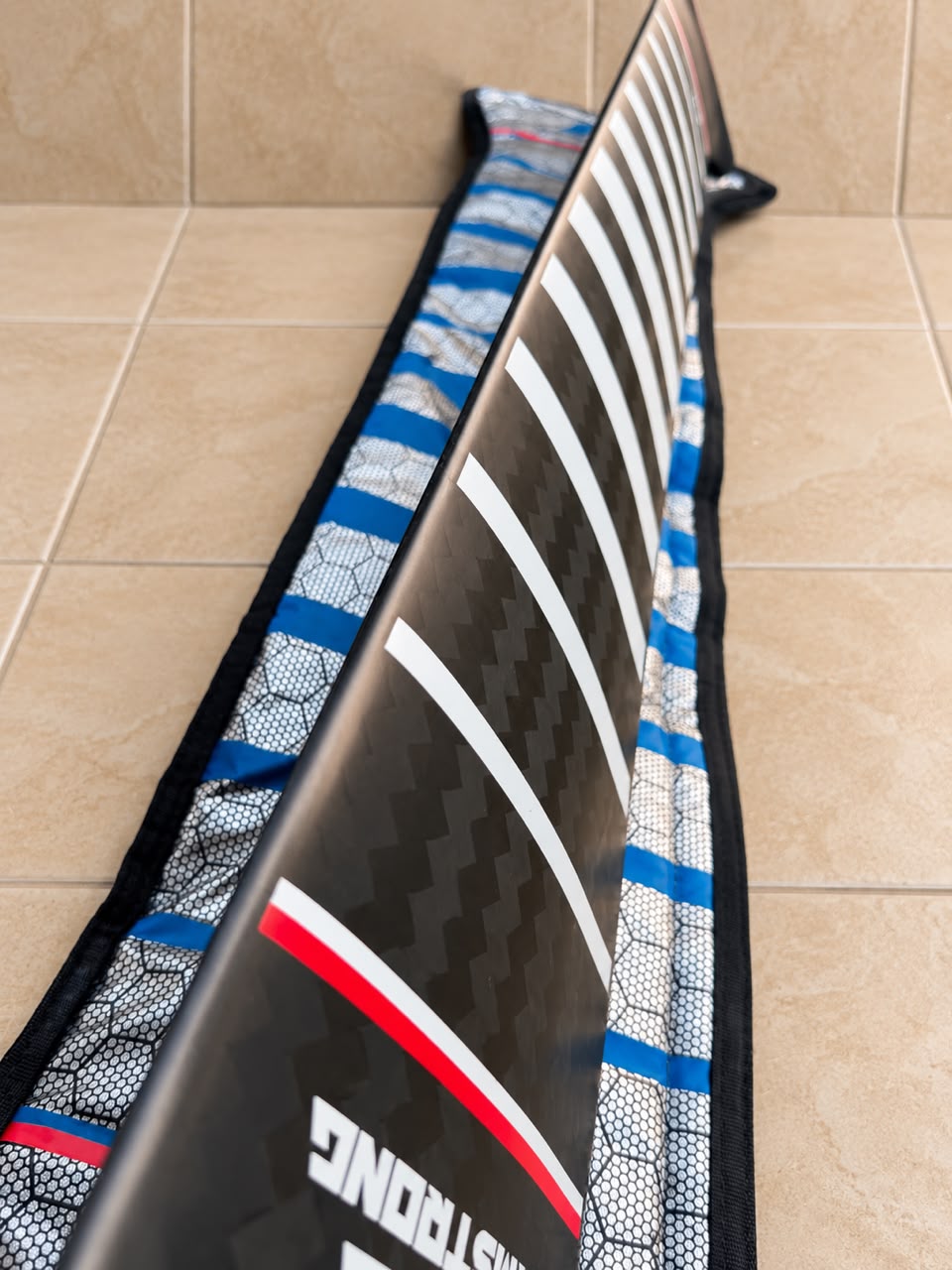
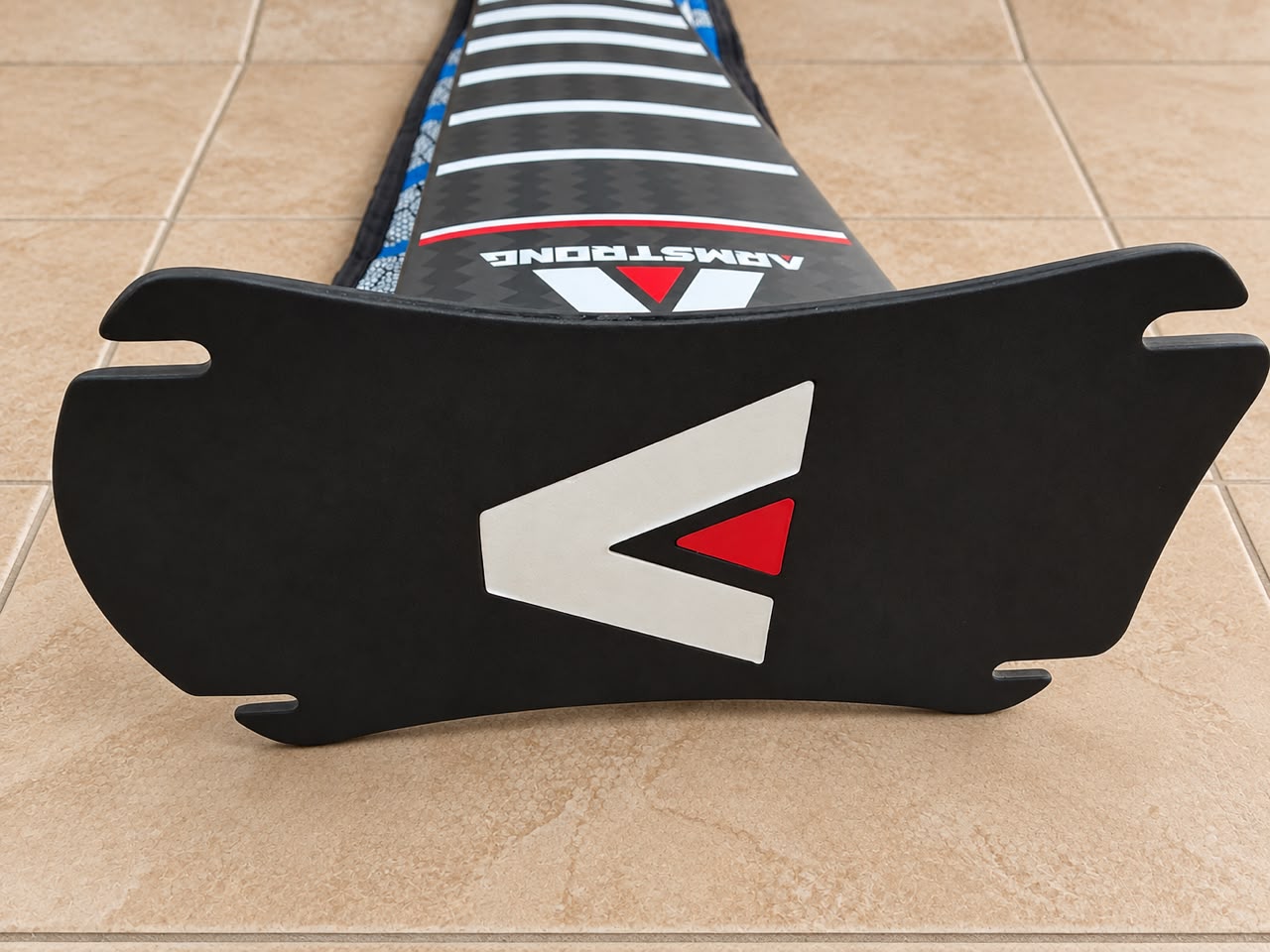

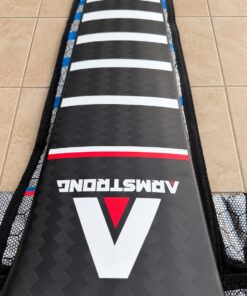
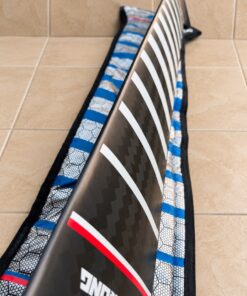
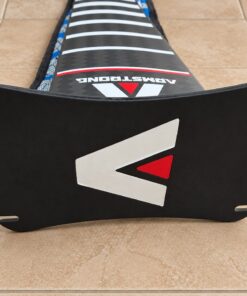
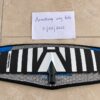
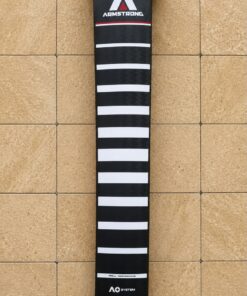
Used Armstrong performance mast 865
€900.00
Used Armstrong Performance Mast 865 Product Description
The Used Armstrong Performance Mast 865 is a premium carbon hydrofoil mast designed for riders who want a strong combination of stiffness, low drag, precise control, and dependable performance across multiple foiling disciplines.
With an 865 mm length and a published weight of approximately 1960 g, this mast provides a useful balance between water clearance and responsive handling. Its length makes it especially suitable for riders who want more clearance in chop, swell, and powered conditions without moving to an excessively long setup.
The mast is constructed using intermediate- and high-modulus carbon fiber, which helps create a rigid connection between the board and the underwater foil assembly. This stiffness is important because unwanted flex can reduce precision, delay rider input, and make pitch or roll corrections feel less direct.
One of the strongest characteristics of this mast is the way it transfers rider movement through the complete setup. When the mounting plate, lower connection, fuselage, and hardware remain secure, changes in foot pressure can translate quickly into roll, pitch, and directional adjustments.
This makes the mast particularly appealing to riders who value accurate carving and responsive handling.
The hydrodynamic mast profile is also designed to move efficiently through the water. Because the mast remains submerged throughout the ride, its shape has a direct influence on drag. A clean surface and properly maintained leading and trailing edges help preserve glide and reduce unnecessary resistance.
The 865 mm length gives the rider useful vertical clearance when riding through uneven water. In rolling swell or choppy conditions, this additional height can help reduce unwanted board contact with the water surface.
At the same time, the mast remains manageable enough for general wing, surf, and downwind use.
During carving, torsional stiffness helps prevent excessive twisting between the board and foil. This can make turns feel cleaner and more predictable. The rider can apply pressure gradually, hold a chosen bank angle, and redirect the foil without the system feeling vague or delayed.
The mast also performs well during pumping. Efficient pumping depends on transferring energy repeatedly through the board, mast, fuselage, and foils. A stiff carbon structure reduces the amount of energy absorbed through flex, helping the setup feel more connected.
For faster riding, rigidity becomes even more important. Increased speed creates greater forces through the mast. A structurally sound carbon mast can help maintain alignment and control as those loads increase.
Because this is a used mast, condition should be inspected carefully before installation. The carbon laminate should remain free from structural cracks, delamination, soft areas, or significant impact damage.
The leading and trailing edges should remain reasonably smooth, while the upper mounting plate and lower connection should be checked for deformation, cracking, or excessive wear.
Hardware condition is equally important. Screws should have clean threads and undamaged heads. The mounting surfaces should fit securely without unwanted movement.
If replacement hardware is required, correctly compatible components should be used rather than improvised alternatives.
After saltwater use, the mast and hardware should be rinsed thoroughly with fresh water. Salt deposits can build up around threaded interfaces and connection points, eventually making disassembly more difficult and encouraging corrosion on metal components.
Sand should also be removed before reassembly because abrasive particles trapped between mating surfaces can affect fit and create unnecessary wear.
Transport protection is important for any carbon mast. A padded cover helps protect the edges, mounting plate, and lower connection from accidental impact.
The mast should not be stored beneath heavy equipment or left where hard objects can strike the carbon structure.
For long-term storage, a cool, dry location away from excessive heat and prolonged direct sunlight is preferable.
A well-maintained used example can remain highly capable for many future sessions.
The Used Armstrong Performance Mast 865 is particularly well suited to riders who want a performance-oriented mast with enough length for varied conditions while retaining a connected and controlled feel.
Its combination of premium carbon construction, structural stiffness, efficient hydrodynamic shaping, and versatile 865 mm length creates a strong foundation for a responsive foil setup.
For wing riding, surf foiling, downwind sessions, and general performance use, it offers smooth glide, precise roll response, stable pitch control, efficient energy transfer, and dependable handling when paired with compatible components and maintained correctly.
Used Armstrong Performance Mast 865 – High-Modulus Carbon Stiffness, Low Drag, Precision Control, and Versatile Foiling Performance
Used Armstrong Performance Mast 865 Overview
The Used Armstrong Performance Mast 865, also identified as the PM865, is a premium carbon mast built for riders who want a combination of stiffness, low drag, lightweight construction, and responsive control across multiple foiling disciplines.
Armstrong lists the PM865 at 865 mm in length and approximately 1960 g in weight. The original Performance Carbon Mast family was developed with input from America’s Cup foil design partners and shaped through CFD analysis, rider feedback, and structural engineering. Armstrong manufactures the mast using Toray intermediate- and high-modulus carbon fiber, with the goal of combining strength, stiffness, minimal drag, and smooth on-water feel.
For a used PM865, condition is especially important. The carbon laminate, base plate, leading edge, trailing edge, mast-to-fuselage connection, screw interfaces, and any previous repair areas should all be inspected carefully.
HA Front Foil
An HA Front Foil is a high-aspect front wing designed mainly around glide, efficiency, and pumping. A stiff mast can help these wings feel more precise because unwanted movement through the system is reduced.
armstrong foils
armstrong foils include front wings, stabilizers, fuselages, masts, boards, and related components designed to work together as complete foil systems.
armstrong integrated foil masts price
The phrase armstrong integrated foil masts price relates to newer mast generations and should not be confused with the original PM865. Used pricing depends heavily on condition, generation, included hardware, and local demand.
armstrong foil board
An armstrong foil board transfers rider input through the mast into the underwater foil system. Mast stiffness strongly influences how directly those inputs are transmitted.
surf foil board
A surf foil board is generally compact and responsive, making mast stiffness especially important during quick directional changes.
armstrong downwind board
An armstrong downwind board prioritizes efficient acceleration and glide before takeoff. The 865 mm mast provides useful clearance for swell and higher-speed riding.
armstrong midlength
The phrase armstrong midlength relates to longer foil boards that combine easier takeoff with responsive riding once airborne.
armstrong downwind foil
An armstrong downwind foil benefits from a mast that minimizes unnecessary drag and maintains structural control during longer glides.
armstrong mid length board
An armstrong mid length board can pair effectively with a performance mast when the rider wants both efficient takeoff and precise foil control.
armstrong downwind boards
armstrong downwind boards are designed around efficient displacement and early lift, while the mast provides the structural link between the board and foil assembly.
wing foil front wing
A wing foil front wing relies on the mast for stiffness and accurate transmission of rider input.
HA Front Foil for sale
When searching for an HA Front Foil for sale, mast compatibility and stiffness should also be considered because a very efficient front wing can expose unwanted flex elsewhere in the setup.
kite armstrong
The phrase kite armstrong may relate to kite-powered foil use, where low drag and predictable mast response can be particularly valuable at higher speeds.
armstrong foil boards
armstrong foil boards vary in length, volume, and intended discipline, while the 865 mm mast provides a versatile middle-to-long mast length for many riding styles.
surf foil
In surf foil use, the mast affects roll response, pitch precision, clearance, and how directly the rider can control the front wing.
armstrong foiling
armstrong foiling covers winging, surf foiling, downwind riding, pumping, wake, tow, and other disciplines. Armstrong describes the original Performance Carbon Mast as versatile across foiling disciplines.
foiling board
A foiling board connects to the mast through the base plate, creating the structural path between rider and foil.
armstrong foils for sale
When evaluating armstrong foils for sale, buyers should inspect component generation, compatibility, structural condition, repairs, and included hardware.
foiling boards
Different foiling boards create different leverage and takeoff characteristics, so mast length and stiffness should be selected according to riding style.
surf foilboard
A surf foilboard generally benefits from direct mast feedback because riders make frequent roll and pitch corrections in waves.
armstrong performance mast
The armstrong performance mast family was developed around strength, stiffness, light weight, and reduced drag. The PM865 sits at 865 mm and approximately 1960 g.
armstrong wing
An armstrong wing provides propulsion above the water, while the mast transfers rider input to the foil below.
surf foil boards
surf foil boards typically prioritize compact handling and maneuverability once airborne.
armstrong wings
armstrong wings are handheld inflatable wings used to generate power for wing foiling and operate independently from the carbon mast.
armstrong fuselage
The armstrong fuselage connects the mast, front wing, and stabilizer. The original Performance Mast uses Armstrong’s A+ System to create a rigid and connected foil assembly.
armstrong v1 downwind board
The armstrong v1 downwind board belongs to an earlier downwind-board generation designed around efficient takeoff and glide.
armstrong integrated foil masts price 2025
The phrase armstrong integrated foil masts price 2025 refers to mast pricing from another model generation and period. It should not be used as the value benchmark for a used original PM865 without considering condition and compatibility.
foil for sup
A foil for sup requires enough mast length and stiffness to handle board leverage, rider weight, and swell energy.
armstrong wing foil
An armstrong wing foil setup typically includes a board, mast, fuselage, front wing, rear stabilizer, and handheld wing.
armstrong downwind foil board
An armstrong downwind foil board benefits from a mast that maintains stiffness under the leverage created by longer boards and larger front wings.
hydrofoil front wing
The hydrofoil front wing generates most of the system’s lift, while the mast transfers that force upward to the board.
front foil
A front foil can only deliver its intended feel when the mast remains structurally rigid and securely connected.
hydrofoil lift stability
hydrofoil lift stability depends on front-wing geometry, stabilizer choice, mast stiffness, rider position, board setup, and water speed.
865 mm Mast Length
The PM865 measures 865 mm, or 86.5 cm.
This length provides substantial foil clearance while remaining shorter and more manageable than the 935 mm and 1035 mm options in the same original mast family. (armstrongfoils.com)
Approximately 1960 g Weight
Armstrong lists the PM865 at approximately 1960 g.
The use of premium carbon allows the mast to maintain structural stiffness without relying on the mass of a heavier metal construction.
Toray Carbon Construction
The mast is manufactured using Toray intermediate- and high-modulus carbon fiber.
These materials were selected to provide the stiffness and structural response required for high-performance foiling.
CFD-Developed Mast Section
Armstrong states that computational fluid dynamics, engineering expertise, and team-rider feedback were combined during development.
The mast section was shaped to balance low drag, stiffness, strength, and practical performance over the broad speeds encountered in real-world foiling. (armstrongfoils.com)
Structural Stiffness
Mast stiffness affects how accurately rider input reaches the foil.
A stiffer structure reduces unwanted bending and twisting, which can make turning, pumping, and pitch corrections feel more immediate.
Low-Drag Design
Reducing drag through the mast helps preserve speed and glide.
This matters because the mast remains submerged throughout the entire ride and continuously moves through the water.
A+ System Compatibility
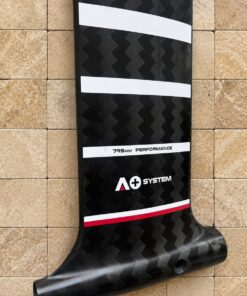
The PM865 belongs to Armstrong’s A+ System, which joins the mast, fuselage, front foil, and stabilizer into one connected assembly.
Armstrong describes the system as designed to produce a solid and smooth feel on the water. (armstrongfoils.com)
Premium Hardware
The original mast package includes corrosion-resistant hardware using titanium and 316L stainless steel components.
Armstrong specifically highlights this hardware combination for durability and corrosion resistance. (armstrongfoils.com)
Why Should You Choose a Used PM865?
A used PM865 can be attractive for riders who want premium carbon performance at a lower cost than purchasing the newest mast generation.
The 865 mm length also offers a practical balance between clearance, control, and versatility.
How Good Is the Performance?
The mast’s greatest strengths are stiffness, smooth feedback, low drag, and broad discipline compatibility.
Its construction allows the rider to feel changes in the foil more directly without excessive flex between the board and underwater assembly.
How Precise Does It Feel?
Precision comes from the mast’s structural stiffness and rigid connections.
When the base plate, fuselage interface, and hardware remain secure, rider inputs can produce immediate changes in roll and pitch.
Where Is It Best Used?
The 865 mm size works particularly well for wing foiling, surf foiling, downwind riding, and other performance-oriented disciplines where extra clearance and stability are useful.
When Does an 865 mm Mast Make Sense?
An 865 mm mast makes sense when the rider wants more water clearance than shorter 725 mm or 795 mm options without moving to a very long 935 mm or 1035 mm mast.
It can be particularly useful in chop, swell, powered riding, and higher-speed conditions.
Used Condition Inspection
Before using or purchasing a used mast, inspect the carbon surface, mast edges, base plate, fuselage connection, threaded interfaces, and all previous repair areas.
Cosmetic marks are generally less concerning than cracks, delamination, soft spots, or structural impact damage.
Base Plate Inspection
The base plate should remain flat and structurally sound.
Cracks around mounting holes or visible deformation can affect board connection and should be taken seriously.
Fuselage Connection Inspection
The lower connection should fit securely without unwanted movement.
Damage in this area can reduce precision and place additional stress on hardware.
Leading Edge Condition
The leading edge should remain reasonably smooth.
Deep chips or badly finished repairs can disturb water flow and increase drag.
Trailing Edge Condition
The trailing edge should remain straight and free from major damage.
Irregular surfaces may create noise, vibration, or unwanted turbulence.
Important Technical Information
- Model: PM865
- Type: Performance Carbon Mast
- Length: 865 mm / 86.5 cm
- Published weight: Approximately 1960 g
- Construction: Toray intermediate- and high-modulus carbon fiber
- Design focus: Stiffness, low drag, strength, light weight, smooth control
- Development: CFD analysis, engineering input, and rider feedback
- System: Armstrong A+ System
- Original hardware: Titanium and 316L stainless steel components
- Original package: Protective cover and mounting hardware
- Used-item checks: Carbon laminate, edges, base plate, lower connection, mounting holes, hardware, and previous repairs (armstrongwingfoils.com)
Overall Precision and Practical Value
The Used Armstrong Performance Mast 865 remains a high-quality carbon mast for riders who want direct foil feedback, low drag, structural stiffness, and enough mast length for demanding water conditions.
Its 865 mm length creates a useful middle ground between shorter, easier-entry masts and longer performance-oriented options. Meanwhile, the premium Toray carbon construction and A+ connection system help create a rigid and connected platform between board and foil.
For a used example in sound structural condition, the PM865 can still deliver smooth glide, accurate roll response, controlled pitch behavior, efficient energy transfer, and dependable performance across wing, surf, downwind, and general performance foiling.
Section 2 – Construction Quality, Carbon Stiffness, Hydrodynamic Efficiency, Mounting Precision, Compatibility, Used Condition, and Reliability
Overall Construction Quality
A high-performance carbon mast depends on structural stiffness, accurate shaping, secure connection points, and a clean hydrodynamic profile.
Because the mast forms the primary structural link between the board and the underwater foil assembly, any movement or weakness in this component can influence roll control, pitch response, glide efficiency, and overall rider confidence.
Carbon Laminate Integrity
The carbon structure should remain firm and consistent across the full mast length.
Cracks, soft areas, visible separation, or unusual flex should be treated seriously.
Minor surface marks are common on used equipment, but deeper structural damage requires closer inspection.
High-Modulus Stiffness
High-modulus carbon construction helps reduce unnecessary bending and twisting.
A stiffer mast transfers rider input more directly to the foil below.
This can make carving, pumping, and pitch correction feel more immediate and controlled.
Torsional Resistance
Twisting resistance is particularly important during aggressive turns.
When the mast resists torsional movement, the front wing can respond more accurately to rider pressure.
Excessive twist can make the system feel delayed or vague.
Fore-and-Aft Flex
Longitudinal stiffness also influences pitch control.
Too much movement can reduce precision when changing ride height.
A well-constructed mast keeps the connection between board and foil more predictable.
Hydrodynamic Profile
The mast continuously moves through the water while the rider is on foil.
Therefore, its cross-sectional shape directly affects drag.
A clean profile helps the system preserve speed and glide more efficiently.
Leading Edge Condition
The leading edge should remain smooth and free from major impact damage.
Deep chips, rough repairs, or uneven areas can disturb water flow.
Small cosmetic marks are usually less important than significant structural defects.
Trailing Edge Condition
The trailing edge should remain straight and consistent.
Damage here can contribute to vibration, humming, or unnecessary turbulence.
Because the edge is thin, it should be handled carefully.
Surface Finish
A smooth surface supports clean flow over the mast.
Deep scratches or badly finished repairs can increase drag.
However, aggressive sanding should be avoided because changing the original profile can also affect performance.
Mast Length Influence
A longer mast provides additional clearance between the board and the foil.
This can help in chop, swell, and powered conditions.
However, greater mast length also increases leverage, which makes structural stiffness more important.
Water Clearance
Additional clearance gives the rider more room to manage changing water height.
This can reduce the chance of the board touching the surface during steeper turns or larger swell.
The benefit becomes more noticeable in rougher conditions.
Roll Control
Roll response depends on mast stiffness, front-wing geometry, stabilizer choice, board width, and rider input.
A stiff mast helps reduce delay between foot pressure and foil movement.
This creates a more connected riding feel.
Pitch Control
Pitch behavior is influenced by both mast stiffness and overall setup.
A secure, rigid mast allows the rider to make smaller and more predictable ride-height adjustments.
Loose connections can make pitch control feel inconsistent.
Pumping Efficiency
During pumping, energy is transferred repeatedly through the board, mast, fuselage, and foils.
A stiff mast can reduce energy lost through unwanted flex.
This helps preserve a more direct connection during repeated pumping movements.
Glide Efficiency
Reduced drag through the mast contributes to better glide.
While the front wing has the greatest influence on overall glide characteristics, mast profile still matters because it remains submerged throughout the ride.
High-Speed Stability
At higher speeds, unwanted flex becomes more noticeable.
A rigid carbon mast helps maintain alignment and control when loads increase.
This is particularly useful during powered riding and aggressive carving.
Carving Precision
A performance-oriented mast can make turns feel cleaner and more immediate.
When the mast resists twisting, rider input reaches the underwater assembly more directly.
This helps maintain a predictable carving arc.
Board Connection
The upper mounting plate should sit flat against the board’s mounting surface.
Any rocking or uneven contact can reduce connection quality.
The plate should remain free from major damage or deformation.
Mounting Hole Condition
Mounting holes should be inspected for cracking, enlargement, or damage.
These areas experience repeated load during riding.
Any structural issue near the plate deserves careful attention.
Screw Condition
Fasteners should remain free from stripped heads, damaged threads, or heavy corrosion.
Correct compatible hardware is essential for secure assembly.
Damaged screws should be replaced rather than forced.
Correct Tightening
Mounting hardware should be tightened according to manufacturer guidance.
Loose screws can allow unwanted movement.
Overtightening can damage threads, hardware, or composite interfaces.
Lower Connection
The lower mast connection should remain structurally sound and free from play.
Any movement here can reduce precision and increase stress on surrounding components.
The mating surfaces should remain clean before assembly.
Fuselage Fit
The fuselage should connect firmly without visible gaps or unusual movement.
A poor fit can affect tracking, roll response, and vibration.
Both mating components should be inspected when looseness is detected.
Hardware Compatibility
Used equipment may sometimes be sold without original hardware.
Correct replacements should match the required dimensions and material specifications.
Improvised hardware can compromise fit and reliability.
Front-Wing Influence
The mast should be considered as part of the complete foil system rather than in isolation.
Larger or more powerful front wings can place greater loads on the mast.
Stiffer construction becomes especially important as wing area and rider input increase.
Rear-Wing Influence
The rear stabilizer affects pitch balance and overall handling.
Although it places less direct load on the mast than the front wing, its setup still contributes to how the complete system feels.
Board Size Influence
Longer boards create more leverage around the mast connection.
Therefore, mounting security becomes increasingly important on larger displacement-style boards.
Compact boards may feel more responsive but still require a rigid connection.
Rider Weight
Heavier riders generally place greater loads on the foil system.
Mast stiffness and structural condition become particularly important when rider weight, speed, or front-wing size increases.
Riding Style
Smooth recreational riding creates different loads from aggressive carving or powered high-speed riding.
A performance mast is most beneficial when the rider can feel and use its additional stiffness.
Choppy Conditions
Rough water creates constant changes in load.
A stiff mast helps keep the foil response predictable when the board moves through uneven surface conditions.
This can reduce the amount of correction required.
Swell Riding
In swell, extra mast length gives useful clearance as the rider moves up and down the face.
The mast also needs enough stiffness to maintain control during faster directional changes.
Flat-Water Riding
Flat water provides a useful environment for evaluating mast behavior.
Vibration, tracking, stiffness, and glide can be assessed more easily without interference from chop.
Used Equipment Inspection
A used carbon mast should be checked carefully before purchase or use.
The entire length, both edges, plate, lower connection, hardware interfaces, and any repair areas should be examined closely.
Structural condition matters more than cosmetic appearance.
Cosmetic Marks
Light scratches and normal surface wear are common on used equipment.
These marks do not necessarily affect performance.
Their importance depends on depth, location, and whether the carbon laminate underneath remains intact.
Crack Inspection
Cracks should not automatically be dismissed as cosmetic.
Areas near the plate, lower connection, and edges deserve particular attention.
Significant cracking should be professionally evaluated.
Delamination Check
Delamination can appear as soft areas, bubbling, unusual flex, or visible separation.
Any suspected delamination should be treated as a structural concern.
Continued use can worsen the damage.
Repair Assessment
A professional composite repair can remain functional.
However, repaired areas should be checked for symmetry, smoothness, stiffness, and renewed cracking.
Poor repairs can alter the mast profile or conceal deeper damage.
Impact Damage
Grounding, dropping, or hitting submerged objects can create hidden structural problems.
After a significant impact, the mast should be inspected before the next session.
Freshwater Rinsing
After saltwater use, the mast and hardware should be rinsed thoroughly with fresh water.
Salt residue can accumulate around screws and connection points.
Regular rinsing helps reduce corrosion.
Sand Removal
Sand should be removed before assembly.
Particles trapped between connection surfaces can create uneven fit and unnecessary wear.
Clean mating surfaces support more accurate assembly.
Drying
The mast should be allowed to dry after rinsing.
Moisture should not remain trapped around hardware for extended periods.
A dry storage environment is preferable.
Transport Protection
A padded mast cover helps protect both edges and connection points during transport.
The mast should not be allowed to strike boards, tools, or other hard equipment.
Storage
Storage should take place away from excessive heat, direct sunlight, and accidental impact.
The mast should not be placed under heavy objects.
A dedicated padded area works well.
Performance Monitoring
Changes in vibration, tracking, pitch response, or roll control should be noticed.
Unexpected behavior can indicate loose hardware, surface damage, or a problem elsewhere in the foil assembly.
Long-Term Reliability
Long-term reliability depends on healthy carbon structure, smooth hydrodynamic surfaces, secure mounting interfaces, correct hardware, regular freshwater rinsing, and careful transport.
When these areas are maintained consistently, the mast can continue providing precise rider feedback, efficient glide, strong torsional stiffness, predictable carving, and dependable performance across many future sessions.
Practical Riding Experience, Control, Glide, Carving, Stability, and Everyday Use
Practical Riding Character
A high-performance carbon mast changes the overall feel of a foil setup by creating a more direct connection between the rider, board, and underwater assembly.
When the mast remains stiff under load, rider input is transferred with less delay. This can make pitch changes, carving movements, pumping, and corrections feel cleaner and more predictable.
Ride Height Control
Mast length has a major influence on how much vertical clearance is available between the board and water.
Additional clearance can be useful in chop, rolling swell, and powered conditions because the rider has more room to manage changes in surface height.
At the same time, greater length requires good balance and control.
Takeoff Feel
During takeoff, the mast begins carrying increasing load as the front wing develops lift.
A rigid structure helps keep this transition predictable.
Once the board rises clear of the water, rider movements are transmitted more directly through the complete foil assembly.
Pitch Response
Pitch control determines how easily the rider manages ride height.
A stiff mast allows smaller changes in front-foot and rear-foot pressure to produce clearer responses.
This can make the setup feel more precise, especially at speed.
Roll Response
Roll behavior becomes important during carving and directional changes.
When the mast resists twisting, foot pressure can be translated more effectively into banking movement.
This gives the rider a more connected feel through turns.
Carving Precision
A responsive mast can improve the quality of carving because it reduces unwanted movement between the board and foil.
The rider can initiate a turn gradually, increase bank angle, and maintain pressure through the arc with better feedback.
Tight Turns
During tighter turns, torsional stiffness becomes increasingly important.
The mast must resist twisting as the rider loads the system from side to side.
A solid connection helps the foil respond quickly without feeling delayed.
Flowing Turns
Longer, smoother carves also benefit from structural consistency.
The rider can maintain a stable bank angle and allow speed to carry through the turn.
This creates a more predictable and controlled riding sensation.
High-Speed Control
As speed increases, loads on the mast rise.
A rigid carbon structure helps maintain alignment during faster riding.
This can reduce unwanted flex and give the rider greater confidence when accelerating.
Glide Performance
Although the front wing has the greatest influence on glide, the mast still contributes because it remains submerged continuously.
A clean hydrodynamic section can reduce resistance and help preserve energy.
This becomes increasingly noticeable during longer glides.
Pumping Efficiency
Pumping requires repeated transfer of energy through the board, mast, fuselage, and foils.
A stiff mast reduces the amount of energy lost through unwanted bending.
Efficient pumping therefore feels more connected and responsive.
Pumping Rhythm
Smooth pumping is more effective than exaggerated movement.
The rider should use controlled body motion and consistent timing.
A predictable mast helps maintain this rhythm.
Energy Transfer
One of the main practical advantages of a stiff mast is efficient energy transfer.
When less movement is absorbed through flex, more rider input reaches the foil system.
This can improve both pumping feel and directional control.
Choppy Water
Chop constantly changes the height of the water surface.
Additional mast clearance gives the rider more room before the board touches down.
A stiff structure also helps the foil remain predictable through uneven conditions.
Rolling Swell
Swell creates repeated changes in water height and speed.
A longer performance-oriented mast can provide useful clearance while the rider moves up and down the face.
This is especially valuable during faster transitions.
Flat Water
Flat water provides an excellent environment for understanding how the mast behaves.
Tracking, vibration, roll response, pitch control, and glide can all be evaluated without interference from rough surface conditions.
Powered Riding
When additional propulsion increases speed, the mast experiences greater load.
A stiff structure helps maintain control during acceleration.
The rider can apply more pressure without the system feeling excessively soft.
Wave Riding
In waves, quick changes in direction demand reliable feedback.
A rigid mast helps the rider redirect the foil through bottom turns, cutbacks, and transitions.
This can make wave riding feel more natural.
Downwind Riding
Long-distance swell riding places a premium on low drag and efficient energy retention.
The mast contributes by moving cleanly through the water while maintaining enough stiffness for directional control.
Board Influence
The board strongly affects how the mast feels.
Longer boards create more leverage around the connection.
Shorter boards can feel more responsive but may transmit rider movement more directly.
Board Width
Wider boards increase leverage across the mast plate.
This makes mounting security particularly important.
A loose connection can reduce precision and create unwanted movement.
Mast Position
Moving the mast forward or backward changes overall balance.
Small adjustments can significantly affect front-foot pressure, rear-foot pressure, and takeoff behavior.
Changes should be made gradually.
Front-Foot Pressure
Front-foot pressure helps control excess lift.
With a stiff mast, these adjustments can feel immediate.
Heavy pressure is usually less effective than small controlled changes.
Rear-Foot Pressure
Rear-foot pressure increases lift and can help initiate turns.
Too much pressure can cause the foil to climb quickly.
A responsive mast makes smaller corrections easier to feel.
Rider Weight
Rider weight affects the loads placed on the complete foil system.
Heavier riders generate greater forces during pumping, carving, and high-speed riding.
Structural stiffness becomes increasingly valuable as loads rise.
Skill Level
Experienced riders are more likely to notice subtle differences in mast stiffness and drag.
Less experienced riders can still benefit from predictable behavior, although they may initially focus more on basic balance and takeoff control.
Foil Size
Larger front wings can place greater bending and twisting loads on the mast.
A stiff structure helps maintain control under these conditions.
Smaller performance wings can also benefit because precise rider input becomes more noticeable.
Rear-Wing Influence
The rear stabilizer affects pitch behavior and turning feel.
Because all components work through the mast, changes in rear-wing size or geometry can influence how the overall setup responds.
Tracking
Good tracking means the system follows the intended direction without unwanted movement.
A straight, structurally sound mast helps support predictable tracking.
Damage or misalignment can reduce this consistency.
Vibration Awareness
Unusual vibration can be caused by edge damage, loose hardware, poor alignment, or rough surfaces.
Any new vibration should be investigated rather than ignored.
It can provide an early warning of a setup problem.
Humming
Hydrodynamic humming can sometimes occur at certain speeds.
Surface condition, edge shape, alignment, and component interaction may all contribute.
A clean and properly assembled system usually performs more quietly.
Pre-Session Inspection
Before entering the water, the rider should check the mast, mounting plate, lower connection, fuselage, front wing, stabilizer, and hardware.
All connections should remain secure.
A short inspection can prevent avoidable problems.
Hardware Check
Fasteners should be checked before launching.
Loose hardware can create movement and reduce control.
Any damaged screws should be replaced before use.
During the Session
Changes in roll response, pitch behavior, vibration, noise, or tracking should be noticed.
Unexpected changes can indicate loose hardware or new damage.
The system should be inspected if something feels abnormal.
Post-Session Rinsing
After saltwater use, the mast and connected hardware should be rinsed thoroughly with fresh water.
Salt deposits can accumulate around screws and mating surfaces.
Regular rinsing helps preserve long-term condition.
Drying
The equipment should be allowed to dry before storage.
Moisture trapped around hardware can encourage corrosion.
A dry environment is preferable.
Transport
A padded cover helps protect the mast during transport.
The leading edge, trailing edge, plate, and lower connection should not be allowed to strike other equipment.
Heavy items should not be placed directly on top.
Storage
The mast should be stored in a cool, dry area away from direct sunlight and excessive heat.
It should remain protected from accidental impact.
A dedicated padded rack or cover can help preserve condition.
Used Equipment Confidence
A used carbon mast can continue performing extremely well when its structure remains sound.
Cosmetic scratches are usually less important than cracks, delamination, plate damage, or compromised connection points.
Condition should always take priority over appearance.
Long Session Comfort
A predictable and efficient mast can reduce the amount of constant correction required.
However, rider fatigue still affects balance and control.
Taking occasional breaks helps preserve technique.
Everyday Usability
For regular use, the most important factors are secure assembly, clean mounting surfaces, correct hardware, freshwater rinsing, careful transport, and periodic inspection.
A simple maintenance routine can preserve performance for many sessions.
Overall Practical Performance
A stiff carbon mast provides a direct and controlled connection between the rider and foil system.
Its strongest benefits appear through accurate roll response, predictable pitch control, efficient pumping, reduced drag, and improved stability under load.
When combined with a suitable board, front wing, stabilizer, and secure hardware, the mast can deliver smooth glide, responsive carving, strong energy transfer, and dependable control across flat water, chop, swell, powered riding, and longer performance-focused sessions.
Be the first to review “Used Armstrong performance mast 865”
Related products
Used Product
Used Product
Used Product
Used Product
Used Product
Used Product
Used Product
Used Product
Reviews
There are no reviews yet.