
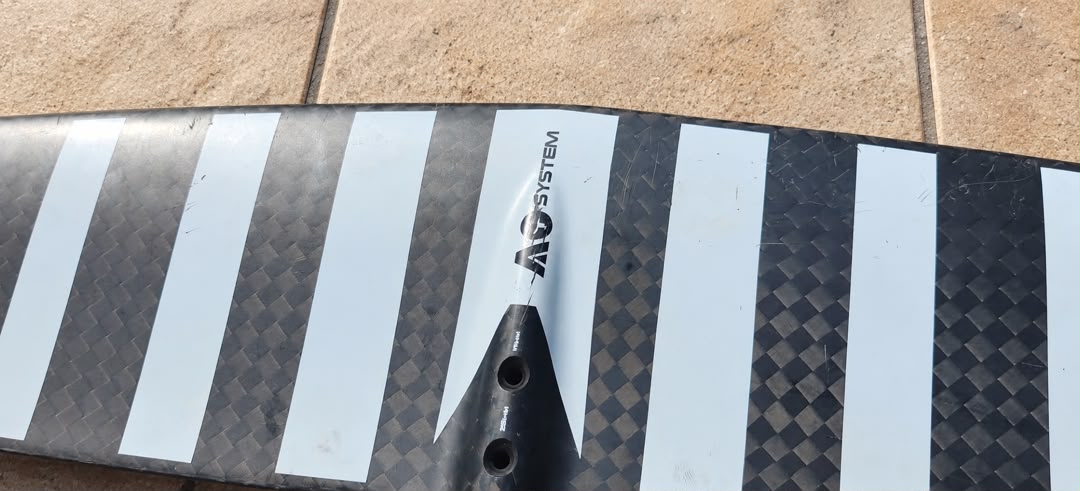


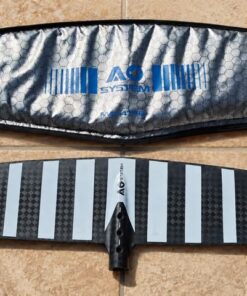
Used Armstrong MA 1475 foil

€300.00
The Used Armstrong MA 1475 Foil is a versatile mid-aspect front wing designed for early lift, smooth carving, efficient pumping, and dependable glide. With its 1475 cm² area and balanced profile, it performs especially well in light wind, surf, downwind-style riding, and longer pump connections.
Its generous lift helps riders get flying at lower speeds, while the responsive shape keeps turns controlled and fluid once underway. The wing also offers a broad usable speed range, making it suitable for riders who want stability without giving up maneuverability.
As a used foil, it offers excellent value when the leading edge, wingtips, mounting connection, and composite structure remain in good condition. It is a strong choice for intermediate and experienced riders looking for a dependable all-round front wing with strong low-end performance, efficient glide, and confident handling.
Used Armstrong MA 1475 Foil – Mid-Aspect Performance Front Wing for Light Wind, Downwind, Surf, and Wing Foiling
Used Armstrong MA 1475 Foil Overview
The Used Armstrong MA 1475 Foil is a performance-focused mid-aspect front wing designed to combine strong low-speed lift, efficient pumping, smooth carving, and dependable control across a broad speed range. Armstrong specifies the MA1475 at 1475 cm² of area, a 1050 mm wingspan, and a 7.5 aspect ratio, positioning it as a versatile option for riders who want more low-end performance and long-distance pumpability than the smaller MA1225. Armstrong specifically highlights it for light-wind winging and downwind use.
Why Choose the Used Armstrong MA 1475 Foil?
The strongest reason to choose the MA1475 is its balance of lift and maneuverability. Its high-camber foil section produces useful lift at lower speeds while retaining control as speed increases. This helps the foil rise efficiently without feeling excessively difficult to manage once the rider accelerates.
For riders comparing armstrong foils, this makes the MA1475 a strong all-around choice when the priority is efficient takeoff, pumping range, carving confidence, and versatility rather than maximum outright speed.
MA1475 Technical Specifications
The confirmed MA1475 specifications are:
- Projected area: 1475 cm²
- Wingspan: 1050 mm
- Aspect ratio: 7.5
- Foil family: Mid Aspect
- System: Armstrong A+ modular foil connection
- Primary strengths: low-end lift, long-distance pumping, carving, downwind efficiency, and broad speed control
Armstrong’s A+ System connects the mast, armstrong fuselage, front wing, and stabilizer into a rigid modular assembly designed to create a solid and smooth riding feel.
How the MA1475 Creates Lift and Stability
The MA1475 uses a relatively high-camber section that generates useful lift before very high speed is required. Consequently, the rider can rise onto foil more efficiently during lighter conditions.
At the same time, the 7.5 aspect ratio gives the wing enough span for efficient glide without becoming excessively difficult to roll through turns.
This balance contributes to strong hydrofoil lift stability, particularly for riders who want predictable lift combined with responsive carving.
Mid Aspect Versus HA Front Foil
Riders researching an HA Front Foil will generally be comparing efficiency and glide against turning response and accessibility.
An HA Front Foil normally emphasizes efficiency and extended glide through a higher aspect configuration. By comparison, the MA1475 is designed around a mid-aspect shape that combines glide with a narrower effective turning feel and faster roll response.
Therefore, a rider searching for an HA Front Foil for sale may still prefer the MA1475 if carving and intuitive handling are more important than maximizing aspect ratio.
Wing Foiling Performance
As a wing foil front wing, the MA1475 is particularly attractive in lighter wind.
Armstrong describes it as an excellent choice for all-around light-wind winging. Its low-end lift helps the rider get flying with less speed, while its broad operating range means the foil does not immediately become difficult to control as conditions strengthen.
This makes it a strong match for an armstrong wing, armstrong wings, or a compatible armstrong wing foil setup.
Downwind Performance
The MA1475 is also designed for efficient downwind use.
Its glide and pumpability allow the rider to maintain flight while moving between pieces of energy.
It can be paired with an armstrong downwind board, armstrong downwind boards, or an armstrong downwind foil board for a highly efficient downwind-oriented configuration.
Riders familiar with the armstrong v1 downwind board may appreciate how the larger front-wing area can make weaker bumps easier to connect.
Surf Foiling Performance
The MA1475 can work effectively in surf foil applications where the rider wants early lift and long rides.
When paired with a suitable surf foil board, surf foilboard, or other surf foil boards, the wing can help riders connect multiple sections without immediately losing flight.
Its carving-focused design also helps the foil feel less locked into a straight line.
Fluid Carving
One of the defining qualities of the MA series is carving.
Armstrong designed the range to provide smooth control through a broad range of bank angles. The mid-aspect geometry keeps the wingspan manageable while maintaining enough surface area for useful lift.
This produces a more natural turning feel than some larger high-aspect designs.
Fast Breach Recovery
The MA series also places strong emphasis on ventilation recovery.
Armstrong uses a fine leading-edge profile and tuned wingtip geometry to help water flow reattach quickly after part of the wing breaches the surface. This can improve recovery after aggressive turns, wingtip breaches, or imperfect landings.
For experienced riders, that characteristic can increase confidence during more aggressive maneuvers.
Pumping and Glide
The MA1475 offers stronger long-distance pumpability than smaller models in the same range.
This is important for riders attempting to connect multiple waves, continue through flat sections, or extend a downwind run.
The larger area helps preserve lift at lower speeds, allowing the rider to maintain flight with less aggressive input.
Pairing With Armstrong Boards
The foil can be paired with an armstrong foil board, armstrong foil boards, armstrong midlength, or armstrong mid length board depending on the rider’s preferred discipline.
A shorter board may feel more maneuverable once flying, while a longer board can improve paddling, glide, and takeoff efficiency.
The correct board should be selected according to rider weight, skill, and start method.
Performance Mast Compatibility
Riders building a performance setup may pair the MA1475 with an armstrong performance mast.
Mast stiffness, length, and drag can strongly influence how the front wing feels.
A stiffer mast can provide more direct feedback, while mast length affects clearance and turning leverage.
People researching armstrong integrated foil masts price or armstrong integrated foil masts price 2025 should treat mast cost as a separate system consideration rather than part of the MA1475 front wing itself.
Armstrong Foiling System Integration
The MA1475 forms part of the wider armstrong foiling ecosystem.
The complete system may include front wing, mast, fuselage, stabilizer, board, and mounting hardware.
Therefore, riders searching armstrong foils for sale should check compatibility across the full setup rather than purchasing components independently.
SUP Foiling Use
For riders researching foil for sup, the MA1475 can provide useful low-speed lift when paired with an appropriate board and mast system.
The increased area makes it easier to remain flying at lower speeds than many smaller front wings.
However, board volume, rider weight, paddle technique, and conditions remain important.
Kite Foiling Context
Some riders researching kite armstrong setups may also encounter the MA range.
However, the MA1475 is a relatively large wing compared with many speed-focused kite setups.
Its strongest advantages remain low-end lift, carving, pumping, and light-condition performance.
Front Foil Design
As a front foil, the MA1475 provides the majority of the system’s lift.
The stabilizer helps control pitch, while the mast and fuselage establish geometry and structural connection.
The front wing’s area, span, camber, and aspect ratio have a major influence on takeoff speed, glide, maneuverability, and pumping performance.
Hydrofoil Front Wing Versatility
For riders comparing a hydrofoil front wing across different disciplines, the MA1475 offers a particularly broad operating window.
It is large enough to deliver useful lift at slower speeds but still shaped for confident carving and faster riding.
That combination makes it more versatile than a wing designed only for one narrow discipline.
Foiling Board and Setup Matching
A foiling board should be chosen to complement the foil rather than simply match brand names.
Likewise, different foiling boards influence takeoff, balance, paddling, and overall maneuverability.
The MA1475 can be used with compact boards for performance riding or longer shapes for greater takeoff efficiency.
Used Condition and Buyer Value
Buying a used MA1475 can provide excellent value when the wing remains structurally sound.
The leading edge should be inspected for deep impacts.
The wingtips should be checked for chips.
The mounting connection should remain clean and undamaged.
Minor cosmetic scratches are normal, but structural cracks or repaired areas should be assessed carefully.
Why the MA1475 Is a Strong All-Round Choice
The Used Armstrong MA 1475 Foil combines 1475 cm² of lifting area, a 1050 mm span, and a 7.5 aspect ratio with low-speed lift, broad speed control, fluid carving, efficient pumping, and strong breach recovery.
For riders who want one front wing capable of handling lighter wind, downwind runs, surf sessions, pumping, wake riding, and general progression, it offers an appealing balance between high-aspect efficiency and lower-aspect maneuverability.
When matched with the correct board, mast, fuselage, stabilizer, and rider weight, the MA1475 becomes a highly versatile performance platform capable of delivering smooth lift, long glide, intuitive turning, and dependable control across a wide range of foiling conditions.
Takeoff Efficiency, Low-Speed Lift, Carving Response, Pumping Performance, Glide, and Real-World Control
The Used Armstrong MA 1475 is designed for riders who want strong low-speed lift without giving up responsive handling once the foil begins accelerating. Its generous surface area, moderate span, and carefully balanced profile make it suitable for conditions where early takeoff, stable flight, long glide, and controllable turning are more important than extreme top-end speed. In practical use, the wing feels supportive without being excessively slow, which is one of the main reasons it works across a broad range of riding styles.
Early Takeoff Performance
One of the strongest characteristics of the MA 1475 is the way it begins producing useful lift at relatively low speed.
This can make starts feel smoother and less demanding, particularly in lighter conditions.
Instead of requiring the rider to generate very high board speed before takeoff, the foil begins supporting the system progressively.
That early lift can reduce the amount of repeated pumping needed to become airborne.
Smooth Lift Development
The lift does not arrive suddenly.
As speed increases, the foil begins carrying more of the rider’s weight in a controlled way.
This progressive feeling makes the transition from water contact to full flight easier to manage.
Rather than forcing the setup upward abruptly, the rider can allow the foil to build lift naturally.
Low-Speed Stability
At lower speeds, the wing remains supportive and predictable.
This is useful during starts, slow turns, recovery phases, and transitions between sections of energy.
A foil that stalls too easily can make these moments difficult.
The larger wing area helps maintain support when speed temporarily decreases.
Broad Speed Range
Although the wing provides strong low-end lift, it is not limited to very slow riding.
As speed increases, the profile remains composed.
The rider can accelerate without immediately feeling that the front wing is producing excessive lift.
This broader speed range makes the setup more versatile.
Controlled Acceleration
As the rider gains speed, front-foot pressure should build in a predictable manner.
The foil should not suddenly become difficult to control.
This progressive acceleration allows the rider to increase speed with confidence.
It also makes the wing useful for riders who are still refining pitch control.
Carving Response
The foil is designed to turn smoothly.
Its span provides useful glide, but the geometry still allows the rider to roll into a bank without excessive resistance.
This creates a balanced carving feel.
The rider can make long drawn-out turns or tighter directional changes depending on speed and technique.
Entering a Turn
Good carving begins with a controlled roll.
The rider should gradually apply pressure rather than forcing the foil into the turn.
The MA 1475 responds well to progressive input.
Once the foil is banked, the rider can increase pressure and tighten the arc.
Maintaining Lift Through Turns
One benefit of the larger area is that the wing continues producing useful lift while banked.
This helps prevent sudden loss of support during slower turns.
The rider can carve without feeling that the foil immediately wants to drop out of flight.
Low-Speed Carving
Slower turns are especially comfortable.
The wing maintains enough support that the rider can remain controlled even when speed decreases.
This can be useful during smaller surf, tighter transitions, or technical positioning.
Higher-Speed Carving
At higher speed, the foil becomes more responsive.
The rider should use smaller inputs because the system reacts more quickly.
The wing remains stable, but aggressive movements can produce stronger directional changes.
Smooth pressure is more effective than abrupt force.
Pumping Efficiency
The MA 1475 performs well during pumping because it retains lift at relatively low speeds.
The rider can generate forward movement through rhythmic pressure changes rather than excessive effort.
Good pumping depends on timing.
A smooth cycle is usually more efficient than large, aggressive movements.
Maintaining Rhythm
The best pumping performance comes from consistency.
The rider should allow the foil to rise slightly and then convert that height into forward speed.
Repeated smoothly, this motion helps maintain momentum.
The wing’s size gives the rider a useful margin for small mistakes.
Connecting Flat Sections
When energy disappears temporarily, pumping can help extend the ride.
The foil’s glide and low-speed support make it easier to cross short flat sections.
Instead of immediately dropping back onto the water, the rider has more time to maintain movement.
Long Glide
The wing can cover useful distance when speed is maintained.
Its span and profile help reduce unnecessary drag while still providing lift.
This can make longer connections easier.
The rider benefits most by keeping a clean line and avoiding excessive steering corrections.
Energy Conservation
Efficient equipment should reduce unnecessary rider effort.
Because the foil lifts early and glides well, the rider may not need to pump as aggressively as on a smaller setup.
This can reduce fatigue during longer sessions.
Light-Wind Use
Lighter conditions are where the wing’s surface area becomes particularly valuable.
When power is limited, the foil can begin lifting before a smaller wing would.
This gives the rider more usable sessions.
Conditions that might feel marginal on a smaller front wing can become enjoyable.
Moderate Conditions
In medium wind or stronger wave energy, the rider will usually need less effort to take off.
The foil accelerates quickly and maintains support.
The rider can then focus more on carving and line selection.
Stronger Conditions
In stronger conditions, the rider may notice more lift than on a smaller wing.
This does not automatically make the foil unsuitable.
However, technique becomes more important.
The rider should maintain balanced front-foot pressure and avoid unnecessary over-lifting.
Board Speed Before Takeoff
Even though the foil has strong low-end lift, takeoff still benefits from adequate forward speed.
Trying to force the foil upward too early can create instability.
A smoother approach is to build board speed first and then allow the front wing to lift naturally.
Mast Position and Balance
Mast position has a significant effect on how the foil feels.
Moving the mast slightly forward generally increases front-foot pressure.
Moving it back usually reduces that pressure.
Small adjustments can dramatically improve comfort.
Finding Neutral Balance
A good setup should not require constant fighting between the front and rear foot.
The rider should be able to maintain level flight with relatively relaxed pressure.
If one leg becomes tired quickly, the setup may need adjustment.
Stabilizer Influence
The rear stabilizing component also affects pitch balance.
Its size and angle can change how much front-foot pressure the rider feels.
A larger stabilizing surface may provide a more locked-in feeling, while a smaller one can create a looser and more maneuverable setup.
Mast Length Considerations
Mast length changes how the whole system feels.
A taller mast provides more clearance above the water and allows deeper banking.
However, it can also increase leverage and make the setup feel more sensitive.
A shorter mast may feel easier during progression.
Surface Conditions
Choppy water can make takeoff more difficult.
The wing’s early lift can help because the rider does not need to maintain high board speed for as long.
However, balance and timing remain important.
Smooth Water Conditions
Flat water makes the foil’s efficiency easier to appreciate.
The rider can feel small setup changes more clearly.
This makes smooth conditions useful for testing mast position, stance, and pitch balance.
Wave Riding
In waves, the foil can maintain useful speed through weaker sections.
The rider can carve across the face, redirect, and continue gliding without needing constant power.
The ability to stay flying through soft areas can make wave riding more enjoyable.
Connecting Multiple Waves
The larger wing area can also help riders connect one section to another.
Instead of returning immediately to the water after leaving the first wave, the rider can pump and glide toward the next source of energy.
This extends ride time.
Recovery After Touchdowns
Touchdowns happen during progression and aggressive riding.
If forward speed is maintained, the foil can often relaunch quickly.
The rider should stay balanced and avoid abrupt weight shifts.
A calm recovery is usually more effective.
Progression for Intermediate Riders
The MA 1475 can be useful for riders who already understand basic pitch control but want more support.
Its early lift and stable low-speed behavior make progression easier.
At the same time, it remains responsive enough to develop more advanced carving skills.
Suitability for Experienced Riders
Experienced riders can use the same characteristics differently.
Instead of relying on the extra area for basic stability, they can use it to extend pumping distance, access lighter conditions, and connect energy more efficiently.
Inspecting a Used Wing
A used front wing should be checked carefully before purchase.
The leading edge should be inspected for impact marks.
The tips should be checked for chips.
The mounting connection should remain clean and undamaged.
Minor cosmetic scratches are common, but structural damage deserves closer attention.
Checking the Leading Edge
The leading edge has a major influence on water flow.
Deep chips or rough repairs can create extra drag.
Small marks may be cosmetic, but larger damage should be repaired properly.
Checking the Tips
The tips are vulnerable to impact.
They should remain structurally solid.
Small cosmetic scuffs are common.
Cracks or exposed internal material are more important concerns.
Checking the Mounting Connection
The connection area should remain tight and undamaged.
Any movement between components can reduce performance and increase wear.
The mounting surfaces should be clean and free from corrosion or debris.
Overall Real-World Performance
The Used Armstrong MA 1475 offers a strong combination of early lift, low-speed support, smooth carving, efficient pumping, and useful glide.
Its larger area helps riders get flying earlier.
Its balanced geometry keeps it maneuverable.
Its broad speed range makes it adaptable to changing conditions.
For riders who want a front wing that can handle lighter wind, longer pumping runs, surf, progression, and general all-round riding without feeling excessively specialized, the MA 1475 provides a highly capable and confidence-inspiring platform.
Construction Quality, Surface Condition, Leading Edge Care, Mounting Integrity, Maintenance, and Long-Term Reliability
The Used Armstrong MA 1475 is designed around a high-performance composite structure that needs to remain smooth, stiff, and accurately shaped in order to perform properly. For a used example, condition matters just as much as the original design because scratches, impact damage, poor repairs, loose mounting points, or surface irregularities can alter water flow and affect how the foil feels. A careful inspection and simple maintenance routine can preserve both performance and long-term value.
Understanding the Importance of Surface Condition
The outer surface of the front wing has a direct effect on how water moves around it.
A smooth surface helps preserve efficient flow.
Deep scratches, rough filler, or damaged laminate can increase drag and disturb the way the wing produces lift.
Minor cosmetic marks are common on used equipment, but more serious damage should be examined carefully.
Inspecting the Leading Edge
The leading edge is one of the most important areas to inspect.
It is the first part of the wing to meet the water, so its shape strongly influences flow quality.
Small surface marks may have little effect, but deeper chips or dents can reduce efficiency.
The edge should feel smooth and consistent from one tip to the other.
Why Leading Edge Damage Matters
A damaged leading edge can create turbulence earlier than intended.
This may slightly reduce glide, increase drag, or make the wing feel less refined.
The effect depends on the size and position of the damage.
A properly repaired area can perform very well, but the repair should restore the original contour as closely as possible.
Checking the Wingtips
The tips are common impact points because they can contact sand, rocks, docks, vehicles, or other equipment.
Inspect both sides carefully.
Minor scuffing is normal on used gear.
Cracks, exposed laminate, or broken material are more important concerns.
The tips should remain structurally solid.
Tip Shape and Performance
Tip shape influences turning and flow behavior.
Damage that changes the profile can affect how smoothly the wing rolls into a carve.
This is why repairs should be carefully shaped rather than simply filled.
A clean tip helps preserve predictable handling.
Inspecting the Upper Surface
The upper surface should be checked for cracks, deep scratches, or unusual raised areas.
Run a hand across the surface gently.
Any sudden change in contour should be investigated.
Small superficial marks are generally less important than deformation.
Inspecting the Lower Surface
The underside also plays a major role in lift generation.
It should remain smooth and structurally firm.
Look for impact marks, scratches, previous repair areas, or evidence of delamination.
A visually minor defect can sometimes hide deeper damage, so both appearance and feel matter.
Checking for Delamination
Delamination occurs when layers begin separating internally.
This can create soft spots, bubbles, or hollow-sounding areas.
Any suspicious section should be examined carefully.
A front wing should feel rigid and consistent.
Softness or movement may indicate structural damage.
Mounting Connection Inspection
The attachment area deserves close attention.
The connection must remain precise and secure because all major riding loads pass through it.
The mounting surfaces should be clean.
There should be no cracking, deformation, or excessive wear around the interface.
Checking for Loose Fit
A loose connection can create movement between components.
This reduces precision and may accelerate wear.
The assembled system should feel solid.
If movement remains after correct tightening, the mounting surfaces should be inspected.
Hardware Condition
Bolts and threaded components should remain in good condition.
Threads should be clean and free from corrosion.
Damaged fasteners should be replaced.
Hardware should never be forced into place.
A smooth connection helps protect both the wing and the rest of the system.
Avoiding Overtightening
Mounting bolts should be secure, but excessive force can damage threads or mating surfaces.
Tightening should be even and controlled.
More torque is not automatically better.
Correct assembly protects the connection and keeps the system aligned.
Rinsing After Saltwater Use
Saltwater should be rinsed away after sessions.
Fresh water helps reduce salt buildup around mounting surfaces and hardware.
Salt residue can encourage corrosion on metal parts over time.
A quick rinse is a simple way to preserve the system.
Drying Before Storage
The wing should be allowed to dry before being sealed inside a bag.
Trapped moisture can remain around metal hardware and create corrosion.
Dry storage is particularly important after coastal use.
Good airflow helps.
Protecting the Surface During Transport
Transport is a common source of damage.
The front wing should be protected from hard objects and sharp edges.
A padded cover can help prevent scratches and impact damage.
The wing should not be thrown loose into a vehicle with tools or heavy equipment.
Avoiding Tip Impacts
The tips are relatively vulnerable.
Care should be taken when placing the foil on concrete, rocks, or other hard surfaces.
Resting the wing directly on a tip can create unnecessary stress.
A soft surface is preferable.
Vehicle Storage
Extreme heat inside a closed vehicle should be avoided when possible.
Composite equipment can tolerate demanding environments, but prolonged high temperatures are unnecessary.
Storing the foil in a shaded, ventilated location is better.
Long-Term Storage
For extended storage, the wing should remain clean, dry, and protected.
The mounting area should be free from salt and sand.
The surface should not remain under heavy pressure.
A padded bag or rack can help protect the shape.
Protecting Against Sand
Sand can scratch finished surfaces and enter mounting connections.
Before assembly, the connection area should be checked and cleaned.
A small grain trapped between mating surfaces can affect fit.
Keeping components clean helps preserve precision.
Checking Before Every Session
A quick inspection should be completed before entering the water.
Check the leading edge.
Inspect the tips.
Confirm that the mounting connection is secure.
Look for fresh damage.
This simple routine can prevent a small issue from becoming larger.
Post-Session Inspection
After riding, the wing should be checked again.
New scratches, chips, or impacts are easier to notice when the session is still fresh.
If damage occurred, it can be addressed before the next use.
Recognizing Cosmetic Wear
Used equipment often has superficial marks.
Light scratches, faded finish, and small surface scuffs do not automatically indicate structural problems.
The important distinction is whether the shape and internal structure remain intact.
Cosmetic wear should be evaluated separately from serious damage.
Recognizing Structural Damage
Structural damage usually involves cracks, softness, deformation, exposed internal material, or movement at the mounting interface.
These issues deserve more attention.
A structurally compromised wing should not be used until properly assessed.
Evaluating Previous Repairs
Previous repairs are not necessarily a problem.
A professional repair can restore strength and shape effectively.
The area should be smooth, hard, and well blended into the surrounding surface.
Poor repairs may feel uneven or remain visibly cracked.
Maintaining the Original Profile
Any repair should preserve the intended foil shape.
Adding too much filler can create a bump.
Removing too much material can flatten the profile.
Both can influence performance.
Careful shaping is therefore important.
Cleaning the Wing
Routine cleaning should remain simple.
Fresh water and a soft cloth are generally sufficient.
Harsh solvents should be avoided unless approved for the material.
A clean surface makes inspection easier.
Avoiding Abrasive Cleaning
Rough pads or aggressive sanding can damage the finish.
The wing should not be polished with materials that alter the profile.
Cleaning should remove contamination without changing the shape.
Monitoring Performance Changes
A change in feel can indicate a condition issue.
If glide seems reduced, turning becomes inconsistent, or unusual vibration appears, the wing should be inspected.
Surface damage, loose hardware, or connection problems may be responsible.
Vibration and Noise
Unexpected vibration can come from rough surface damage or loose assembly.
It should not be ignored.
The complete connection should be checked.
The leading edge and tips should also be inspected.
Maintaining System Alignment
The front wing must align correctly with the mast, fuselage, and rear stabilizing component.
Misalignment can affect balance and handling.
Clean mounting surfaces and undamaged hardware help preserve correct geometry.
Used Equipment Inspection Before Purchase
A buyer should examine the foil in good light.
Look at both surfaces.
Inspect the tips.
Check the leading edge.
Examine the attachment area.
Ask about repairs or major impacts.
A complete inspection provides a much better picture than photographs alone.
Assessing Value
A used wing with light cosmetic wear but strong structural condition can offer excellent value.
A heavily scratched but sound foil may still perform well.
By contrast, a visually clean wing with hidden structural damage may be a poor purchase.
Condition should be judged by function and integrity rather than appearance alone.
Long-Term Ownership Value
A well-maintained MA 1475 can remain useful for many seasons.
The key is simple care.
Rinse salt away.
Keep the mounting area clean.
Protect the tips.
Store the wing dry.
Inspect it regularly.
Address damage early.
Preserving Performance
Good maintenance does not require complicated servicing.
The objective is to preserve the original shape and structural connection.
When the surfaces remain smooth and the mounting interface remains secure, the wing can continue delivering efficient lift, clean glide, predictable carving, and responsive control.
Overall Durability
The Used Armstrong MA 1475 is built for repeated use, but its performance still depends on responsible handling.
Composite construction provides stiffness and low weight.
The refined profile supports efficient water flow.
The rigid mounting connection supports precise feedback.
Careful transport prevents unnecessary impact.
Regular inspection helps identify problems early.
When these habits are followed, a structurally sound used example can continue providing reliable, efficient, and enjoyable performance across many future sessions.
Real-World Riding Scenarios, Setup Balance, Rider Progression, Conditions, Control, and Performance Optimization
The Used Armstrong MA 1475 becomes most impressive when it is matched correctly to the rider, board, mast position, rear stabilizing component, and local conditions. Its relatively generous lifting area gives it strong low-speed support, while its moderate span and balanced profile keep the handling responsive enough for carving and progression. In practical riding, the foil can cover a wide range of conditions, but the quality of the setup has a major influence on how smooth, efficient, and controllable it feels.
Matching the Foil to Rider Weight
Rider weight strongly influences how the foil behaves.
A lighter rider will generally experience earlier lift and stronger support at lower speed.
A heavier rider may need more board speed before takeoff.
For this reason, the same front wing can feel very different from one person to another.
The most effective setup is one that creates useful lift without excessive front-foot pressure.
Considering Skill Level
The MA 1475 can suit riders who already understand basic pitch control and want more efficiency.
Its low-speed support can make progression easier because the foil is less likely to drop suddenly out of flight.
At the same time, its turning response is refined enough to remain interesting as skills improve.
Light-Wind Sessions
Lighter conditions are one of the strongest use cases for this size.
When available power is limited, the larger area helps the foil begin lifting earlier.
The rider can focus on generating smooth forward speed instead of forcing the system upward.
Once enough speed develops, the takeoff can feel progressive and controlled.
Moderate Conditions
In moderate wind or stronger swell energy, the foil becomes easier to accelerate.
Takeoff requires less effort.
The rider can then concentrate more on carving, pumping, and line selection.
This makes the setup highly versatile for everyday riding.
Stronger Conditions
As conditions strengthen, the foil produces more lift.
The rider may need to manage front-foot pressure more actively than on a smaller wing.
Correct mast placement becomes particularly important.
A balanced setup can still remain stable, but excessive lift should be managed through thoughtful tuning rather than force.
Small-Wave Riding
In smaller waves, the wing’s ability to stay flying at lower speed is extremely useful.
The rider can make use of softer sections that might not support a smaller foil.
Maintaining glide through weak energy can increase ride length significantly.
Larger-Wave Riding
Larger and faster waves demand more control.
The rider should use smaller, smoother inputs because the foil responds more quickly as speed increases.
The wing can still carve confidently, but aggressive movements become more powerful at higher velocity.
Building Speed Before Takeoff
A common mistake is trying to force the foil upward before enough forward speed has been generated.
The better approach is to allow the board to accelerate first.
As speed increases, the front wing naturally develops more lift.
This creates a smoother transition into flight.
Managing Pitch After Takeoff
Once airborne, the rider should focus on maintaining level flight.
Large front-to-back movements can create unnecessary instability.
Small pressure changes are usually sufficient.
The wing responds well when the rider remains centered and relaxed.
Finding the Best Mast Position
Mast position can completely change how the setup feels.
Moving it forward generally increases front-foot pressure and may make the system rise earlier.
Moving it backward reduces that pressure and can create a calmer feel at speed.
Small changes should be tested gradually.
Adjusting in Small Steps
Setup changes should be made one at a time.
If several components are adjusted together, it becomes difficult to know which change improved or worsened performance.
Move the mast slightly.
Test it.
Then decide whether another adjustment is needed.
This approach produces better results.
Front-Foot Pressure
Some front-foot pressure is normal.
However, if the rider constantly needs to push hard on the front leg, the setup may not be balanced.
Mast position, stance, rear stabilizing component, and speed can all influence the pressure.
The goal should be a comfortable and predictable feel.
Rear-Foot Pressure
Excessive rear-foot pressure can make the foil feel overly sensitive.
The nose may rise too easily.
This can create repeated pitch corrections and unnecessary fatigue.
A balanced system allows both legs to remain relatively relaxed.
Stance Width
Stance width influences leverage.
A wider stance can provide stronger pitch control.
A narrower stance may feel more natural and relaxed.
The ideal position depends on rider height, board dimensions, and riding style.
Foot Placement
The rider should stand where the setup feels naturally balanced.
Too far forward can suppress lift.
Too far back can make takeoff abrupt.
Good placement reduces the need for constant correction.
Carving Technique
The MA 1475 responds best to progressive carving input.
The rider should roll into the turn smoothly.
Once the foil is banked, more pressure can be applied to tighten the arc.
This produces cleaner turns than forcing the foil aggressively from the beginning.
Slow-Speed Turns
The larger lifting area helps preserve support during slower turns.
This is useful when riding small waves or changing direction without much speed.
The foil remains predictable instead of dropping suddenly.
Faster Carving
At higher speed, the wing becomes more responsive.
Small pressure changes produce larger directional effects.
The rider should remain relaxed and avoid sudden movements.
Smooth control preserves stability.
Pumping Through Flat Sections
The foil can maintain flight effectively when pumping through areas with little energy.
The rider should focus on rhythm rather than brute force.
A smooth rise-and-fall cycle helps convert vertical movement into forward distance.
Conserving Energy
Efficient pumping reduces fatigue.
The rider should avoid making movements larger than necessary.
The front wing’s low-speed support allows a more relaxed rhythm.
This can be especially useful during longer sessions.
Connecting Multiple Waves
One of the most enjoyable real-world uses is linking separate sections of energy.
After leaving one wave, the rider can maintain speed, pump through the flat area, and reach the next source of lift.
This extends total ride time considerably.
Downwind-Style Riding
During longer open-water runs, efficiency becomes more important than aggressive maneuvering.
The rider benefits from maintaining smooth speed and selecting clean lines.
The MA 1475 can support this style because it combines glide with manageable turning response.
Choppy Conditions
In chop, the rider should maintain enough speed to stabilize the board before takeoff.
Trying to balance nearly stationary can make starts more difficult.
Once airborne, the foil can help smooth out surface irregularities.
Glassy Water
Smooth water makes setup differences easier to feel.
The rider can evaluate balance, pitch, and mast position more accurately.
These conditions are ideal for testing adjustments Used Armstrong MA 1475 foilUsed Armstrong MA 1475 foil.
Touchdown Recovery
A brief board contact with the water does not always need to end the ride Used Armstrong MA 1475 foilUsed Armstrong MA 1475 foil.
If forward speed remains high enough, the rider can often recover Used Armstrong MA 1475 foilUsed Armstrong MA 1475 foil.
Staying calm and centered is important.
Abrupt weight shifts can make recovery harde Used Armstrong MA 1475 foilUsed Armstrong MA 1475 foilr.
Recovering From Speed Loss
If speed begins to drop, the rider should avoid aggressive movements Used Armstrong MA 1475 foilUsed Armstrong MA 1475 foil.
Smooth pumping or a better line through available energy is usually more effective.
The foil’s larger area gives more time to recover before full stall.
Learning Efficient Transitions
Transitions become easier when the rider maintains speed throughout the movement.
Entering too slowly increases the chance of losing lift.
A clean, controlled turn preserves momentum Used Armstrong MA 1475 foilUsed Armstrong MA 1475 foil.
Progression Toward Smaller Front Wings
The MA 1475 can also help riders build skills before moving to a smaller setup.
It allows them to refine pumping, carving, and pitch control while still benefiting from generous low-speed support.
Once those skills become consistent, downsizing may feel more natural Used Armstrong MA 1475 foilUsed Armstrong MA 1475 foil.
Progression for Experienced Riders
More advanced riders can use the foil differently Used Armstrong MA 1475 foilUsed Armstrong MA 1475 foil.
They may focus on longer connections, lower-power conditions, or extended glide.
The larger area becomes a tool for efficiency rather than simply stability.
Choosing the Right Board
Board size affects how the entire system feels.
A longer board may improve starts and glide.
A compact board may feel more maneuverable once airborne.
The best choice depends on rider preference and conditions.
Rear Stabilizer Tuning
The rear stabilizing component influences pitch feel.
A larger one can create a more planted sensation.
A smaller one may feel looser and more responsive.
The correct choice depends on whether the rider prioritizes stability or maneuverability.
Mast Length and Control
A taller mast provides more clearance for deeper turns.
It can also make the system feel more sensitive because of increased leverage.
A shorter mast may feel easier during progression.
Pre-Session Inspection
Before entering the water, the rider should check all connections.
The front wing should be secure.
The mast and rear component should also be tight.
The leading edge and tips should be inspected quickly for fresh damage.
Post-Session Review
After riding, it is useful to think about how the setup felt.
Was there too much front-foot pressure?
Did the foil rise too early?
Was the turning response comfortable?
These observations can guide the next adjustment.
Used Equipment Value
A good used example can provide excellent performance at a lower cost.
Cosmetic marks are common.
The important factors are structural integrity, smooth surfaces, undamaged mounting points, and a clean connection.
Overall Real-World Performance
The Used Armstrong MA 1475 offers a highly adaptable combination of early lift, smooth acceleration, low-speed support, pumping efficiency, and confident carving.
Its generous area helps in light conditions Used Armstrong MA 1475 foilUsed Armstrong MA 1475 foil.
Its balanced geometry keeps it responsive Used Armstrong MA 1475 foil.
Its glide supports longer connections.
Its predictable lift makes progression easier Used Armstrong MA 1475 foil.
When the mast position, stance, stabilizer choice, board size Used Armstrong MA 1475 foilUsed Armstrong MA 1475 foil, and riding technique are all balanced correctly, the foil becomes a versatile performance platform capable of handling everything from relaxed low-speed sessions to longer pumping runs and energetic wave riding.
Be the first to review “Used Armstrong MA 1475 foil”
Related products

Used Product


Used Product
Used Product
Used Product
Used Product
Used Product
Used Product


Used Product
Reviews
There are no reviews yet.