

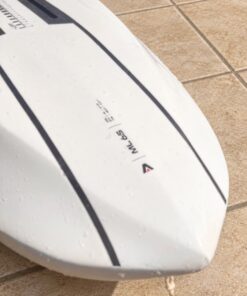
Used Armstrong Midlength FG 65l Foilboard
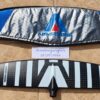
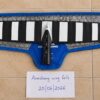
€800.00
The Used Armstrong Midlength FG 65L Foilboard is a versatile performance board designed for riders who want efficient glide, smooth takeoffs, and responsive handling in a compact midlength shape. Its 65L volume provides useful support without making the board feel oversized once airborne, while the longer outline helps generate speed more easily in lighter wind and softer wave conditions.
Built with a rigid reinforced structure and a strong foil mounting area, the board delivers direct feedback and precise control through turns, pumping, and transitions. The narrow profile also helps reduce swing weight, giving it a lively and maneuverable feel in flight.
As a used board, it offers strong value for riders seeking a capable setup for mixed conditions. When the deck, rails, tracks, and underside remain structurally sound, it can continue delivering excellent performance for many additional sessions. It is a practical choice for intermediate and experienced riders who want a balanced combination of stability, glide, control, and efficiency.
Used Armstrong Midlength FG 65L Foilboard – Fast Glide, Balanced Stability, and Responsive Foiling Performance
Used Armstrong Midlength FG 65L Foilboard Overview
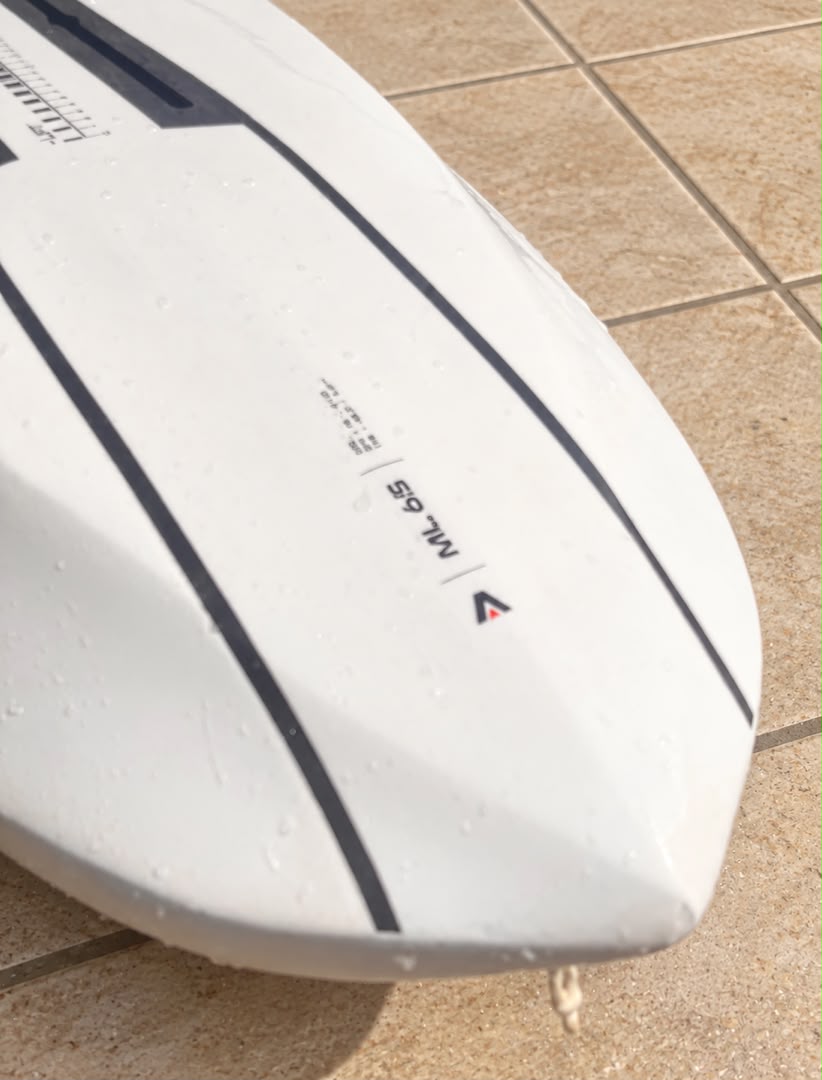
The Used Armstrong Midlength FG 65L Foilboard is a versatile performance board designed to bridge prone, wing, and downwind-inspired foiling. Armstrong describes the Midlength FG as a “Goldilocks” balance of glide, stability, and maneuverability, positioned between its Prone, Wing, and Downwind board families. In the 65L size, the board measures 5’9″ long, 19″ wide, and 4 1/2″ thick, with a listed weight range of approximately 4.6–5.1 kg.
Why Choose the Used Armstrong Midlength FG 65L?
The main reason to choose this board is versatility. It carries more glide than a compact performance shape while remaining much more maneuverable than a full armstrong downwind board. Therefore, riders who want one foiling board for lighter wing days, prone paddling, and efficient takeoffs may find the 65L configuration particularly attractive.
Compared with shorter armstrong foil boards, the Midlength’s longer outline produces better forward efficiency. However, it still retains a narrow, surf-inspired profile that keeps the board responsive once it rises onto foil.
Armstrong Midlength Shape and Glide
The armstrong midlength uses a pointed but not excessively sharp nose, a gently tapering center section, and a pulled-in tail. Armstrong designed this outline to paddle efficiently into both smaller and larger surf while also providing excellent low-power winging performance.
For anyone comparing an armstrong mid length board with a conventional surf foil board, the main advantage is the additional glide obtained without moving all the way into the proportions of an armstrong downwind foil board.
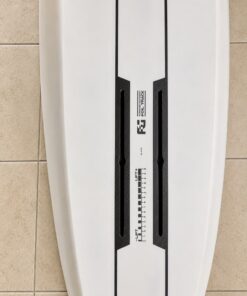
Forward Geometry Foil Track System
One of the board’s defining engineering features is Armstrong’s Forward Geometry system.
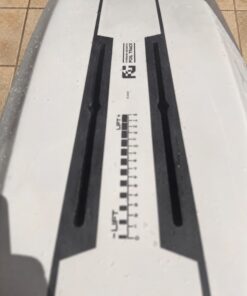
The foil tracks are positioned more centrally beneath the rider. This placement reduces swing weight and increases responsiveness through turns. Armstrong also designed the system to work with foils from multiple brands, giving riders more flexibility when selecting a mast and foil package.
That means the board can be paired with an armstrong performance mast, armstrong fuselage, or another compatible system rather than forcing the rider into only one configuration.
Carbon-Reinforced Construction
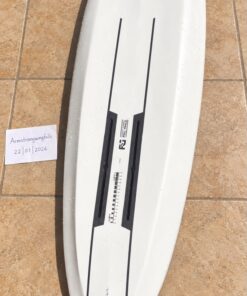
The Midlength FG uses a pair of top-to-bottom I-beam stringers. Proprietary carbon-fiber foil tracks are keyed directly into those stringer fibers, creating a stiff connection between the deck structure and foil mounting area.
This rigidity is important because a board that flexes excessively around the mounting area can reduce feedback.
For buyers comparing armstrong foils, armstrong foiling, and different foiling boards, this reinforced construction is one of the main technical reasons the board feels connected and precise.
How the Board Gets Onto Foil
The Midlength shape is designed to build speed efficiently before takeoff.
Its longer waterline allows the board to accelerate with less drag than many short shapes. Once sufficient speed is reached, the bottom contours and foil system work together to release the board from the surface.
This can make light-wind starts easier when paired with an appropriate wing foil front wing, hydrofoil front wing, or front foil.
Hydrofoil Lift and Stability
Board shape is only one part of the system.
The selected foil determines much of the actual hydrofoil lift stability, turning radius, speed range, and pumping behavior.
An HA Front Foil may suit riders seeking efficient glide and speed, while a larger or more forgiving front wing may provide easier takeoff characteristics.
Anyone looking for an HA Front Foil for sale should therefore match the foil size to rider weight, conditions, and skill rather than selecting it only because the board is 65L.
Compatibility With Armstrong Foil Components
The 65L board integrates naturally with an Armstrong setup.
Potential combinations may include an armstrong wing foil, compatible mast, armstrong fuselage, front wing, and tail system.
Riders researching armstrong integrated foil masts price or armstrong integrated foil masts price 2025 should remember that mast choice affects stiffness, drag, weight, and overall system feel rather than changing the board’s stated 65L volume.
Wing Foiling Performance
The Midlength FG is particularly interesting for armstrong wing and armstrong wings users because the longer outline can help generate early board speed in lighter conditions.
Compared with a shorter dedicated wing shape, the rider may achieve takeoff with less aggressive pumping.
Once airborne, Forward Geometry reduces the feeling of excess nose length, allowing the board to remain maneuverable.
Surf Foiling Performance
As a surf foilboard, the 65L Midlength combines paddle efficiency with manageable dimensions.
Its shape can make catching softer waves easier than on a very short board.
Therefore, riders comparing surf foil, surf foil boards, and compact prone designs may appreciate the extra glide while still retaining good control once flying.
Downwind-Inspired Performance
The board borrows efficiency concepts associated with armstrong downwind boards and the armstrong downwind foil category without becoming a full-length downwind shape.
This makes it useful for riders who appreciate the glide of an armstrong v1 downwind board but want a shorter platform with more responsive turning characteristics.
Foil for SUP and Broader Use
Some riders researching foil for sup may also encounter the Midlength because of its efficient outline.
However, the 65L size remains significantly smaller than a traditional stand-up paddling platform.
Suitability depends heavily on rider weight, skill, and intended start method.
Used Condition and Buyer Value
A used 65L example can offer strong value because the underlying board design remains highly capable.
Current used listings show these boards commonly inspected around the deck, nose, tail, rails, underside, traction pad, and foil tracks. Some examples are sold with a carrying bag, while mounting hardware may not be included.
Before purchase, buyers should confirm the exact condition of the specific board being offered rather than assuming all used examples are identical.
Armstrong Foils for Sale and System Matching
People searching armstrong foils for sale should think of the board as the platform around which the rest of the system is built.
Foil choice affects lift and speed.
Mast selection affects stiffness and height.
The fuselage influences geometry.
The board determines volume, stance, release behavior, and overall handling.
That system approach is more useful than evaluating each component independently.
Why the 65L Size Stands Out
The 65L version sits in a useful middle ground.
At 5’9″ × 19″ × 4 1/2″, it is long enough to create efficient paddle and wing-powered acceleration, yet narrow enough to maintain a performance-oriented feel.
For riders looking for one armstrong foil board that blends glide, responsive turning, surf usability, and lighter-wind wing performance, the Used Armstrong Midlength FG 65L Foilboard offers a highly versatile platform with proven Forward Geometry construction and a strong connection to Armstrong’s wider foil system.
Water Start Efficiency, Stability, Turning Response, Paddle Feel, Light-Wind Use, and Real-World Performance
The Used Armstrong Midlength FG 65L is designed for riders who want efficient acceleration without giving up the responsive feel of a more compact performance shape. Its longer outline helps it move through the water with less resistance than many short boards, while the narrow width keeps the platform from feeling excessively bulky once it is flying. In practical use, this combination can make starts easier, improve glide between bumps, and create a smoother transition from displacement mode to full flight.
Efficient Acceleration Before Takeoff
One of the most important advantages of this board is the way it builds speed on the water.
The longer waterline helps the board move forward efficiently before the foil begins carrying the rider.
This can reduce the amount of aggressive pumping needed in marginal conditions.
Instead of feeling as though the board is constantly pushing water, the shape encourages cleaner forward movement.
That efficiency can be particularly noticeable when the available power is limited.
Smoother Water Release
Good takeoff performance is not only about speed.
The board also needs to release cleanly from the surface.
The bottom shape helps reduce unnecessary sticking as forward speed increases.
As the foil begins generating lift, the board transitions progressively from water contact into full flight.
A clean release can make the entire start feel more controlled.
Stability Without Excessive Width
A wide board can feel stable while stationary, but excessive width can also make a performance board feel slower and less responsive.
The 65L shape takes a different approach.
Its stability comes from overall volume distribution and length rather than extreme width.
This creates a platform that remains manageable while still feeling relatively narrow and performance-oriented.
Balance During Starts
The rider benefits from a platform that does not demand constant correction before moving.
Once forward motion begins, the board becomes progressively more stable.
This can make balancing during pumping and acceleration easier.
The rider can focus more on generating movement and less on correcting side-to-side instability.
Light-Wind Performance
The shape becomes especially useful when power is limited.
In lighter conditions, a short board may require more aggressive pumping to overcome drag.
The longer outline allows the rider to build speed more gradually.
This can make the difference between repeatedly missing takeoff and entering flight with a smoother rhythm.
Using Momentum Efficiently
Once the board starts moving, it carries momentum well.
This helps when there is a temporary reduction in available power.
Instead of stopping immediately, the board can continue gliding long enough for the rider to generate another pump or catch the next usable energy source.
Momentum management is one of the strongest benefits of a longer performance-oriented shape.
Paddle Efficiency
The board is also well suited to riders who value efficient paddling.
The narrow outline reduces resistance as the board moves forward.
A longer waterline also helps maintain direction between strokes.
This means the rider can use energy more efficiently while positioning for a wave or building speed.
Maintaining Direction
Shorter boards can sometimes wander from side to side during paddling.
The increased length of this design helps improve tracking.
That means fewer corrective strokes may be needed.
Better tracking also allows the rider to focus on timing and positioning rather than constantly adjusting direction.
Catching Softer Energy
Efficient paddling can help the rider enter weaker or less powerful energy earlier.
Instead of waiting until the wave becomes steep, the board can begin moving sooner.
This creates more time to establish speed before takeoff.
Earlier entry can make the overall ride feel smoother and more controlled.
Narrow Width and Turning Feel
Once airborne, the narrower planform contributes to a more responsive feel.
The board does not create the same sensation of swinging a large platform from side to side.
This is particularly noticeable during carving.
The rider can initiate turns with less effort.
Reduced Swing Weight
The mounting position and overall geometry help reduce the sensation of excess length.
Although the board is physically longer than a compact shape, it does not necessarily feel long in the air.
This improves responsiveness during transitions.
The rider can redirect the board more easily without fighting excessive nose weight.
Carving Performance
During carving, the board feels connected to the foil system beneath it.
A rigid mounting area helps translate rider input more directly.
This creates a cleaner relationship between foot pressure and turning response.
The result is a more precise feel during both gentle arcs and more aggressive direction changes.
Pumping Efficiency
The board can also perform well during pumping.
Its relatively low swing weight helps the rider maintain rhythm.
The longer shape may seem as though it would feel heavy, but the geometry is designed to keep the board responsive once it is flying.
This allows pumping movements to remain controlled.
Recovery After Touchdowns
Touchdowns are inevitable during learning or aggressive riding.
A well-shaped board can recover more smoothly after contacting the water.
The longer nose and refined bottom shape help the board skim forward rather than stopping abruptly.
This can give the rider enough time to regain lift.
Preventing Sudden Deceleration
A poorly shaped touchdown can produce a sudden stop.
That can destabilize the rider immediately.
The smoother outline of this board helps reduce that effect.
Instead of burying aggressively, the nose is more likely to continue moving forward.
This contributes to confidence during faster riding.
Managing Choppy Water
Choppy conditions can make small boards difficult to control before takeoff.
The increased length helps bridge small sections of disturbed water.
The rider still needs balance, but the board is less likely to feel excessively nervous.
This can make starts more predictable.
Handling Larger Surface Movement
In larger surface movement, the rider benefits from keeping the board moving.
Momentum helps prevent the platform from being pushed around as easily.
The narrow shape also reduces the amount of surface area exposed to side forces.
Together, these characteristics improve control.
Foot Placement
Correct foot placement remains important.
The rider should feel centered over the usable area of the board.
Standing too far forward can increase nose pressure.
Standing too far back can reduce efficient acceleration before takeoff.
A balanced stance helps the board perform as intended.
Transitioning Onto Flight
The transition from water to flight should feel progressive rather than abrupt.
As speed builds, lift increases.
The rider can gradually reduce pressure on the board and allow the foil to take over.
Smooth transitions generally create better control than forcing the board upward suddenly.
Riding Once Fully Airborne
Once the board clears the water, its volume becomes much less relevant.
At that point, geometry, stiffness, and mass distribution matter more.
The board feels considerably smaller in the air than its length might suggest.
This is one of the characteristics that makes the shape appealing to experienced riders.
Handling Speed
At higher speeds, the rider benefits from the board’s rigid connection to the foil system.
A stiff structure reduces unwanted flex.
This improves feedback.
The rider can make smaller corrections without feeling that the board is lagging behind the input.
Maintaining Control Through Turns
Higher-speed turns require predictable feedback.
The board responds progressively to pressure changes.
This allows the rider to commit to a turn without feeling that the platform is twisting excessively.
A stable connection helps maintain confidence.
Low-Speed Maneuverability
The board is not only about speed.
Its geometry also works well during slower maneuvering.
The rider can make controlled adjustments without needing large movements.
This makes it useful when positioning for a wave or managing limited energy.
Recovering From Mistakes
A versatile board should help the rider recover when technique is not perfect.
Extra glide can provide time to correct a poor pump.
Stable acceleration can help recover after a weak start.
Smooth touchdown behavior can prevent a minor mistake from ending the ride immediately.
These characteristics improve usability.
Rider Weight Considerations
The 65L volume should be considered in relation to rider weight and skill.
A lighter rider may find the board relatively buoyant.
A heavier rider may experience more sink while stationary.
The board’s performance should therefore be evaluated as part of the complete rider-and-equipment system.
Skill-Level Considerations
The board is best suited to riders who already understand basic foil control.
Its narrow width rewards balanced technique.
At the same time, the longer outline can make acceleration easier than on extremely short shapes.
This creates an interesting balance between accessibility and performance.
Used Board Inspection
A used board should be checked carefully before purchase.
The deck should be inspected for soft areas.
The rails and nose should be checked for impact damage.
The mounting area deserves particular attention because it carries significant load.
Any repaired areas should be examined closely.
Checking the Mounting Tracks
The track system should be straight and secure.
Cracks around the mounting area can indicate previous heavy impact.
The inserts should not show signs of movement.
A solid mounting area is important because it transfers all major riding loads between the board and foil system.
Checking the Traction Pad
The traction pad should remain firmly bonded.
Loose edges may eventually lift further.
Compression marks are normal on used equipment, but excessive separation should be noted.
The surface should still provide reliable grip.
Checking for Water Ingress
Any significant crack should be investigated.
If water has entered the board, additional weight may be noticeable.
The board should feel appropriately light for its size.
Unusual heaviness can indicate internal moisture.
Practical Real-World Value
The Used Armstrong Midlength FG 65L offers a strong balance of glide, stability, and responsive flight characteristics.
Its longer outline improves acceleration.
The narrow shape preserves maneuverability.
The rigid construction supports precise feedback.
Smooth touchdowns improve recovery.
Efficient paddling reduces unnecessary effort.
Light-wind performance expands usable conditions.
For riders seeking a used board that can cover multiple styles while still delivering a performance-oriented feel, the 65L platform provides a versatile and capable option.
Construction Quality, Durability, Deck Feel, Track Strength, Used-Board Inspection, Care, and Long-Term Ownership
The Used Armstrong Midlength FG 65L is built around a performance-focused structure intended to provide a rigid connection between the rider and the hydrofoil system while keeping overall weight under control. For a used example, construction quality matters just as much as shape because stiffness, deck integrity, mounting security, and water resistance all influence how the board performs over time. A carefully inspected and properly maintained board can continue delivering precise feedback and efficient flight long after its first season of use.
Understanding the Structural Design
The board uses a reinforced internal structure designed to distribute loads from the mounting area through the body of the board.
This matters because considerable force passes through the attachment points during starts, pumping, carving, touchdowns, and higher-speed riding.
A strong internal structure helps maintain a solid connection between the rider and the foil.
When the board remains stiff, rider input is transferred more directly.
Importance of Board Stiffness
Stiffness has a noticeable effect on control.
A board that flexes excessively can feel delayed during turns because part of the rider’s input is absorbed by the structure before reaching the foil.
A rigid platform responds more immediately.
This creates a more connected feeling during carving, pumping, and directional changes.
For experienced riders, that direct feedback can improve confidence.
Deck Strength
The deck experiences repeated pressure from the rider’s feet.
Over time, softer construction can develop noticeable depressions.
Normal cosmetic compression may occur on a used board, but deep or unusually soft areas deserve closer inspection.
A healthy deck should feel structurally consistent when gently pressed.
Large soft spots can indicate internal damage.
Inspecting the Deck Surface
Before buying, examine the entire standing area.
Look for cracks, unusual dents, separation around the traction material, or areas that flex significantly more than surrounding sections.
Minor cosmetic marks are common on used equipment.
Structural softness is more important than superficial scratches.
Traction Pad Condition
The traction pad should remain firmly attached.
Edges should not be peeling excessively.
A slightly compressed pad can still function normally, but loose sections may continue separating over time.
The surface should also retain enough texture to provide confident footing when wet.
A secure pad contributes to control.
Foot Position and Deck Feedback
The deck layout should allow the rider to feel a natural relationship with the foil beneath the board.
Once airborne, subtle pressure changes through the front and rear foot influence pitch and turning.
A rigid deck helps communicate those changes quickly.
This makes the board feel more precise during transitions.
Inspecting the Mounting Area
The mounting area deserves particularly close attention on any used board.
Look around the tracks for cracks, raised sections, unusual discoloration, or signs of previous structural repair.
The tracks should sit firmly in the board.
They should not move when moderate pressure is applied.
Movement can indicate a serious internal problem.
Checking the Tracks
Both tracks should appear straight and evenly positioned.
Inspect the slots carefully.
Damage caused by overtightened hardware or impact can sometimes deform the surrounding material.
Minor cosmetic marks are not unusual, but the track structure should remain solid.
A strong mounting connection is essential because it carries significant loads.
Hardware Fit
Mounting hardware should slide smoothly through the usable track area.
If bolts or nuts bind unexpectedly, inspect for sand, corrosion, or physical deformation.
Hardware should never be forced into position.
Clean, correctly sized parts help prevent damage.
The threads should also remain in good condition.
Avoiding Overtightening
Mounting bolts need to be secure, but excessive tightening can damage components.
More force does not automatically create a safer connection.
Hardware should be tightened evenly and according to appropriate equipment guidance.
Balanced pressure helps protect the tracks and mounting plate.
Rail Inspection
The rails are common impact areas.
They may contact transport racks, other equipment, or hard surfaces during handling.
Inspect both sides closely.
Small paint chips may be cosmetic.
Deep cracks, exposed laminate, or softened areas require more attention.
Nose Condition
The nose can experience impact during transport or hard touchdowns.
Check it for cracks, repaired sections, and unusual softness.
A well-maintained repair can be acceptable, but the quality of the work matters.
Poorly sealed damage may allow water to enter the core.
Tail Inspection
The tail should also be checked carefully.
Look around the corners and lower edges for chips or cracks.
Because the tail sits close to the mounting area, repeated impacts can sometimes transfer stress into the surrounding structure.
Any significant damage should be assessed before purchase.
Bottom Surface Condition
Turn the board over and inspect the entire underside.
Look for deep scratches, punctures, bubbling, or repaired areas.
Minor cosmetic marks usually have little effect on performance.
However, damage that penetrates the outer skin should be properly sealed.
Checking for Water Ingress
Water inside the board can increase weight and eventually damage the internal structure.
A suspiciously heavy board may indicate moisture.
Look closely at previous repairs, cracks, and impact points.
If possible, compare the weight with a known healthy example of the same size.
Recognizing Good Repairs
A professionally repaired area should be solid and well sealed.
It should not feel softer than the surrounding structure.
The repair should also remain smooth enough that it does not interfere with water flow.
A repaired board can still perform very well when the work was completed properly.
Recognizing Poor Repairs
Uneven filler, cracks around the repaired area, soft material, or obvious water staining can indicate poor repair quality.
These areas deserve extra attention.
A cosmetic patch may hide deeper structural damage.
Buyers should understand the condition before completing a purchase.
Caring for the Board After Saltwater Use
Salt should not be allowed to build up around the tracks and hardware.
After use, rinsing the board with fresh water can help reduce corrosion and salt deposits.
The mounting area deserves particular attention.
Allow the board to dry before placing it into long-term storage.
Drying Before Storage
A wet board should not remain sealed inside a bag for long periods.
Trapped moisture can encourage corrosion on metal hardware and create unpleasant odors around the traction surface.
After use, allow the board to dry naturally.
Good airflow helps.
Protecting the Board During Transport
Transport damage is often more common than riding damage.
A padded bag can help protect the rails, nose, tail, and deck.
The board should not be placed directly against sharp metal objects.
Heavy equipment should also not be stacked on top.
Vehicle Transport
When transporting the board on a roof rack, use appropriate padding and secure straps.
The straps should hold the board firmly without crushing the rails.
Excessive tension can damage lightweight construction.
The board should not be allowed to move in strong wind.
Heat Protection
Avoid leaving the board inside a closed vehicle under strong sun for extended periods.
High temperatures can increase internal pressure and place unnecessary stress on materials.
Whenever practical, store the board in a shaded and ventilated location.
Long-Term Storage
For longer storage, the board should remain clean, dry, and protected from direct sunlight.
Store it where heavy objects cannot fall onto it.
The deck and rails should not remain under constant pressure from other equipment.
A stable storage location helps preserve shape and finish.
Checking Before Returning to the Water
After extended storage, inspect the board again.
Check the mounting area, traction surface, rails, nose, tail, and underside.
Confirm that no new cracks or soft areas have developed.
Hardware should also be clean and functional.
Maintaining Efficient Performance
A clean underside helps maintain smooth water release.
Heavy dirt, wax buildup, adhesive residue, or damaged surfaces can create unnecessary drag.
Keeping the bottom relatively clean supports efficient acceleration.
The mounting area should also remain free from sand and debris.
Long-Term Ownership Value
A well-maintained used board can provide excellent value.
The important factor is structural condition rather than cosmetic perfection.
Small scratches and marks are normal signs of use.
Strong tracks, a firm deck, sealed rails, and a dry internal structure matter much more.
Practical Durability
The 65L platform combines lightweight construction with reinforcement in the areas that experience the greatest loads.
That balance supports efficient handling while maintaining the stiffness needed for responsive riding.
With normal care, the board can withstand repeated sessions without requiring complicated maintenance.
Overall Condition Assessment
Before purchasing, evaluate the board as a complete structure.
Inspect the deck.
Check the tracks.
Examine the rails.
Look closely at the nose and tail.
Inspect the underside.
Ask about previous repairs.
Confirm that the board feels appropriately light and structurally firm.
A carefully inspected example can deliver many additional seasons of reliable performance.
Long-Term Performance
The Used Armstrong Midlength FG 65L remains an attractive option because its performance depends on more than appearance alone.
A structurally sound board provides direct feedback, predictable turning, efficient takeoff behavior, and dependable mounting strength.
Proper rinsing reduces salt buildup.
Careful transport prevents avoidable impact damage.
Dry storage protects the construction.
Regular inspections help identify small issues before they become serious.
When these practices are followed consistently, a good used example can continue providing responsive, efficient, and enjoyable performance across a wide range of riding conditions.
Real-World Riding Scenarios, Rider Progression, Setup Balance, Conditions, Control, and Performance Optimization
The Used Armstrong Midlength FG 65L becomes most valuable when it is matched carefully to rider weight, skill level, water conditions, and the rest of the hydrofoil setup. Its longer outline, relatively narrow shape, moderate volume, and performance-focused construction create a platform that can cover a surprisingly broad range of sessions. However, the board still rewards proper setup. Mast position, stance, front-wing size, riding style, and local conditions all influence how it feels once the rider begins moving.
Finding the Right Rider Match
The 65L volume makes the board most suitable for riders who already possess basic foil control.
A lighter rider may find the board relatively buoyant and forgiving.
A heavier rider may experience more sink while stationary, particularly in weak wind.
Skill level therefore matters just as much as body weight.
An experienced rider can often use lower volume more effectively because balance corrections become more automatic.
Understanding the Volume-to-Weight Relationship
Board volume affects how much support the rider receives before takeoff.
More volume generally provides greater flotation.
Less volume produces a lower and more performance-oriented feel.
The 65L platform sits in a useful middle range where it can provide meaningful support without becoming excessively large once airborne.
Light-Wind Sessions
One of the strongest real-world uses for this board is in marginal power.
The longer outline helps generate forward movement before full lift develops.
Instead of relying only on aggressive pumping, the rider can build speed progressively.
This can make weak conditions more productive.
A session that might otherwise involve repeated unsuccessful starts can become much more enjoyable.
Moderate-Wind Sessions
In medium conditions, the board becomes easier to accelerate.
The rider does not need to work as hard to reach takeoff speed.
This allows more attention to be placed on timing, stance, and control.
Once airborne, the board feels much smaller than its waterline length suggests.
Stronger Conditions
When power increases, the rider may notice the benefits of the narrow outline even more.
The board remains responsive and relatively easy to redirect.
However, stronger wind and surface movement require good technique.
The rider should avoid forcing the board into the water during touchdowns because higher speed increases impact energy.
Small-Wave Use
In smaller waves, efficient acceleration can be extremely useful.
The rider can catch softer energy earlier.
This provides more time to build speed before the wave steepens.
Instead of waiting for a powerful section, the rider can make use of less obvious energy.
Larger-Wave Use
Larger waves require greater control and confidence.
The board’s responsive geometry can help during faster transitions.
However, the rider should be experienced enough to manage speed, positioning, and recovery.
The board itself does not replace good wave judgment.
Paddle Starts
For paddle-based starts, forward efficiency matters.
The longer shape helps maintain momentum between strokes.
It also improves directional tracking.
This means the rider can concentrate more on timing and less on constant correction.
Wing-Powered Starts
During wing-powered starts, the rider benefits from the same forward efficiency.
Instead of immediately forcing the board upward, it is usually more effective to build speed first.
Once sufficient momentum develops, the foil can begin producing stronger lift.
A smooth takeoff is generally more controllable than an abrupt one.
Matching Mast Position
Mast position plays a major role in balance.
Moving the mast forward generally increases front-foot pressure and can make lift develop earlier.
Moving it backward generally reduces front-foot pressure and can make the setup feel calmer at speed.
Small adjustments can make a noticeable difference.
Making Small Adjustments
Changes should be made gradually.
Moving the mast several centimeters at once can completely alter balance.
A smaller adjustment gives the rider a better understanding of cause and effect.
After each change, several rides should be completed before deciding whether another adjustment is necessary.
Front-Foot Pressure
Excessive front-foot pressure can make the board tiring to ride.
If the rider constantly needs to push down on the front leg, the setup may need adjustment.
Mast position, stabilizer angle, front-wing choice, and stance can all influence pressure.
The goal is a balanced feel.
Rear-Foot Pressure
Too much rear-foot pressure can make the setup feel unstable or overly sensitive.
The rider may struggle to keep the nose from rising.
Again, small equipment adjustments can help.
A balanced system should allow the rider to control pitch without fighting the setup continuously.
Stance Width
Stance width affects control.
A wider stance can provide more leverage over pitch changes.
A narrower stance can feel more relaxed and natural.
The ideal position depends on rider height, foil geometry, and riding style.
The rider should experiment within a comfortable range.
Foot Placement
The front and rear feet should align naturally with the balance point of the system.
Standing too far forward can reduce lift.
Standing too far back can make the setup rise aggressively.
Good foot placement reduces unnecessary leg fatigue.
Takeoff Technique
Efficient takeoff begins with forward speed.
The rider should allow the board to accelerate before demanding full lift.
Once enough speed develops, a controlled weight shift can encourage takeoff.
Aggressive upward pumping before sufficient speed is available usually wastes energy.
Maintaining Flight
Once fully airborne, the rider should focus on smooth pressure changes.
Large abrupt movements can create unnecessary pitch instability.
Small corrections are often enough.
The rigid board structure helps those corrections translate directly into the foil.
Carving Through Turns
During carving, the rider should enter the turn progressively.
Pressure can then be increased as the foil loads.
The narrow shape helps the board feel less bulky above the water.
This can make direction changes feel more natural.
Touchdown Recovery
Touchdowns should be treated as recoverable events rather than immediate failures.
If the board contacts the water while still carrying forward speed, the rider can often maintain balance and return to flight.
The longer nose helps support this recovery.
Avoiding Nose Burying
When a touchdown occurs, excessive forward pressure can drive the nose deeper.
The rider should remain balanced and allow the board to skim.
Good recovery depends on maintaining momentum.
Pumping Through Flat Sections
When wave energy decreases, pumping can extend the ride.
The rider should focus on rhythm rather than brute force.
Smooth pressure cycles are usually more efficient.
The board’s reduced airborne swing sensation helps support this movement.
Connecting Multiple Energy Sources
Experienced riders can use the board’s glide to connect separate pieces of energy.
Maintaining speed becomes more important than making aggressive turns.
A clean line often produces better distance.
Choppy Conditions
In chop, the rider should keep enough forward speed to stabilize the board before takeoff.
Trying to balance nearly stationary can be more difficult.
Momentum helps the board track through disturbed water.
Glassy Conditions
Smooth water makes subtle setup differences easier to feel.
The rider can better evaluate mast position, stance, and balance.
These conditions are useful for testing adjustments.
Learning Efficient Starts
Riders progressing from shorter boards may initially try to use too much pumping effort.
The longer shape rewards patience.
Building speed smoothly often produces a cleaner takeoff.
Once the rider adapts, less energy may be required.
Progressing Toward Smaller Equipment
The 65L platform can also serve as a useful transitional size.
A rider who eventually wants a smaller board can use it to refine balance, pumping, and takeoff technique.
The board still provides enough support to make progression manageable.
Traveling With the Board
For travel, protection is important.
The board should be secured in a padded bag.
Heavy equipment should not rest directly on the deck or rails.
Mounting hardware should be removed or protected if it could damage the board during transport.
Preparing for a Session
Before entering the water, inspect the board quickly.
Check the mounting bolts.
Confirm the mast is secure.
Look for fresh damage.
Make sure the traction surface is properly attached.
A short pre-session inspection can prevent equipment problems later.
Post-Session Care
After riding, rinse salt and sand away.
Allow the board to dry.
Inspect the rails, mounting area, and underside.
Any new impact marks should be checked before the next session Used Armstrong Midlength FG 65l Foilboard.
Used Equipment Value
A well-kept used board can provide excellent performance without the cost of buying new.
Cosmetic marks should not automatically be treated as serious defects Used Armstrong Midlength FG 65l Foilboard.
Structural condition matters much more.
Strong tracks, a firm deck, sealed repairs, and a dry core are the key areas to evaluate kite armstrong.
Overall Real-World Performance
The Used Armstrong Midlength FG 65L offers a compelling blend of efficient takeoff, smooth acceleration, responsive flight, manageable volume, and broad versatility Used Armstrong Midlength FG 65l FoilboardUsed Armstrong Midlength FG 65l Foilboard.
It works particularly well for riders who want better glide without moving to an extremely long board Used Armstrong Midlength FG 65l Foilboard.
Its narrow outline keeps the airborne feel lively Used Armstrong Midlength FG 65l Foilboard.
Its length improves starts Used Armstrong Midlength FG 65l Foilboard Used Armstrong ML65l Wing board.
Its reinforced structure supports direct control Used Armstrong Midlength FG 65l Foilboard.
Its moderate volume provides useful support Used Armstrong Midlength FG 65l Foilboard.
When the mast position, stance, foil choice, and riding technique are balanced correctly, the board becomes a highly capable platform for progressing skills, handling mixed conditions, and getting more usable sessions from changing wind and wave energy Used Armstrong Midlength FG 65l Foilboard Used Armstrong Midlength FG 65l Foilboard.
Be the first to review “Used Armstrong Midlength FG 65l Foilboard”
Related products
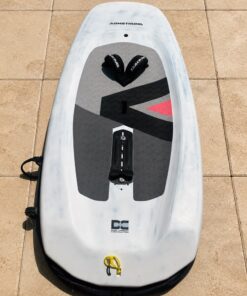
Used Product
Used Product
Used Product
Used Product
Used Product
Used Product
Used Product
Used Product
Reviews
There are no reviews yet.