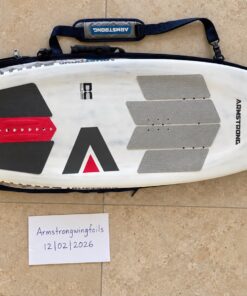

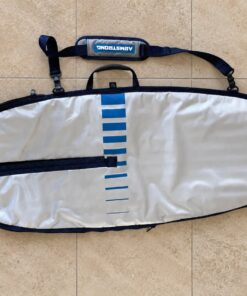


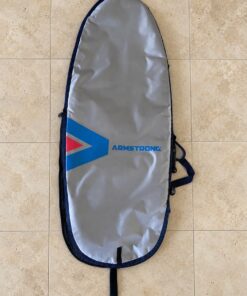
Used Armstrong Wing Surf FG 34L


€500.00
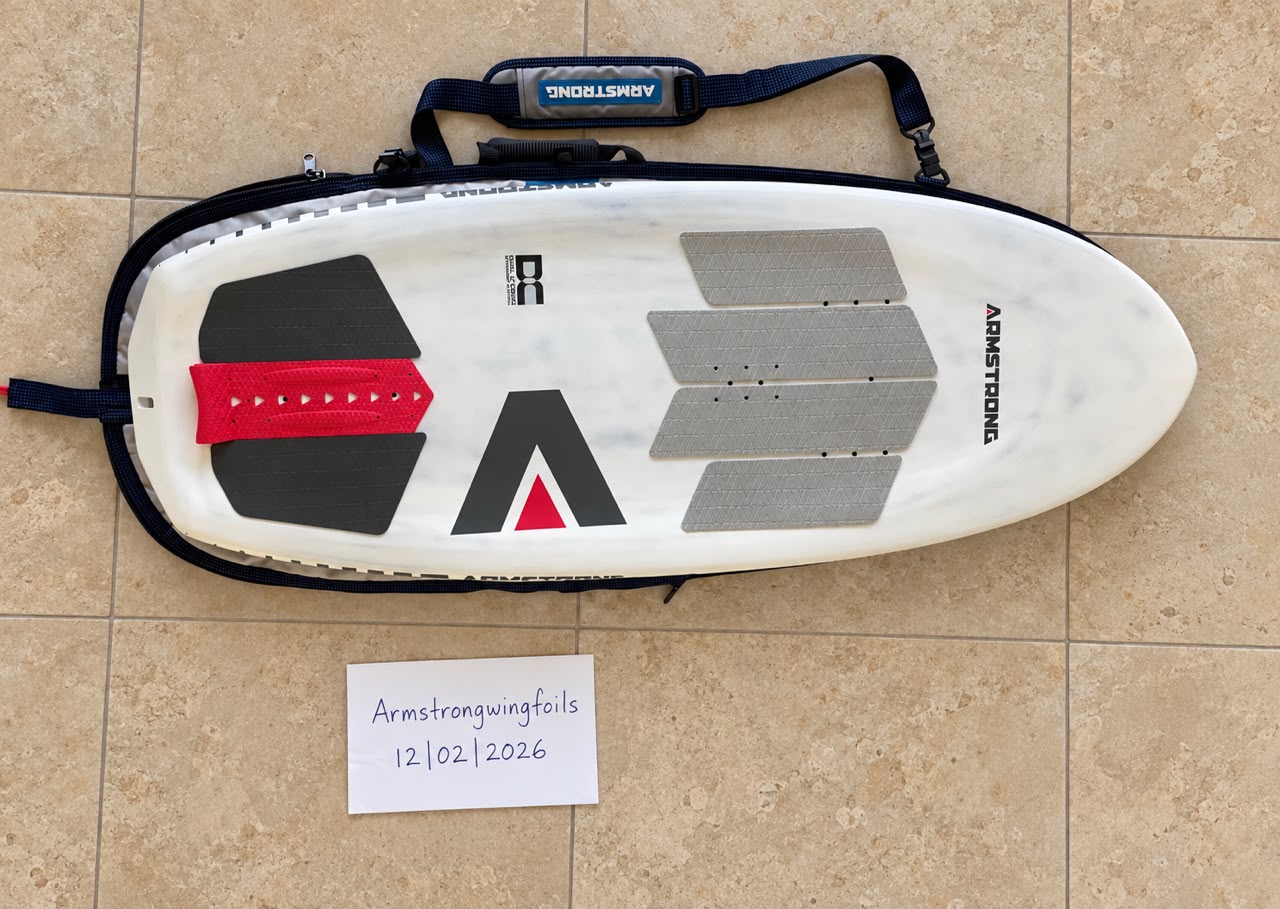
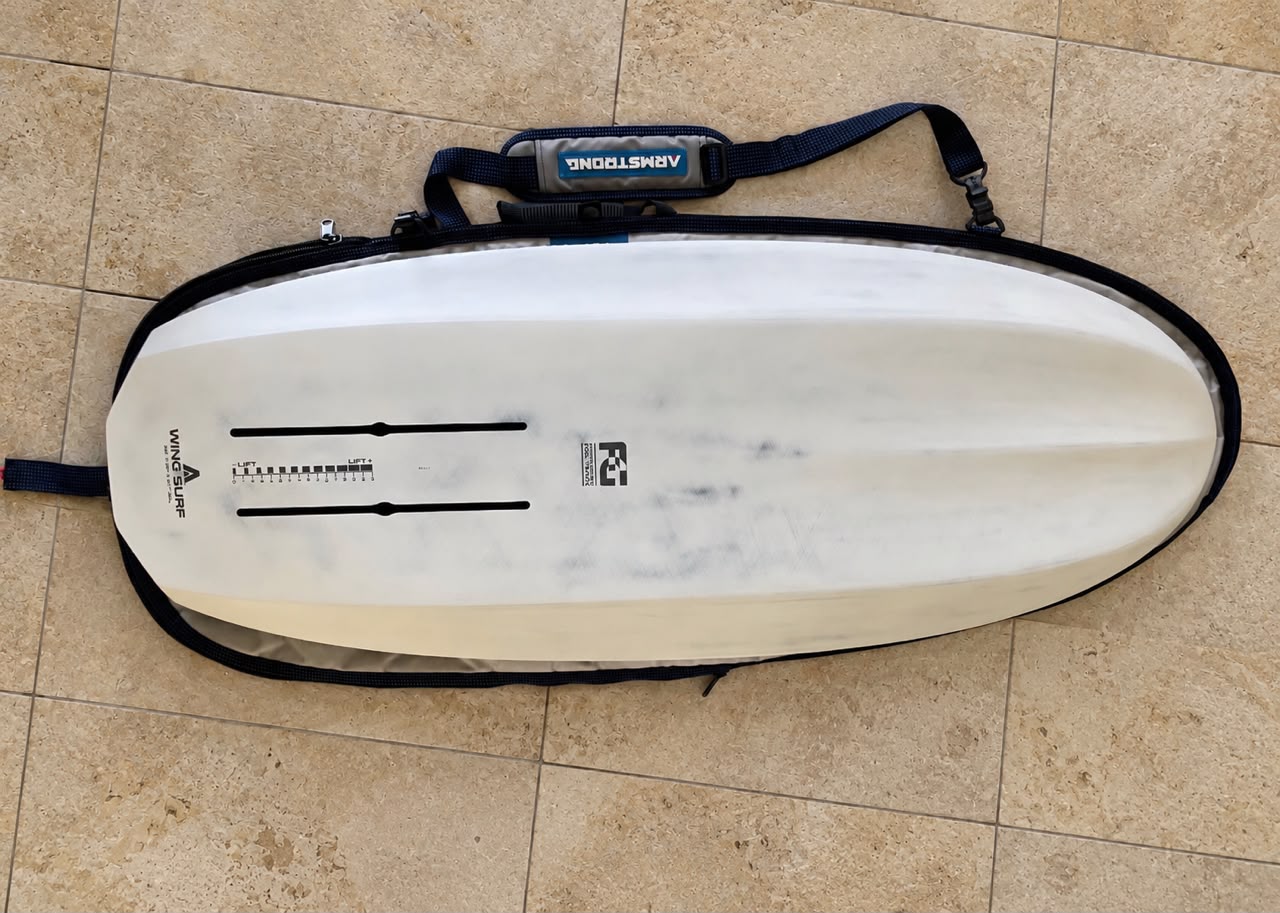
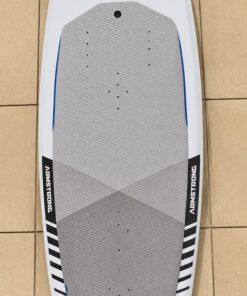
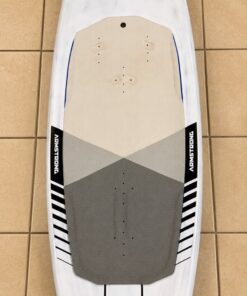
The Used Armstrong Wing Surf FG 34L is a compact, high-performance foil board in like-new condition, ideal for riders who want responsive handling, direct foil feedback, and a small platform that performs well across wake and prone foiling.
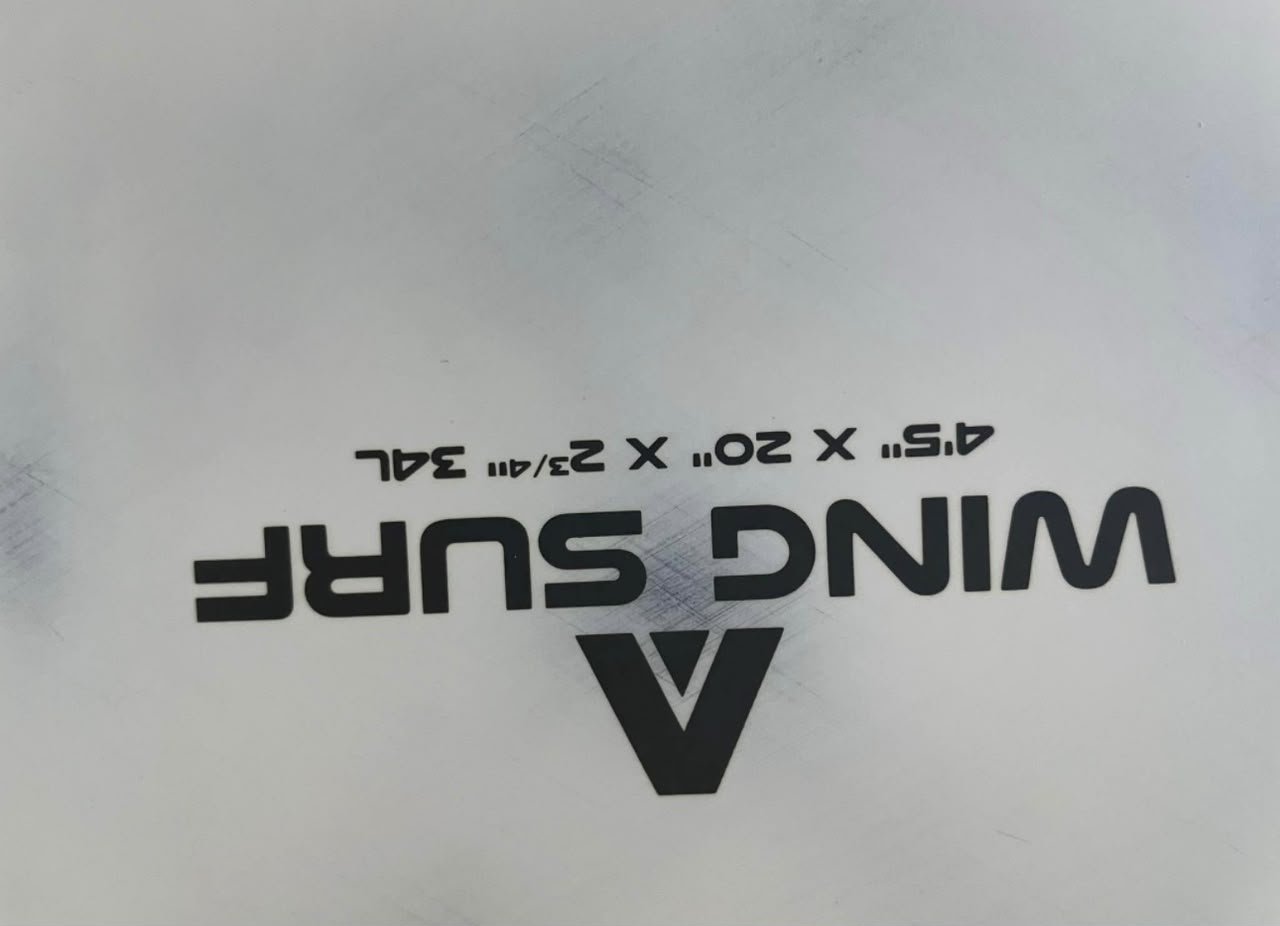
This board measures 4’5″ and has 34 liters of volume, giving it a compact and agile feel once on foil. It has been used to learn wake foil surfing and has also been used for prone foiling, making it a proven and versatile setup for progression.
Its short length helps reduce swing weight, which can improve pumping, carving, and directional response. The concentrated volume and recessed deck design also help keep the rider closely connected to the foil, while the efficient hull shape supports smoother water release during takeoff and touchdowns.
The board remains in excellent, like-new condition with limited use and is a strong option for riders looking for a clean, responsive, and performance-focused setup without buying brand new.
Key Details
- Model: Armstrong Wing Surf FG
- Length: 4’5″
- Volume: 34L
- Condition: Like new
- Previous Use: Wake foil learning and prone foiling
- Design: Compact foil-focused platform
- Construction: Lightweight, stiff performance construction
- Best For: Wake foiling, prone foiling, surf progression, and experienced low-volume riding
- Handling: Responsive, agile, and direct
- Takeoff: Efficient water release with a compact outline
- Performance: Excellent for pumping, carving, and progressing to more technical riding
Overall, this is an amazing compact foil board for anyone looking for a responsive 34L platform with minimal wear, strong performance characteristics, and plenty of life remaining.
Used Armstrong Wing Surf FG 34L – 4’5″ Carbon Foil Board in Like-New Condition
Used Armstrong Wing Surf FG 34L Overview
The Used Armstrong Wing Surf FG 34L is a compact, high-performance foil board designed for riders who want direct foil control, efficient takeoff, and responsive handling in a small 4’5″ platform. This particular board is in like-new condition, measures 4’5″, carries 34 liters of volume, and has been used for learning wake foil surfing as well as prone foiling.
The 4’5″ × 34L Wing Surf FG is part of Armstrong’s Forward Geometry generation. This shape was designed around a recessed deck, wide nose, efficient waterline, accentuated chines, and a compact outline that keeps the rider closely connected to the foil. Retail listings for this generation identify the 4’5″ model as a 34L board, with an approximate weight around 3.4 kg depending on individual construction variation.
For riders researching an armstrong foil board, surf foil board, surf foilboard, or other high-performance foiling boards, this model combines low volume with efficient geometry to create a lively and precise riding experience.
4’5″ Length and 34L Volume
At 4’5″ and 34 liters, this board is compact enough to feel highly responsive once on foil while still providing useful volume for experienced riders.
Armstrong’s historical buyer guidance positioned the 4’5″ 34L size across intermediate and advanced wing-foiling use depending on rider weight, and also across several surf-foiling rider categories.
The shorter length reduces swing weight during turns.
Meanwhile, the 34L volume provides enough flotation to assist with starts without making the board feel unnecessarily large once flying.
For riders moving from a larger armstrong foil board or exploring a smaller foiling board, the 34L size offers a more direct connection between rider input and foil response.
Like-New Condition
Condition is one of the biggest selling points of this board.
It remains in like-new condition and has primarily been used while learning wake foil surfing and for prone sessions.
That background suggests a board that has been actively used but not heavily worn through years of repeated riding.
For buyers comparing armstrong foil boards, armstrong foils for sale, or a performance board on the used market, condition matters because impacts, rail damage, mast-track wear, and deck compression can affect both appearance and long-term durability.
This example remains an attractive option for someone looking for a lightly used board with substantial service life remaining.
Forward Geometry Design
The board’s Forward Geometry concept places volume strategically through the outline rather than simply increasing overall length.
A recessed deck positions the rider closer to the foil connection.
This can improve feedback and make small weight shifts feel more immediate.
The wide, chisel-style nose and relatively rectangular outline distribute volume toward the extremities, which improves stability for such a compact platform.
That design philosophy helps explain why the board can feel stable enough for learning specific foil disciplines while still remaining responsive when the rider progresses.
Efficient Water Release
Water release is especially important during takeoff and touchdowns.
The board uses pronounced chines and carefully shaped tail geometry to reduce the amount of surface dragging through the water as speed increases.
As the foil begins producing lift, the contact area decreases progressively.
This helps the board transition more smoothly from displacement to foil flight.
The same geometry can also help during light touchdowns because the rails and bottom shape are intended to release rather than grab aggressively.
For riders practicing wake starts or prone takeoffs, that characteristic can make progression more forgiving.
Wake Foil Learning Use
This specific board has been used to learn wake foil surfing.
That is a particularly relevant use case because wake foiling requires compact handling, balance, and efficient release from the water.
A 34L board can provide enough volume for supported starts while remaining small enough to become highly maneuverable once on foil.
As skill develops, the rider can concentrate more on foil control rather than fighting excessive board length.
Prone Foiling Performance
The board has also been used for prone foiling.
In that discipline, paddling efficiency, early wave entry, low swing weight, and direct foil response all matter.
The compact 4’5″ size keeps the board maneuverable.
Meanwhile, the recessed deck and carbon construction contribute to a more connected feel once airborne.
Independent rider feedback on this exact 4’5″ 34L size has highlighted strong prone performance, efficient pumping, and clean release from the water.
Carbon Construction and Rigidity
The Wing Surf FG generation uses a foam core reinforced with multiple PVC sections, dual carbon stringers, carbon fiber, and Dyneema cloth.
This type of construction aims to keep the board lightweight while maintaining stiffness.
Stiffness matters because rider input must travel through the board into the mast and foil.
A softer structure can absorb some of that energy.
A rigid board generally creates a more immediate connection.
That can improve pumping efficiency, carving response, and overall feedback.
Mast Track and Foil Connection
The board uses reinforced mast tracks designed to handle the loads created by the foil.
The track position allows the rider to tune mast placement according to foil size, rider weight, stance, and preferred balance.
This becomes particularly important when pairing the board with an armstrong fuselage, armstrong performance mast, hydrofoil front wing, wing foil front wing, or front foil.
Moving the mast slightly can significantly change front-foot pressure and overall balance.
Pairing With an HA Front Foil
Riders searching for an HA Front Foil or HA Front Foil for sale may pair a compact board like this with a high-aspect foil system when efficient glide is a priority.
A high-aspect hydrofoil front wing can help maintain momentum between wave sections or during pumping.
However, hydrofoil lift stability depends on the complete foil system, including mast, fuselage, stabilizer, rider weight, and front-wing size.
The board provides the platform, while the underwater components determine most of the lift and glide characteristics.
Wing Foiling Use
Although this board has been used for wake and prone foiling, the 34L platform also sits within Armstrong’s wing-foiling ecosystem.
It can be paired with an armstrong wing, armstrong wings, or broader armstrong wing foil setup for riders with sufficient experience to manage lower-volume boards.
A smaller platform can feel exceptionally responsive once flying, although water starts generally demand greater skill than with higher-volume equipment.
Comparison With Longer Armstrong Boards
A rider comparing this model with an armstrong downwind board, armstrong downwind boards, armstrong downwind foil board, or armstrong v1 downwind board should understand that the riding goals are different.
Longer downwind boards emphasize glide, paddle acceleration, and early takeoff.
The 4’5″ 34L board emphasizes compactness, maneuverability, and close foil connection.
Likewise, an armstrong midlength or armstrong mid length board offers a compromise between compact handling and longer-waterline efficiency.
Mast Upgrade Considerations
Some riders researching complete setups may also compare armstrong integrated foil masts price or armstrong integrated foil masts price 2025.
The mast can significantly influence stiffness and feedback, but it remains a separate component from the board itself.
A high-performance mast can complement the stiff construction of this board by creating a more direct connection from the rider’s feet to the foil.
Surf, SUP, and Multi-Discipline Use
The board is primarily aimed at compact surf and wing foiling, but buyers may also encounter related searches such as surf foil, surf foil boards, foil for sup, and kite armstrong.
These disciplines share some foil technology but place different demands on board volume, length, and takeoff technique.
A 34L board is much more compact than a typical SUP-oriented platform, so rider experience and body weight should be considered carefully.
Why Choose This Used 34L Board?
The main reasons to choose this example are its like-new condition, compact 4’5″ length, useful 34L volume, proven wake-foil learning history, and successful prone use.
It offers the performance advantages of a compact Forward Geometry board without the heavy wear often seen on older foil equipment.
The stiff construction, efficient water release, recessed deck, stable volume distribution, and reinforced foil connection all contribute to a board that feels purposeful rather than generic.
For riders who want a compact, responsive platform for prone, wake, surf, or experienced wing-foiling use, this board offers a strong balance of condition, precision, performance, and long-term value.
Real-World Performance, Stability, Takeoff, Pumping, and Practical Use
This compact 34-liter board is designed for riders who want a direct connection to the foil, quick response underfoot, and a small platform that becomes highly maneuverable once airborne. At 4’5″, the board keeps unnecessary length to a minimum, which can make turning, pumping, and directional changes feel faster and more immediate.
Because this particular board is in like-new condition and has mainly been used for wake foil learning and prone sessions, it offers a strong balance between proven usability and limited wear. Its performance is best understood by looking at how volume, length, deck shape, water release, mast position, rider weight, and foil choice all interact in real conditions.
Compact 4’5″ Handling
The short 4’5″ length is one of the board’s strongest performance characteristics.
A shorter board reduces swing weight in front of and behind the rider.
That can make turns feel more immediate.
It can also reduce the amount of board that needs to be moved during pumping.
Once the foil is flying, the rider feels closely connected to the mast and front wing.
This compactness can make the board feel lively and responsive, especially for riders who already understand basic foil control.
34-Liter Volume
The 34-liter volume provides useful flotation without making the board feel oversized.
For many riders, lower-volume boards demand more balance during starts.
However, they often feel more precise once airborne.
The correct experience depends heavily on rider weight and skill level.
A lighter rider may find the volume relatively manageable.
A heavier rider may need stronger technique, more support from the water, or an assisted start.
The board should therefore be matched to the rider rather than judged by volume alone.
Stability Before Takeoff
Compact boards can feel less stable on the surface than larger platforms.
That is normal.
The rider should stay centered and avoid unnecessary movement.
The wide outline and concentrated volume help create a usable platform despite the short length.
During wake starts or prone positioning, the rider should remain relaxed.
Overcorrecting can make the board feel less stable.
Small adjustments are usually more effective.
Water Release
Efficient water release helps the board transition onto foil.
As speed builds, the hull should separate cleanly from the water rather than dragging excessively.
This matters during both wake and prone takeoffs.
A clean release reduces the amount of force needed to transition from surface riding to foil flight.
The rider should focus on building speed progressively.
Trying to force the board upward too early can reduce efficiency.
Wake Foil Learning
This board has already been used for learning behind a boat, which demonstrates its practical suitability for assisted foil progression.
Wake riding gives the rider a predictable source of pull.
That can make it easier to focus on balance, mast control, and ride height.
The compact size becomes especially useful once the board rises onto foil.
The rider can then concentrate on maintaining a stable stance and learning how small weight shifts affect lift.
Prone Foiling
Prone use places different demands on the board.
Paddling position, wave timing, takeoff angle, and foil efficiency all become important.
The short length keeps the board compact once flying.
However, the rider still needs enough speed to engage the foil.
A good prone takeoff involves timing rather than excessive effort.
The rider should accelerate with the wave and allow the foil to begin producing lift before making large body movements.
Transition From Surface to Foil
The transition from displacement to flight should feel controlled.
As speed increases, resistance from the board decreases and lift from the foil increases.
The rider should stay balanced over the mast area.
If weight shifts too far back, the foil may rise too quickly.
If pressure remains too far forward, takeoff may be delayed.
A smooth transition comes from small movements.
This becomes easier as the rider gains familiarity with the board.
Pumping Performance
A compact board can be especially rewarding during pumping.
Because there is less board length and swing weight, the rider can move the system more efficiently.
Pumping should not be performed with exaggerated vertical movements.
Instead, the rider should use a coordinated rhythm through the legs and hips.
The goal is to maintain forward speed.
Efficient pumping depends just as much on foil choice as it does on the board.
Connecting Sections
Once pumping technique improves, the board can help the rider connect sections of swell or wake.
The small platform reduces unnecessary mass around the feet.
That can make rhythm changes easier.
The rider should focus on maintaining momentum rather than simply increasing vertical movement.
A smooth cycle usually produces better distance.
Turning Response
The short outline makes directional changes feel quick.
The rider can initiate turns through controlled weight transfer.
Because the board is compact, exaggerated movements are usually unnecessary.
The foil itself still determines much of the turning radius.
A larger front wing may feel more stable but slower to roll.
A smaller wing may feel more responsive.
The board simply allows those differences to be felt more directly.
Carving
Carving should be approached progressively.
The rider should enter the turn with enough speed.
Weight can then shift smoothly toward the inside of the turn.
The foil will follow the rider’s input.
The compact deck makes it easier to move between edges.
This creates a more surf-like feel compared with larger boards.
Maintaining speed through the carve helps prevent the foil from dropping.
Touchdowns
Occasional touchdowns are normal.
When the board contacts the water, the hull shape can help it recover rather than stop abruptly.
The rider should remain balanced and avoid panicking.
If speed is still sufficient, the foil may rise again quickly.
A compact board with efficient release can recover from brief surface contact more cleanly than a shape that creates excessive drag.
Mast Position
Mast position has a major influence on balance.
Moving the mast forward generally increases front-wing influence under the rider.
Moving it backward can reduce that effect.
Adjustments should be made gradually.
Even small changes can alter front-foot pressure significantly.
The rider should find a position where the board feels balanced rather than constantly requiring excessive pressure from one foot.
Foot Position
Foot placement should be centered around the mast and foil balance point.
The exact stance depends on foil size, mast position, rider weight, and riding style.
The rider should avoid locking into one position before testing.
Small adjustments can make a large difference.
Once the ideal stance is found, it becomes easier to maintain consistent ride height.
Board and Foil Balance
The board itself does not create the majority of lift once airborne.
The foil does.
The board mainly provides the platform for rider input.
That means overall performance depends on the complete system.
A high-lift setup may take off earlier.
A smaller faster setup may require more speed.
The board’s compact design allows the rider to feel these differences clearly.
Rider Weight Considerations
A 34-liter board can feel very different for riders of different body weights.
Lighter riders may find it easier to manage on the surface.
Heavier riders may sink it more deeply.
That does not necessarily prevent use, but it changes the starting technique.
The board is best chosen by considering both volume and the rider’s experience.
Learning Curve
This board can be an excellent progression tool for someone who already understands basic balance.
However, it may be demanding for a complete beginner.
A larger board usually offers more surface stability.
This smaller platform becomes more rewarding as skill improves.
Its precision encourages the rider to develop better control.
Once the rider becomes comfortable, the board can feel much more agile than a larger learning platform.
Deck Feel
The recessed deck helps bring the rider closer to the foil connection.
This can improve feedback.
Small changes in pressure become easier to feel.
The rider can respond more quickly to pitch and roll.
This closer relationship between feet and foil can make the board feel precise once airborne.
Construction and Stiffness
A stiff board transfers rider input efficiently.
When the rider shifts weight, less energy is lost through flex.
This can improve pumping response and turning feedback.
The board should still be inspected periodically for cracks, compression, or impact damage.
Because this example is in like-new condition, preserving that structure should remain a priority.
Deck Pad Care
The deck pad should be checked for lifting edges or damage.
It should remain clean and secure.
Sand and debris can collect around the edges.
Rinsing the board after saltwater use helps keep the surface clean.
A well-maintained pad provides better grip and comfort.
Mast Track Inspection
The mast track carries significant load.
It should be inspected regularly.
Bolts should tighten smoothly.
There should be no visible cracks or movement around the track area.
Sand should be removed before mounting the foil.
A clean connection helps preserve both the track and mounting hardware.
Hardware Care
Mounting bolts should remain clean.
Threads should engage smoothly.
Corrosion should not be allowed to develop.
After saltwater use, hardware should be rinsed.
The rider should avoid overtightening bolts.
Enough torque should be used to secure the foil without damaging the track or threads.
Fresh-Water Rinsing
Fresh-water rinsing is an important maintenance step.
Salt residue can remain on the board, hardware, and mast-track area.
The board should be rinsed and dried after use.
This helps protect both appearance and long-term durability.
Avoiding Impact Damage
Compact boards are often carried together with foil components.
Care should be taken to keep sharp edges away from the rails and deck.
The board should not be dropped onto concrete or rocks.
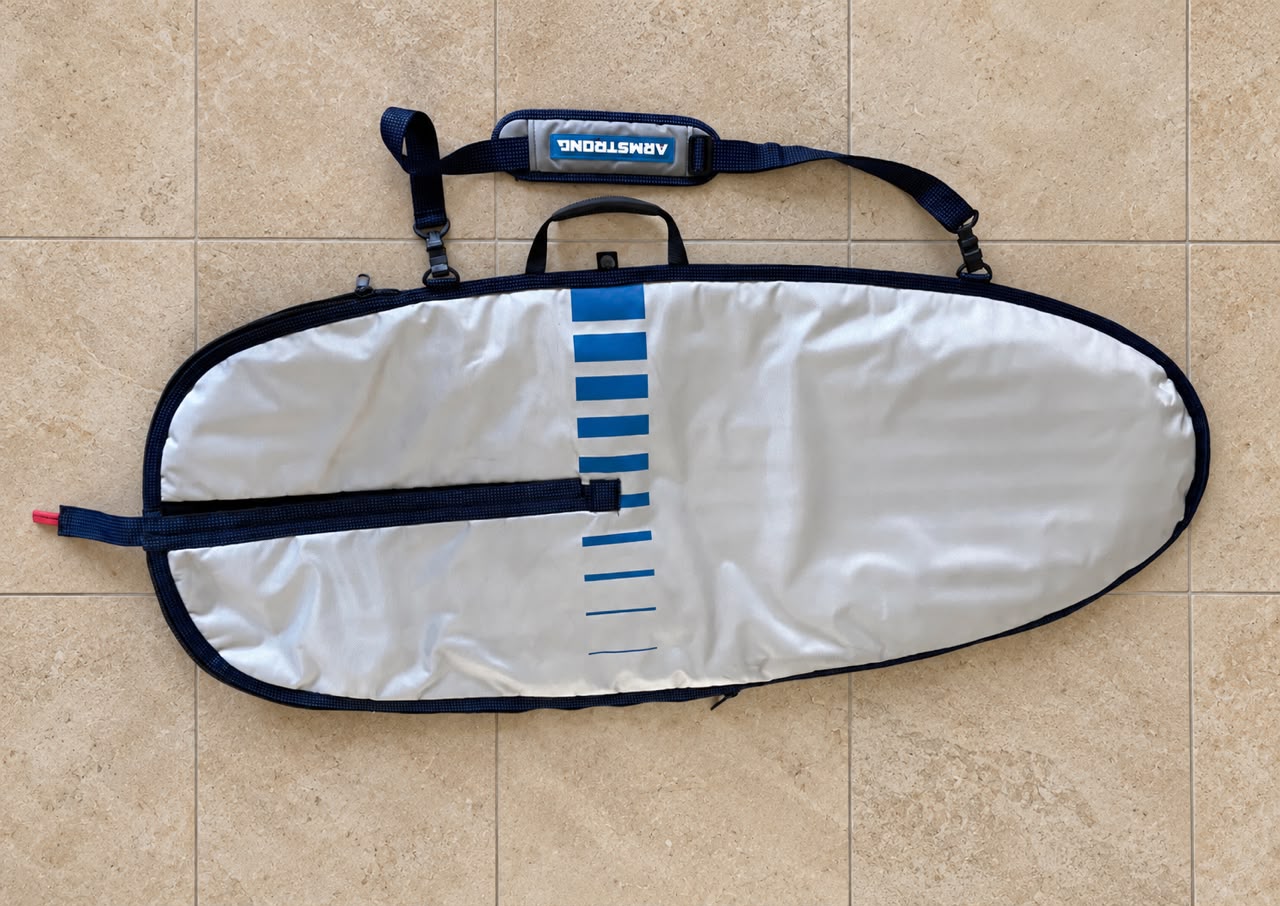
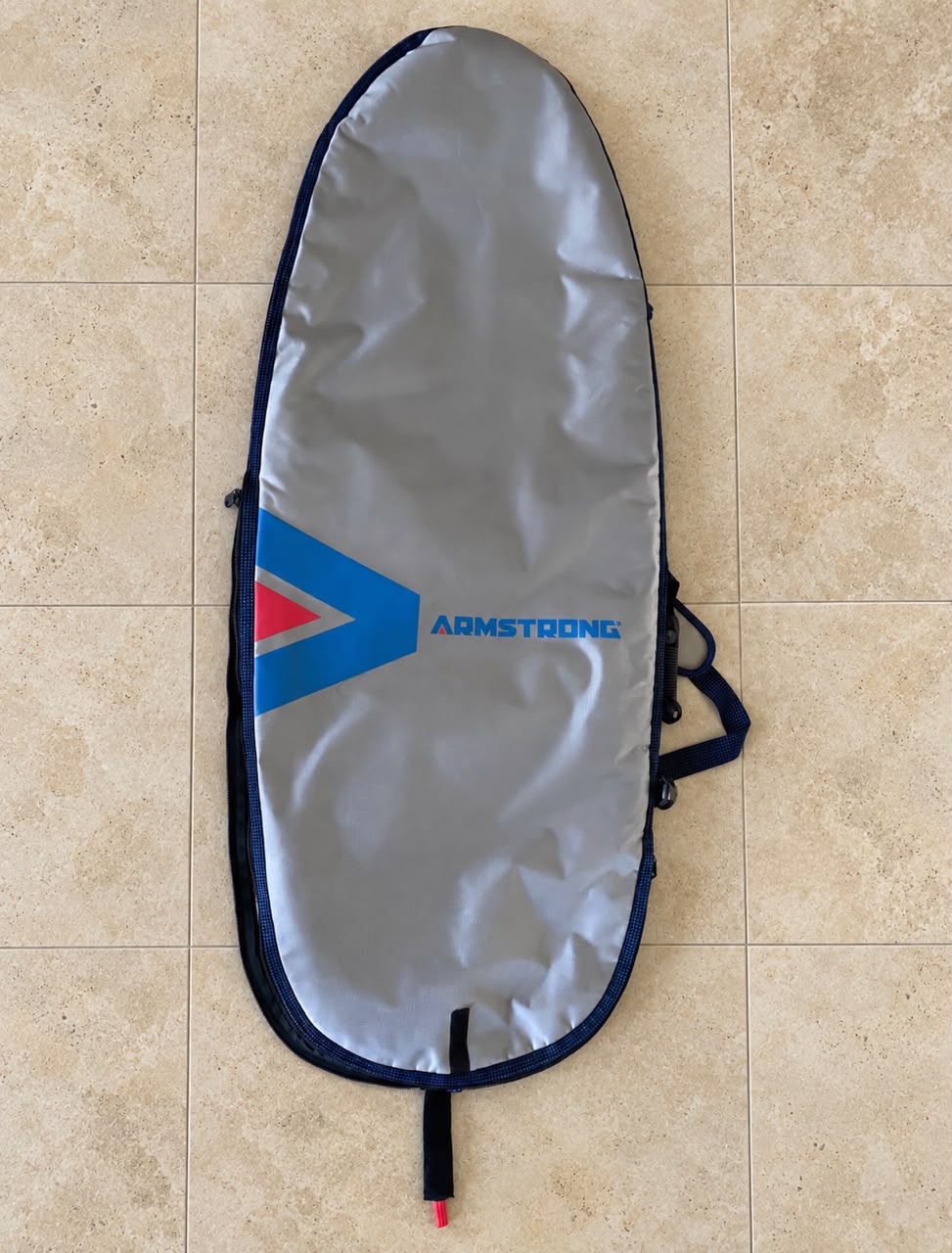
A padded bag provides useful protection during transport.
Preventing impact damage is much easier than repairing structural cracks later.
Transport
The board should be secured during travel.
It should not move freely inside a vehicle.
Heavy gear should not be stacked on top.
If the foil is removed, the mast track should remain protected from loose hardware.
Transport protection helps preserve the like-new condition.
Storage
The board should be stored in a dry area away from excessive heat.
Direct sunlight should be avoided during long-term storage.
The board should not be left under heavy objects.
If stored in a bag, both the board and bag should be dry.
Trapped moisture can contribute to odor or material wear.
Real-World Value
The strongest advantage of this board is the combination of compact performance and excellent condition.
Its 4’5″ length keeps handling responsive.
The 34-liter volume provides useful flotation for skilled riders.
Its history of wake learning and prone use demonstrates practical versatility.
The board can suit riders progressing from larger platforms or experienced riders looking for something smaller and more direct.
Long-Term Ownership
With regular rinsing, careful mounting, protected transport, and sensible storage, the board can provide many more sessions of reliable use.
The mast track should be checked regularly.
The deck pad should remain clean.
The rails should be protected from impact.
Hardware should be kept free from corrosion.
Because the board is already in like-new condition, maintaining these habits can help preserve both performance and resale value.
For riders who want a compact platform with direct feedback, responsive handling, and proven wake and prone capability, this 34-liter board offers a strong combination of performance, condition, and long-term usability.
Here is Section 3 focused on progression, real-world riding technique, setup refinement, durability checks, care, transport, and long-term ownership without keyword stuffing.
Section 3 – Progression, Riding Technique, Setup Refinement, Durability, and Long-Term Care
A compact 34-liter foil board becomes more rewarding as the rider develops better balance, smoother takeoff timing, stronger pumping rhythm, and more precise control over pitch and roll. Its small 4’5″ platform keeps excess swing weight low and creates a direct relationship between foot pressure and foil response.
Because this particular board is in like-new condition and has already been used successfully for wake foil learning and prone sessions, it offers a practical foundation for someone who wants to continue progressing without stepping into a heavily worn setup.
Developing Better Balance
Balance should be developed gradually.
The rider should begin by learning how the board reacts to small changes in body position.
Large movements can make a compact platform feel unstable.
Small, controlled adjustments work better.
The rider should keep the upper body relaxed and allow the legs to manage most of the corrections.
Over time, these movements become more automatic.
Understanding Pitch Control
Pitch refers to how the nose rises or drops.
The rider controls this primarily through front-foot and rear-foot pressure.
Too much rear pressure can cause the foil to climb too quickly.
Too much front pressure can keep the board low or push it back toward the water.
The best approach is to make subtle adjustments.
Smooth pressure changes create better control than abrupt movements.
Understanding Roll Control
Roll determines how the system leans from side to side.
This is important during carving.
The rider should avoid forcing the board sharply onto an edge.
Instead, weight should shift progressively through the feet.
The foil then follows the rider’s input.
Because the board is compact, these changes can feel immediate.
That responsiveness is one of the reasons smaller boards appeal to progressing riders.
Wake Foil Progression
Wake riding is useful for learning because the pull from the boat creates consistent forward speed.
Once the rider becomes comfortable standing and maintaining ride height, attention can shift toward reducing dependence on the rope.
The goal is to become more efficient with body position and foil control.
As confidence increases, the rider can focus on pumping, carving, and staying in the wake with less external support.
Prone Progression
Prone foiling requires a different skill set.
The rider must combine paddling, wave timing, takeoff positioning, and foil control.
The short length keeps the board maneuverable once it leaves the water.
However, successful takeoff depends on entering the wave with enough speed.
The rider should avoid trying to force lift too early.
A controlled transition produces a smoother result.
Takeoff Timing
Good takeoff timing is more important than aggressive movement.
The rider should allow the foil to begin creating lift as speed increases.
Once lift becomes noticeable, pressure can be adjusted gradually.
If the board rises too quickly, front-foot pressure can stabilize it.
If the board remains low, a slight rearward shift may help.
These adjustments should remain small.
Managing Ride Height
Ride height should remain stable.
Flying too high increases the risk of ventilation or losing control.
Flying too low increases the chance of touching down.
The rider should aim for a comfortable middle position.
This provides enough clearance while leaving room for correction.
As experience grows, the rider can maintain height with less conscious effort.
Pumping Technique
Pumping depends on rhythm rather than brute force.
The rider should coordinate leg movement with the foil’s natural lift cycle.
The board and foil should move smoothly through repeated compression and release.
Large vertical movements usually waste energy.
A smaller, more controlled rhythm often produces better forward speed.
The compact board helps because there is less swing weight to move.
Maintaining Momentum
Momentum is critical when connecting wake sections or small swell.
The rider should avoid slowing excessively during turns.
A smooth line helps preserve speed.
When pumping is needed, it should be introduced before the system loses too much momentum.
Waiting until speed has nearly disappeared makes recovery harder.
Anticipation is more efficient than trying to rebuild speed from nothing.
Carving Technique
Carving should begin with good entry speed.
The rider should look toward the intended exit point.
Weight can then shift gently through the feet.
The body should remain centered over the foil.
Excessive upper-body rotation can disturb balance.
A smooth carve feels controlled rather than forced.
As the rider gains confidence, turn radius can be tightened gradually.
Recovering From Touchdowns
Touchdowns are part of learning.
When the board contacts the water, the rider should stay relaxed.
If speed remains adequate, the foil may recover quickly.
Abrupt body movement can make the situation worse.
The rider should keep pressure balanced and allow the board to release from the surface.
The compact shape can make recovery feel quick when momentum is maintained.
Mast Position Fine-Tuning
Mast position should be adjusted gradually.
Moving it forward typically changes the balance toward greater front-wing influence.
Moving it backward generally reduces that effect.
Changes should be small.
A few millimeters can sometimes alter stance pressure significantly.
The correct position should allow the rider to maintain level flight without excessive effort from either foot.
Finding the Best Stance
Foot position should support the foil’s natural balance.
The rider should begin around the central balance area and make small adjustments.
If constant front-foot pressure is required, the setup may need refinement.
If the nose feels difficult to control, the stance or mast position may also need attention.
A balanced setup reduces fatigue.
Matching the Board to Rider Weight
Volume should always be considered relative to rider weight.
A lighter rider may find the board easier to manage on the surface.
A heavier rider may need stronger technique during starts.
The 34-liter size is compact, so it rewards riders who already have some experience.
It can still be useful for progression, but it should be matched realistically to skill and body weight.
Matching the Board to Conditions
Calm water makes learning easier.
Choppy water adds instability.
Small clean swell can be ideal for practicing prone takeoffs.
Wake sessions provide controlled speed and repeatability.
The board can work across different conditions, but the rider should choose sessions that match current skill level.
Progress usually comes faster when conditions are manageable.
Foil Compatibility Considerations
The board is only one part of the system.
The mast, fuselage, front wing, rear stabilizer, and rider setup all influence performance.
A larger foil may provide more lift and stability.
A smaller foil may feel faster and more responsive.
The board’s compact design allows those differences to be felt clearly.
The rider should choose foil components according to skill level and intended use.
Inspecting the Mast Track
The mast track should be checked regularly.
There should be no visible movement, cracking, or compression around the mounting area.
The track should remain clean.
Sand should be removed before attaching hardware.
Bolts should thread smoothly.
If anything feels abnormal, mounting should stop until the cause is identified.
Checking the Deck
The deck should remain firm.
Soft areas can indicate compression or structural issues.
The pad should also be inspected.
Edges should remain bonded.
Any lifting section should be addressed before it becomes larger.
Regular inspection helps preserve the like-new condition.
Rail Inspection
The rails should be checked for chips, cracks, or impact marks.
Small cosmetic marks are not always serious, but structural damage should not be ignored.
The board should be dried fully before repair if the outer skin has been compromised.
Early attention prevents minor damage from becoming a larger issue.
Bottom Surface Care
The bottom should remain smooth and clean.
Deep scratches or dents can affect water release.
After each session, the rider should check for impact damage.
Salt, sand, and dirt should be removed.
The board should be dried before storage.
Hardware Maintenance
Mounting hardware should be rinsed after saltwater use.
Threads should remain clean.
Bolts should not be forced.
Corrosion can make future removal difficult.
The rider should use suitable hardware and avoid unnecessary overtightening.
The goal is secure attachment without damaging the track.
Fresh-Water Rinsing
Fresh-water rinsing is one of the easiest ways to extend the life of the equipment.
Salt should be removed from the board, track, bolts, and foil components.
The equipment should then be allowed to dry.
This simple routine helps protect hardware and keeps the board looking clean.
Drying the Board
The board should not be stored wet.
Moisture trapped inside a bag can create odor and accelerate material wear.
After rinsing, it should be dried in a shaded, ventilated area.
Direct intense heat should be avoided.
Once dry, it can be placed into a protective bag.
Protecting the Board From Heat
Excessive heat should be avoided.
The board should not be left inside a closed vehicle for long periods in strong sun.
Heat can increase internal pressure.
A cool storage environment is preferable.
Direct sunlight during storage should also be minimized.
Transport Preparation
Before transport, the foil should normally be removed unless the vehicle setup allows safe carriage.
The mast track should be protected.
Loose bolts should not be left where they can scratch the board.
The board should be placed in a padded bag.
Straps should be secure without being overtightened.
Vehicle Transport
Inside a vehicle, the board should be positioned where heavy equipment cannot fall onto it.
If carried externally, secure straps should be used.
Sharp strap buckles should not rest directly against the board.
Movement during travel should be minimized Used Armstrong Wing Surf FG 34L.
Careful transport helps preserve the rails, deck, and foil mounting area.
Long-Term Storage
For longer storage periods, the board should be clean and completely dry.
The foil should be removed.
Hardware should be rinsed and stored separately.
The board should rest without heavy pressure on one area.
A dry, shaded location is ideal.
The board bag should also be clean.
Maintaining Like-New Condition
Because this board is already in excellent condition, preservation should be straightforward.
Avoid rocks and concrete during setup.
Use a padded surface when assembling the foil.
Rinse after saltwater sessions Used Armstrong Wing Surf FG 34L.
Inspect the mast track regularly Used Armstrong Wing Surf FG 34L.
Keep the rails protected.
Transport it in a quality bag.
These habits can help maintain both performance and appearance.
When Repair Is Needed
Repair should be considered when there is a visible crack, deep impact, soft deck area, damaged mast track, or any sign that water may have entered the structure.
Small cosmetic marks may only require monitoring.
Structural damage should be handled properly.
Continuing to ride a damaged board can increase the extent of the problem.
Long-Term Riding Value
A compact foil board can remain useful even as skills improve.
Beginners may initially use Used Armstrong Wing Surf FG 34L it in controlled wake conditions.
Later, the same platform can become a more performance-oriented tool for prone riding, pumping, and carving Used Armstrong Wing Surf FG 34LUsed Armstrong Wing Surf FG 34L.
That progression gives a smaller board strong long-term value Used Armstrong Wing Surf FG 34L.
Instead of becoming obsolete quickly Used Armstrong Wing Surf FG 34L, it can become more enjoyable as technique develops.
Overall Performance Perspective
The strongest quality of this 34-liter board is how directly it connects rider movement to foil response Used Armstrong Wing Surf FG 34L.
Its compact size keeps handling lively Used Armstrong Wing Surf FG 34L.
The volume provides useful flotation without making the platform feel bulky.
The shape supports clean water release Used Armstrong Wing Surf FG 34L.
The construction gives the board a firm and precise feel Used Armstrong Wing Surf FG 34LUsed Armstrong Wing Surf FG 34L.
Combined with careful setup, the result is a board capable of supporting meaningful progression.
Final Ownership Perspective
For a rider who values compact dimensions, responsive handling, and a clean used condition, this board offers a strong platform for continued progression Used Armstrong Wing Surf FG 34L Used Armstrong Wing Surf FG 34L.
Its wake-learning history demonstrates practical accessibility, while its prone use shows that it is capable of more technical riding.
With careful rinsing, protected transport, clean hardware, regular mast-track inspection, and sensible storage, the board can remain reliable Used Armstrong Wing Surf FG 34LUsed Armstrong Wing Surf FG 34L and attractive for many future sessions Used Armstrong Wing Surf FG 34L.
As rider skill develops, its small size and direct feel can become even more valuable, making it a practical choice for anyone seeking a responsive board with long-term performance potential Used Armstrong Wing Surf FG 34LUsed Armstrong Wing Surf FG 34L.
Be the first to review “Used Armstrong Wing Surf FG 34L”
Related products
Used Product
Used Product
Used Product
Used Product
Used Product
Used Product
Used Product
Used Product
Reviews
There are no reviews yet.