
Used Armstrong High Speed 1050 Front Wing

€220.00
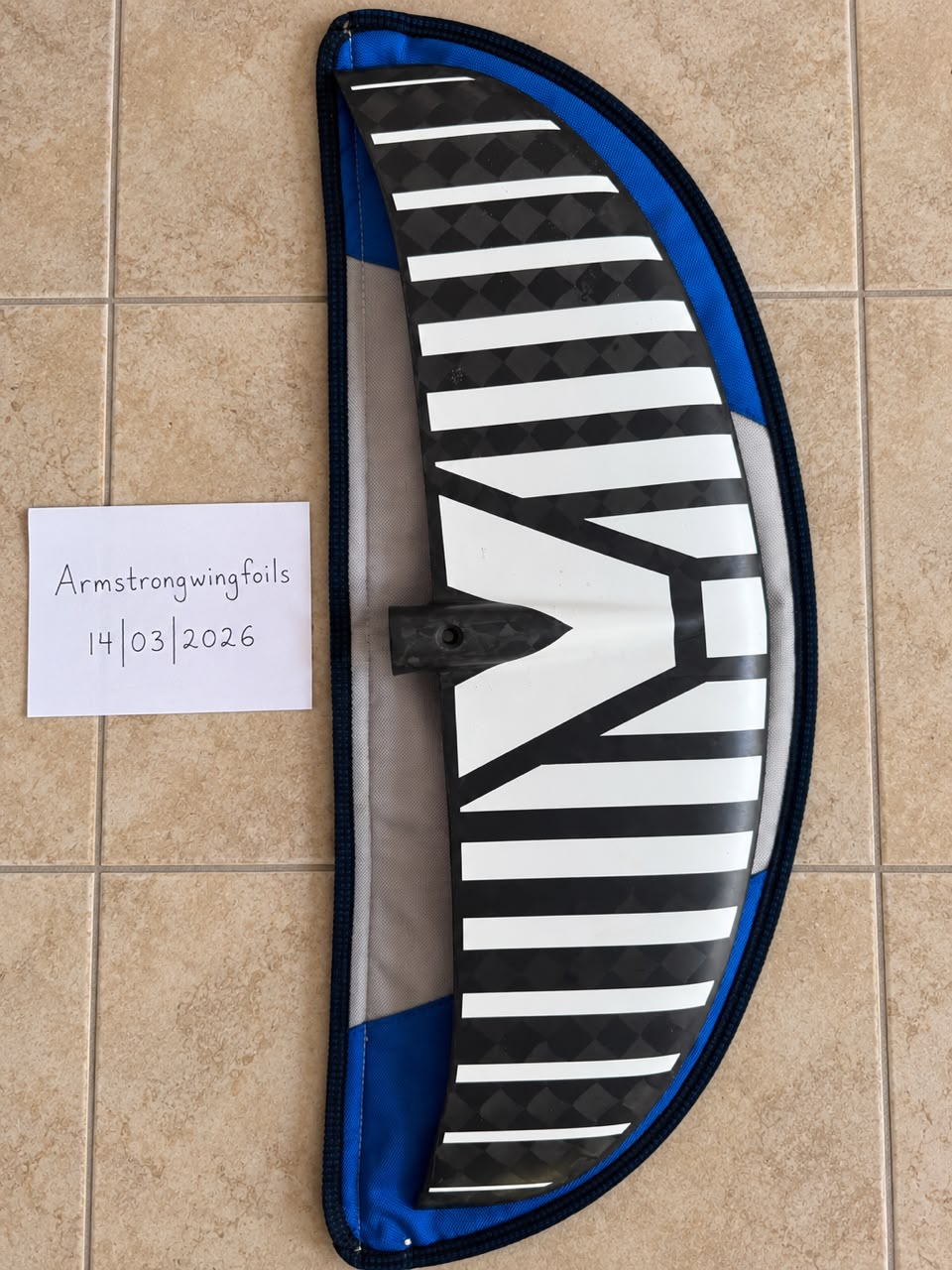
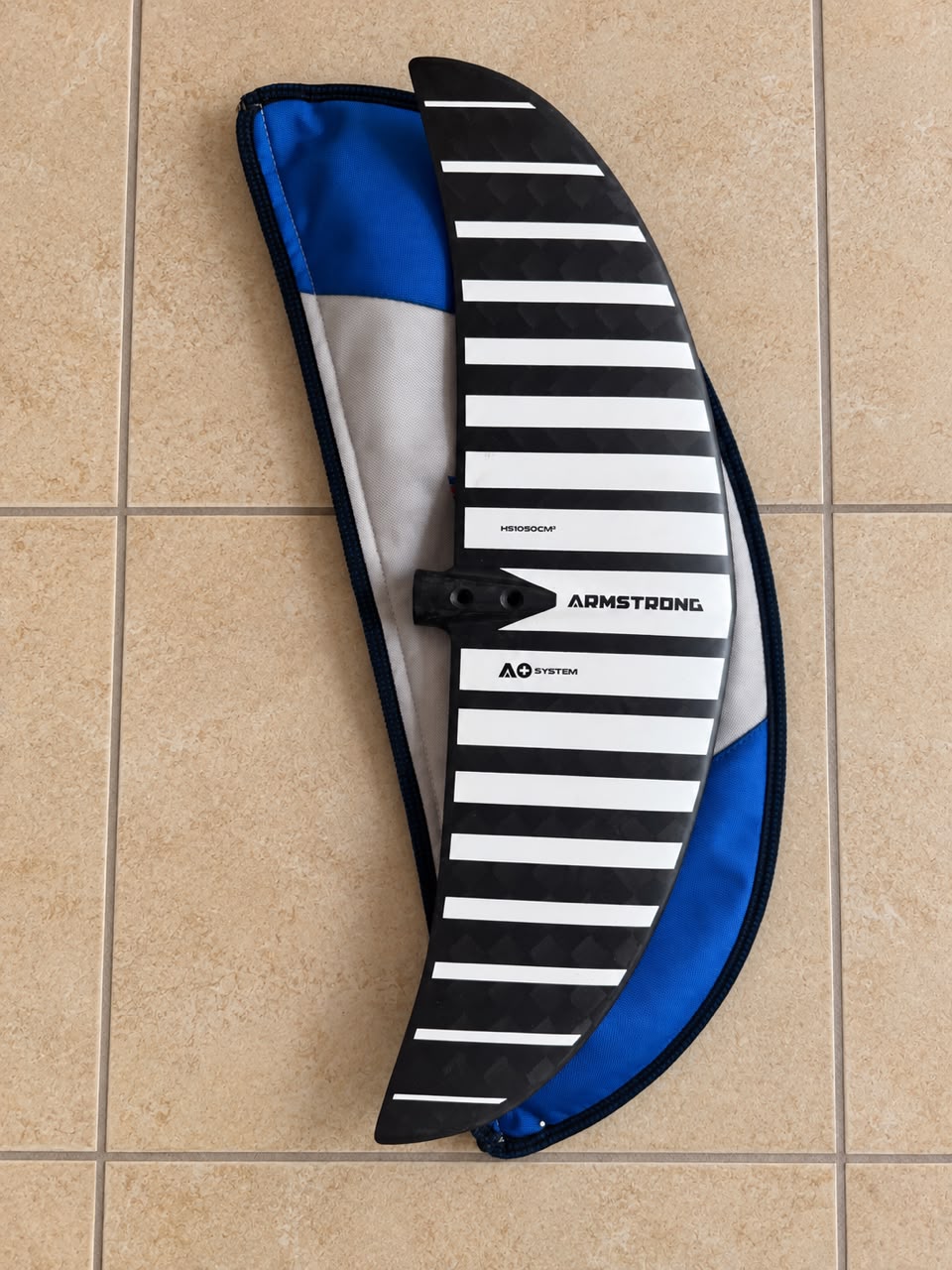
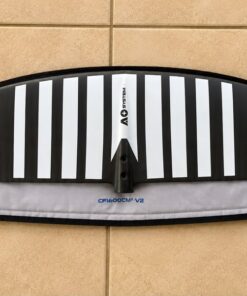
The Used Armstrong High Speed 1050 Front Wing is a premium performance foil wing in perfect, like-new condition with no damage. It is an excellent option for riders looking for a fast, responsive, and efficient front wing with strong carving ability, smooth glide, and dependable high-speed control.
With approximately 1050 cm² of front-wing area, the HS1050 offers a balanced combination of lift and performance. It is compact enough to feel agile and precise, yet it still provides useful stability for confident progression. The wing responds quickly to rider input, making it well suited to carving, pumping, linking sections, and carrying speed through changing conditions.
Its lightweight carbon construction helps provide a stiff and direct feel, allowing rider movements to transfer efficiently through the foil system. The clean leading edge, undamaged tips, and intact carbon surface help preserve the hydrodynamic profile and intended riding characteristics.
Important Details
- Model: Armstrong High Speed 1050
- Type: Front foil wing
- Condition: Perfect / like new
- Damage: None
- Wing Area: Approximately 1050 cm²
- Construction: Lightweight carbon performance construction
- Best For: Surf, wake, wing, kite, and performance-oriented foiling
- Performance: Fast, stable, responsive, and agile
- Ride Feel: Direct, precise, and efficient
- Strengths: Strong glide, carving response, pumping efficiency, and controlled speed
Overall, this is a clean, high-performance front wing with no damage and plenty of life remaining, ideal for riders who want a proven foil with excellent speed, control, and long-term progression potential.
Used Armstrong High Speed 1050 Front Wing – Like-New Carbon Performance Foil in Perfect Condition
Used Armstrong High Speed 1050 Front Wing Overview
The Used Armstrong High Speed 1050 front wing is a proven performance hydrofoil wing designed for riders who want a strong balance of speed, stability, agility, glide, and precise control. This particular wing is in perfect condition, has no damage, and presents in like-new condition, making it an especially attractive option for buyers who want premium Armstrong performance without the wear commonly associated with used foil equipment.
Armstrong’s HS range was positioned as a progression step above its more forgiving carving range, offering more speed, glide, and reactivity for intermediate through advanced riders. The manufacturer’s own foil guidance lists the HS1050 across surf, kite, wake, tow, wing, and windsurf disciplines depending on rider weight and conditions.
Perfect Condition With No Damage
Condition is one of the most important factors when purchasing a used front wing.
This HS1050 is described as being in perfect condition, with no damage and a like-new appearance.
That is particularly valuable because the leading edge, wing tips, mounting area, and carbon skin all contribute directly to hydrodynamic performance.
A clean front wing should preserve the profile originally intended by the designer.
There are no disclosed repairs, cracks, impact marks, or structural problems on this example.
For someone browsing armstrong foils for sale, condition this clean can make a significant difference in long-term value.
High-Speed Performance
The HS1050 was created as a performance-oriented wing rather than a large beginner foil.
Armstrong’s High Speed range was developed to provide greater speed, glide, and reactivity than the brand’s more forgiving carving models.
That makes the 1050 especially appealing to riders who already understand basic foil control and want sharper performance.
As speed increases, the wing is designed to remain stable rather than becoming excessively nervous.
This gives the rider confidence to carve harder, carry more speed through turns, and explore faster lines.
Fast, Stable, Responsive, and Agile
The HS1050 has been described as fast, stable, responsive, agile, and capable of strong glide.
Those characteristics make it particularly suitable for carving waves and performance-oriented riding.
The benefit of this combination is balance.
A very fast foil can become demanding if stability disappears.
A very stable foil can feel slow if it produces too much drag.
The HS1050 sits between those extremes.
It provides enough control to remain predictable while still responding quickly to rider input.
Glide and Momentum
Efficient glide allows the rider to carry momentum between sections.
This matters in surf, wake, and wing riding because the rider may need to maintain speed through areas where external power decreases.
A front wing with good glide requires less aggressive input to keep moving.
The rider can therefore concentrate on line choice and transitions rather than constantly rebuilding speed.
This is one reason the HS range became an important progression platform before Armstrong’s later HA Front Foil designs.
HS1050 Compared With an HA Front Foil
A HA Front Foil uses a higher-aspect design aimed at greater glide efficiency and more advanced performance.
Armstrong positions its high-aspect families above the HS range in terms of rider experience and glide focus.
Therefore, buyers looking for an HA Front Foil for sale should understand that the HS1050 occupies a slightly different category.
It provides high performance while retaining a more compact and reactive character.
For many riders, that can make it easier to carve aggressively than an extremely high-aspect wing.
Surf Foil Performance
For surf foil riding, the HS1050 is particularly appealing in medium to larger waves.
Armstrong’s historical rider charts recommend the 1050 across multiple surf categories depending on rider weight and wave size.
A rider using a compact surf foil board or surf foilboard can benefit from the wing’s responsive turning behavior.
Because the wing carries speed efficiently, the rider can draw longer lines and still retain enough agility for directional changes.
Wing Foil Use
The HS1050 is also relevant to armstrong wing foil setups.
Armstrong’s sizing guidance includes the HS1050 within its wing-foil recommendations for several rider-weight categories.
Paired with an armstrong wing or other suitable handheld wing, the HS1050 can deliver a more performance-focused feel than a very large low-speed foil.
An experienced rider can use the wing’s speed and glide to improve transitions, carving, and powered riding.
Wake and Tow Performance
Wake riding is another strong application.
Armstrong’s foil chart includes the HS1050 among its wake recommendations across several rider weights.
Behind a boat, the consistent forward speed allows the rider to focus on pitch control, pumping, and carving.
The wing is also included in Armstrong’s tow-foil recommendations, where speed control and stability are especially important.
Kite Foiling
The HS1050 also appears in Armstrong’s kite-foil recommendations across multiple rider-weight ranges.
For kite armstrong setups, a smaller performance wing can provide excellent speed and quick response.
However, rider experience is important because a more reactive foil requires better pitch and roll control than a large beginner-oriented wing.
Carbon Construction
Armstrong complete HS1050 foil packages have been described as using high-density foam cores wrapped with Aramid and high-modulus carbon in the wing structure.
This construction aims to produce a strong, stiff, and lightweight component.
Stiffness is essential because rider movement must transfer through the mast and armstrong fuselage into the hydrofoil front wing without excessive flex.
A rigid system gives the rider clearer feedback.
Mast Pairing
The HS1050 can form part of a complete setup using an armstrong performance mast or other compatible Armstrong mast system.
Buyers researching armstrong integrated foil masts price or armstrong integrated foil masts price 2025 should remember that mast stiffness and length can significantly influence how the front wing feels.
The front wing determines much of the lift and carving character, while the mast affects leverage, stiffness, and ride height.
Relationship to the Foil Board
A front foil works together with the board rather than independently.
An armstrong foil board, armstrong foil boards, or another suitable foiling board provides the platform from which rider input is transferred into the foil system.
Board volume, mast placement, stance, and foil choice all influence the final riding experience.
The same HS1050 can feel noticeably different beneath different foiling boards.
Downwind and Midlength Comparisons
Riders researching an armstrong downwind board, armstrong downwind boards, armstrong downwind foil, armstrong downwind foil board, armstrong v1 downwind board, armstrong midlength, or armstrong mid length board are often looking for efficiency and glide.
Those boards can be paired with different foil categories depending on conditions and rider goals.
However, the HS1050 is generally more naturally associated with surf, wing, wake, kite, and tow performance than with the extreme low-drag efficiency targeted by modern dedicated downwind front wings.
SUP Foiling
The HS1050 can also be used for certain foil for sup applications.
Armstrong’s historic recommendations include the HS1050 for larger-wave SUP foiling in several rider-weight categories.
Because SUP boards create different takeoff dynamics from small prone boards, rider weight and wave energy become especially important.
The wing’s blend of stability and speed can work well when enough energy is available.
Hydrofoil Lift Stability
Hydrofoil lift stability depends on more than front-wing area.
Rider weight, mast position, rear stabilizer, fuselage length, speed, and technique all affect the final result.
The HS1050 provides a performance-focused balance of lift and speed rather than maximum low-speed flotation.
That is why it works best for riders who want responsive handling and are comfortable managing foil height.
Why Choose This Used HS1050?
This particular wing stands out because it combines proven performance with unusually clean used condition.
It is in perfect condition, has no damage, and looks like new.
That means the buyer gains the speed, carving ability, glide, stability, and responsiveness associated with the HS platform without taking on a visibly worn front wing.
For riders exploring armstrong foiling, surf foil boards, wing foil front wing options, or a quality hydrofoil front wing, this HS1050 offers a strong combination of condition, versatility, precision, and performance.
Section 2 – Real-World Performance, Speed, Carving, Glide, and Practical Ownership
This front wing is designed for riders who already understand the fundamentals of foil control and want a setup that feels faster, more reactive, and more efficient across a broad range of conditions. Its strongest qualities become obvious once the rider starts carrying speed, linking turns, pumping between sections, and using small body movements to control pitch and roll.
Because this particular wing is in perfect, like-new condition with no damage, the hydrodynamic surfaces remain clean and consistent. That matters because the leading edge, tips, underside, mounting surfaces, and overall profile all contribute directly to how smoothly the foil moves through the water.
Speed Across the Water
One of the most noticeable characteristics is the way the wing carries speed.
As the rider accelerates, the foil feels efficient rather than excessively draggy.
This makes it easier to maintain momentum once the board is flying.
A wing that carries speed well allows the rider to focus more on line choice and less on constantly rebuilding acceleration.
The result is a smoother and more confident ride.
High-Speed Control
Speed is only useful when the foil remains predictable.
At higher pace, the rider needs a wing that does not become overly nervous.
This model offers a controlled feel that allows experienced riders to push harder while maintaining confidence.
Good high-speed control helps during fast carving, powered riding, and long gliding sections.
The rider can make adjustments without feeling that the foil is reacting unpredictably.
Carving Performance
Carving is one of the main reasons riders choose a wing of this size and shape.
The compact outline responds quickly when pressure changes from one side to the other.
The rider does not need to exaggerate body movement.
A smooth lean through the hips and legs is usually enough to initiate a turn.
The front wing then follows the rider’s input with a direct and responsive feel.
Tight Turns
Tighter turns require both speed and control.
The rider should enter the turn with enough momentum.
Weight should then move gradually toward the inside of the arc.
The board and foil should remain balanced.
Abrupt upper-body movement can disturb the line.
A smooth approach creates better control and helps maintain speed through the exit.
Drawn-Out Carves
The wing is equally capable of longer, more flowing turns.
A drawn-out carve can be useful when riding open faces or connecting different parts of a wave.
The rider can use a more progressive lean and allow the foil to carry momentum naturally.
This makes the ride feel fluid rather than forced.
Glide Efficiency
Glide is one of the most important performance characteristics of a foil.
A wing that maintains momentum efficiently allows the rider to travel farther with less input.
This becomes especially valuable when moving between sections with reduced power.
The rider can carry speed through weaker areas rather than immediately losing lift.
Good glide also reduces fatigue because less aggressive pumping is required.
Pumping Technique
Pumping should be controlled and rhythmic.
The rider should avoid making large vertical movements.
A more efficient approach is to coordinate the legs and hips with the foil’s natural lift cycle.
Pressure is applied and released smoothly.
The goal is forward momentum, not simply moving the board up and down.
A lighter and faster wing rewards good timing.
Pumping Between Sections
When connecting sections, timing becomes especially important.
The rider should begin pumping before speed drops too far.
Waiting until the foil is almost stalled makes recovery much harder.
A good rider anticipates the loss of power and starts creating momentum early.
This allows the foil to remain higher in the water and maintain a smoother line.
Pitch Control
Pitch refers to the movement of the nose up and down.
This is controlled mainly through foot pressure.
Too much rear-foot pressure can cause the foil to rise quickly.
Too much front-foot pressure can push it down.
The rider should use small adjustments.
The faster the foil is moving, the more important subtle control becomes.
Roll Control
Roll determines how the system leans from side to side.
This is central to carving.
The rider should keep the upper body relaxed and allow the legs to manage most of the movement.
A responsive front wing reacts quickly to pressure changes.
Therefore, smooth inputs are more effective than abrupt corrections.
Maintaining Ride Height
Consistent ride height improves both speed and control.
Flying too high can increase the risk of losing stability.
Flying too low increases the chance of touching down.
The rider should aim for a comfortable middle position.
As experience grows, these corrections become smaller and more automatic.
A well-balanced foil setup makes this easier.
Low-Speed Behavior
Although the wing is performance-oriented, it still provides useful lift at lower speed when matched correctly to rider weight and conditions.
However, the rider should not expect the same slow-speed support as a much larger front wing.
Some forward speed is necessary.
This encourages better technique and smoother acceleration.
Once sufficient speed is achieved, the wing becomes much more efficient.
Takeoff Characteristics
Takeoff should be progressive.
The rider should allow the foil to begin generating lift naturally as speed increases.
Trying to force the system upward too early can create instability.
A smooth takeoff comes from balanced foot pressure and controlled acceleration.
The rider should remain centered as the board leaves the water.
Wake Riding
Behind a boat, the wing can provide an excellent platform for developing precision.
The consistent pull gives the rider time to focus on ride height and carving.
Once the rope is released, glide becomes more important.
The rider can then use pumping and wake energy to maintain speed.
This makes wake sessions useful for progression.
Surf Riding
In surf, the rider needs a combination of glide and responsiveness.
The wing must carry speed between sections while still turning quickly enough to follow the shape of the wave.
A compact performance design helps with this balance.
The rider can carve across the face, pump through weaker areas, and redirect the foil without excessive effort.
Wing-Powered Riding
When powered by a handheld wing, the rider gains an external source of acceleration.
This allows the foil to reach higher speeds more easily.
The front wing then needs to remain stable as power increases.
The rider should manage wing pressure carefully and avoid overpowering the setup.
Smooth power delivery creates better control.
Kite-Powered Riding
With kite power, speed can increase rapidly.
The rider should remain relaxed.
A stiff posture can make the foil feel more nervous.
The front wing works best when the rider allows it to move naturally.
Small corrections are usually enough.
This can create a very fast and efficient ride.
Rear Stabilizer Influence
The rear stabilizer changes how the front wing feels.
A larger rear wing can create a more stable and locked-in sensation.
A smaller one can make the foil feel looser and more responsive.
Neither setup is automatically better.
The correct choice depends on riding style and experience.
The rider should change one component at a time when tuning.
Fuselage Influence
Fuselage length also affects stability and turning behavior.
A longer fuselage can make pitch control feel more stable.
A shorter fuselage can increase responsiveness.
The front wing therefore should not be evaluated in isolation.
The complete foil system determines the final riding feel.
Mast Influence
Mast stiffness is especially important at higher speeds.
A stiff mast reduces unwanted flex.
This helps the rider feel what the front wing is doing.
Mast length also influences leverage and ride height.
A longer mast provides more clearance, while a shorter mast can feel easier during progression.
Board Relationship
The board also affects the overall feel.
A compact board generally creates a more direct connection to the foil.
A larger board may add stability before takeoff.
Once airborne, the front wing provides most of the lift and much of the turning character.
The rider should therefore consider board size, foil setup, and riding goals together.
Matching Rider Weight
Rider weight changes how the wing performs.
A lighter rider may achieve lift at lower speed.
A heavier rider may need more power or forward movement.
That does not mean the wing is unsuitable.
It simply changes the operating range.
Choosing conditions and foil components that suit rider weight is important.
Matching Conditions
This wing performs best when there is enough energy to keep it moving.
That energy can come from wind, wave power, wake, or kite pull.
In stronger conditions, the speed potential becomes more obvious.
In lighter conditions, the rider may need more precise technique.
The setup should therefore match both skill level and local conditions.
Leading-Edge Care
The leading edge should remain smooth.
Even small impacts can affect the surface.
The rider should avoid dragging the wing across sand, rocks, or concrete.
After each session, the leading edge should be inspected.
Because this example is currently damage-free, careful handling can preserve its clean condition.
Wing-Tip Protection
Wing tips are vulnerable during transport and setup.
The foil should not be rested carelessly on hard surfaces.
A padded cover can help protect the tips.
Small chips should be addressed early.
Maintaining smooth tips helps preserve both appearance and hydrodynamic efficiency.
Mounting Surface Care
The mounting area should remain clean.
Sand and salt should be removed before assembly.
The connection should sit flat and secure.
Bolts should tighten evenly.
Excessive force is unnecessary.
A clean, properly assembled connection improves reliability and protects the carbon surfaces.
Hardware Maintenance
Bolts and other hardware should be rinsed after saltwater use.
Threads should remain clean.
Corrosion should not be allowed to build up.
If a bolt begins to feel rough, it should be inspected before being forced.
Good hardware care makes setup easier and prevents unnecessary damage.
Fresh-Water Rinsing
Fresh-water rinsing should become routine.
Salt residue can remain around the mounting area and hardware.
The foil should be rinsed thoroughly after use.
It should then dry completely before storage.
This simple maintenance habit helps preserve long-term condition.
Transport
The front wing should be protected during transport.
A padded cover is ideal.
The wing should not be placed underneath heavy equipment.
Sharp objects should be kept away from the carbon surface.
The tips and leading edge should receive particular attention.
Storage
The wing should be stored in a dry, protected location.
It should not rest on its leading edge.
Heavy objects should not be stacked on top of it.
Excessive heat and direct sunlight should be avoided during long-term storage.
Proper storage helps preserve both shape and finish.
Inspecting for Damage
Regular inspection is important even when the wing appears perfect.
The rider should check the tips, leading edge, trailing edge, and mounting area.
Any crack, separation, or unusual softness should be investigated.
Small cosmetic marks are different from structural damage.
Early inspection helps prevent larger problems.
Preserving Like-New Condition
Because this wing currently has no damage, preserving that condition should be straightforward.
Use protective covers.
Avoid rocks and hard surfaces.
Rinse after saltwater sessions.
Keep hardware clean.
Transport the foil carefully.
These habits help maintain performance and resale value.
Long-Term Performance
A well-maintained front wing can provide many seasons of use.
Carbon construction is durable when treated properly.
The biggest risks usually come from impacts, poor transport, corrosion, or careless storage rather than normal water use.
Routine care can therefore make a substantial difference.
Overall Riding Value
The main strength of this front wing is its balance between speed, glide, control, and agility.
It is fast enough to feel exciting.
It is stable enough to remain predictable.
It turns quickly without feeling excessively nervous.
It also carries momentum efficiently.
That combination makes it useful across several performance-oriented riding styles.
Because this example remains in perfect, like-new condition with no damage, it offers strong value for a rider who wants a clean, responsive, and proven front wing with plenty of performance potential remaining.
Section 3 – Progression, Setup Tuning, Carving Technique, Durability, and Long-Term Ownership
A performance-oriented front wing becomes more rewarding as the rider develops stronger control over speed, pitch, roll, pumping rhythm, and setup balance. This model is especially well suited to riders who already understand the fundamentals and want to refine technique while gaining a faster, more responsive feel.
Because this particular wing is in perfect, like-new condition with no damage, it offers an excellent starting point for continued progression. Clean surfaces, intact tips, and an undamaged leading edge help preserve the profile and handling characteristics that the wing was designed to deliver.
Progressing Beyond Basic Foil Control
Once a rider is comfortable taking off, maintaining height, and flying in a straight line, the next stage is developing efficiency.
That means using less unnecessary movement.
The rider should focus on smoother pressure changes, better timing, and more accurate body positioning.
A responsive wing rewards this approach because it reacts quickly to subtle inputs.
The goal is not to make larger movements, but to make better ones.
Developing Consistent Pitch Control
Pitch determines how high the foil flies.
The rider should manage it with small changes in front-foot and rear-foot pressure.
Too much rear pressure can cause a sudden climb.
Too much front pressure can push the foil back toward the water.
The best results come from controlled adjustments.
As confidence improves, the rider should be able to maintain a stable ride height without constantly thinking about it.
Developing Better Roll Control
Roll determines how the foil leans from one side to the other.
This is essential during carving.
The rider should initiate turns through the legs and hips.
The upper body should remain calm.
Large shoulder movements can create instability.
A smooth lean gives the front wing time to follow the rider’s line.
That makes the turn feel more predictable.
Entry Speed Into Turns
Good carving starts before the turn begins.
The rider should enter with sufficient speed.
If too much momentum is lost before leaning, the foil may drop.
A faster entry provides more energy through the carve.
This allows the rider to maintain lift and exit with better speed.
The rider should therefore think about the entire line rather than only the middle of the turn.
Tightening the Turn
Once basic carving feels comfortable, the turn radius can be reduced gradually.
The rider should avoid forcing the foil too aggressively.
Instead, more pressure can be applied progressively through the inside edge.
The body should remain centered over the system.
A tighter carve should still feel controlled.
If the foil becomes unstable, the rider may be asking too much from the turn.
Linking Multiple Carves
Connecting one carve directly into another requires rhythm.
The rider should finish the first turn with enough speed to begin the next one.
The transition between edges should remain smooth.
Abrupt changes can cause the foil to lose efficiency.
A clean sequence of linked turns feels fluid.
This is where the wing’s responsiveness becomes especially rewarding.
Pumping for Distance
Pumping should be used to maintain or rebuild momentum.
The rider should coordinate the legs with the foil’s natural movement.
The compression phase should be controlled.
The release phase should allow the foil to accelerate forward.
Large vertical bouncing wastes energy.
The most efficient technique usually involves a smaller, faster rhythm.
Pumping After a Turn
Speed often drops during aggressive carving.
A few well-timed pumps can help rebuild momentum after the exit.
The rider should start before the foil becomes too slow.
This reduces the effort needed.
Good riders learn to combine carving and pumping naturally rather than treating them as separate skills.
Pumping Through Weak Sections
When wave or wake energy decreases, pumping can keep the foil moving.
The rider should look ahead and anticipate the weaker section.
Waiting until speed is nearly gone makes recovery much harder.
Early pumping preserves lift and allows the rider to carry momentum into the next powered area.
Managing Speed
A faster front wing requires good speed awareness.
The rider should know when the foil is accelerating and when it is beginning to slow.
Small changes in stance can control this.
Too much rear-foot pressure can create excessive lift.
Too much front pressure can reduce speed.
The rider should aim for a balanced position where the wing can run efficiently.
Using Speed Instead of Fighting It
One of the biggest improvements in advanced riding comes from learning to work with speed.
The rider should not constantly try to slow the foil.
Speed creates stability and helps the wing glide.
The goal is to stay relaxed and let the foil carry momentum.
Controlled speed usually feels more stable than hesitant riding.
Rear Wing Tuning
The rear stabilizer can significantly change the personality of the setup.
A larger stabilizer can make the foil feel more stable and predictable.
A smaller stabilizer can make it feel looser and faster.
The rider should choose based on skill level and preferred style.
Only one change should be made at a time.
This makes it easier to understand how each adjustment affects the ride.
Fuselage Tuning
Fuselage length influences pitch stability and turning response.
A longer fuselage generally creates a more stable feel.
A shorter option can make the foil more reactive.
The front wing may therefore feel noticeably different depending on the fuselage it is paired with.
Setup should be treated as a complete system.
Mast Stiffness
Mast stiffness is especially important at higher speeds.
A flexible mast can introduce unwanted movement.
A stiffer mast provides more direct feedback.
This can make the front wing feel more precise.
The rider should also consider mast thickness and drag.
Every component influences the final balance between speed and control.
Mast Length
Mast length changes the riding experience.
A longer mast provides more clearance above the water.
This can be useful in chop and during steeper turns.
However, it also increases leverage.
A shorter mast can feel easier and more manageable.
The correct choice depends on skill, water depth, and local conditions.
Board Volume
Board volume affects the experience before takeoff more than it does once airborne.
A larger board provides more flotation.
A smaller board can feel more direct.
The rider should choose a board that suits both body weight and preferred discipline.
The front wing can perform very differently depending on how easily the rider can get the board moving.
Rider Weight
Rider weight has a major effect on lift and speed.
A lighter rider may achieve takeoff more easily.
A heavier rider may need stronger power or more forward speed.
The correct setup should account for this.
The front wing should not be judged in isolation.
The complete rider-and-equipment combination determines performance.
Wind Strength
In stronger wind, the rider can generate more speed easily.
This allows the front wing to show more of its high-speed potential.
In lighter wind, efficient technique becomes more important.
The rider may need a larger hand wing or a more lift-oriented setup.
Matching equipment to conditions improves both performance and enjoyment.
Wave Conditions
Clean waves provide a useful environment for carving.
The rider can use the face to generate speed.
Smaller waves may require more pumping.
Larger waves can increase acceleration quickly.
The rider should remain aware of how much lift the wing is producing as speed builds.
Controlled pressure becomes increasingly important.
Wake Conditions
Wake riding provides consistent energy.
This makes it excellent for technique development.
The rider can focus on turns, pumping, and height control without needing to manage wind.
Once the rope is released, the wake becomes the main source of power.
This is a good environment for learning how the wing carries speed.
Building Confidence at Higher Speed
Higher speed should be approached gradually.
The rider should not immediately push the setup to its limit.
Instead, speed can be increased session by session.
The goal is to remain relaxed.
Tension often creates unnecessary movement.
A calm rider can make smaller and more accurate corrections.
Inspecting the Leading Edge
The leading edge should be inspected regularly.
It should remain smooth.
Damage here can affect water flow.
Small chips should not be ignored.
The wing should never be dragged over sand, concrete, or rocks.
Because this example is currently damage-free, careful handling can preserve its condition.
Checking the Trailing Edge
The trailing edge should also remain intact.
It is thinner and can be vulnerable to impact.
The rider should avoid resting the wing carelessly on hard surfaces.
Any crack or separation should be examined.
A clean trailing edge helps maintain predictable flow.
Wing-Tip Care
The tips are especially vulnerable during transport.
They can be damaged by dropping the foil or allowing heavy equipment to press against them.
Protective covers are useful.
The tips should be inspected after travel.
Maintaining their shape helps preserve performance.
Mounting Area Inspection
The mounting surface should remain flat and clean.
Sand, salt, or debris can interfere with the connection.
The rider should inspect the area before assembly.
Bolts should tighten smoothly.
If the connection feels uneven, the problem should be corrected before riding.
Bolt Care
Hardware should be rinsed regularly.
Salt can cause corrosion.
Threads should remain clean.
A damaged bolt should be replaced rather than forced.
Careful hardware maintenance makes setup easier and protects the mounting system.
Rinsing After Use
The front wing should be rinsed with fresh water after saltwater sessions.
Special attention should be given to the mounting area.
Salt residue should not be allowed to build up.
After rinsing, the wing should be dried before storage.
This routine is simple but important.
Drying
The wing should be allowed to dry completely.
It should not be stored wet inside a cover.
Trapped moisture can contribute to corrosion around hardware.
A shaded and ventilated area is ideal.
Once dry, the wing can be stored safely.
Protective Covers
A padded front-wing cover is one of the best ways to preserve condition.
It protects the leading edge, tips, and carbon surface.
The cover should remain clean.
Sand trapped inside can create scratches.
The wing should be dry before long-term storage.
Transport in a Vehicle
The wing should be positioned so that it cannot move freely.
Heavy equipment should not be placed on top.
The tips should be protected.
If the wing is transported as part of an assembled foil, extra care is required because the complete system can create leverage during movement.
Disassembly is often safer.
Storage Position
The wing should not be stored resting on its leading edge.
A flat or properly supported position is better.
Heavy objects should not be stacked on top.
The storage environment should remain dry.
Direct sunlight and excessive heat should be avoided.
Heat Exposure
Carbon components should not be left in extreme heat unnecessarily.
A closed vehicle in strong sunlight can reach very high temperatures.
Long exposure should be avoided Used Armstrong High Speed 1050 Front Wing.
A cooler storage environment helps preserve materials and finish.
When Inspection Is Needed
The wing should be inspected after any significant impact.
The rider should check for cracks, separation, unusual flex, or surface damage.
A wing can sometimes appear acceptable from a distance while having a small damaged area.
Early inspection helps prevent further problems.
Preserving Perfect Condition
This example already has an excellent advantage because it is described as perfect, like new, and free from damage.
Preserving that condition requires simple habits.
Use covers.
Rinse after saltwater use Used Armstrong High Speed 1050 Front WingUsed Armstrong High Speed 1050 Front Wing.
Keep mounting surfaces clean.
Protect the tips.
Avoid hard surfaces.
Store it correctly. Used Armstrong High Speed 1050 Front WingUsed Armstrong High Speed 1050 Front Wing
These steps can maintain both performance and appearance.
Resale Value
Condition has a strong influence on resale value.
A clean front wing with intact tips, smooth edges, and no structural damage will generally be more attractive to future buyers.
Original finish and undamaged mounting areas are especially important.
Careful ownership therefore protects financial value as well as performance Used Armstrong High Speed 1050 Front WingUsed Armstrong High Speed 1050 Front Wing.
Long-Term Performance
A high-quality carbon front wing can remain useful for many seasons.
Normal water use creates relatively little wear compared with impact damage or poor transport.
The main risks are usually external Used Armstrong High Speed 1050 Front Wing.
That means long-term durability depends heavily on how carefully the wing is handled away from the water.
Progression Value
This front wing can remain relevant as the rider becomes more skilled.
At first, the rider may focus on basic speed control and stable carving.
Later, the same wing can support faster lines, tighter turns, stronger pumping, and more technical riding.
This gives it strong progression value Used Armstrong High Speed 1050 Front Wing.
Overall Performance Character
The overall feel is defined by speed, control, responsiveness, and efficiency Used Armstrong High Speed 1050 Front Wing.
It is not simply a fast wing.
It is designed to allow the rider to use that speed effectively Used Armstrong High Speed 1050 Front Wing.
The compact shape supports carving. Used Armstrong High Speed 1050 Front WingUsed Armstrong High Speed 1050 Front Wing
The efficient profile helps preserve momentum.
The stiff construction supports clear feedback.
Together, these qualities create a precise and rewarding performance platform. Used Armstrong High Speed 1050 Front WingUsed Armstrong High Speed 1050 Front Wing armstrong wings
Final Ownership Perspective
For a rider looking for a clean, performance-focused front wing, this example offers a strong combination of condition and capability.
Its perfect, like-new state with no damage means the buyer starts with a component that has not been compromised by heavy wear.
With careful setup, proper rinsing, protected transport, and sensible storage, it can remain fast, responsive, reliable, and attractive for many future sessions Used Armstrong High Speed 1050 Front WingUsed Armstrong High Speed 1050 Front Wing.
As riding technique improves, the wing’s speed, glide, and carving response can become even more valuable, making it a strong long-term choice for progression and performance-focused riding Used Armstrong High Speed 1050 Front WingUsed Armstrong High Speed 1050 Front Wing.
Be the first to review “Used Armstrong High Speed 1050 Front Wing”
Related products
Used Product
Used Product
Used Product
Used Product
Used Product

Used Product
Used Product
Used Product
Reviews
There are no reviews yet.