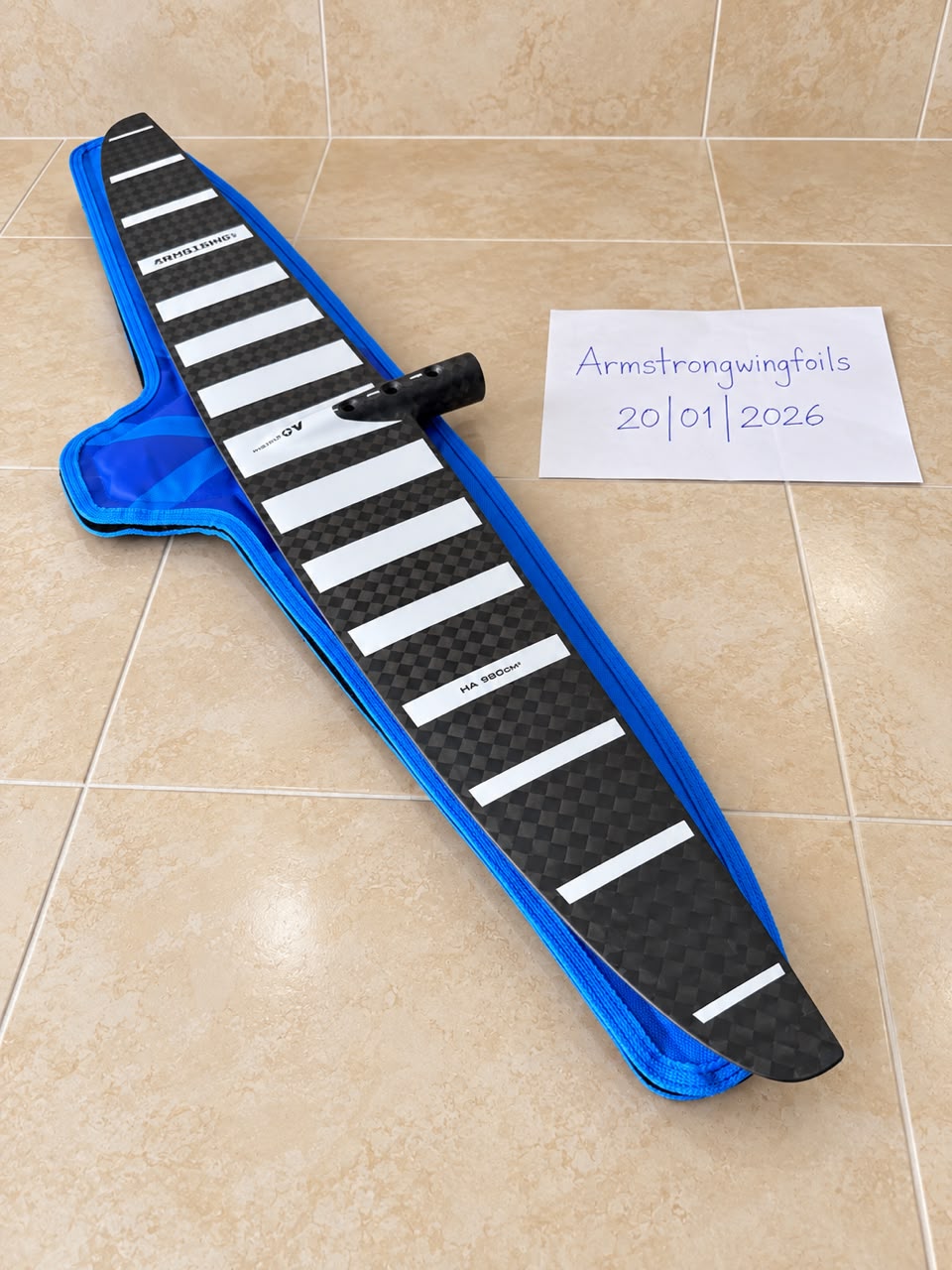

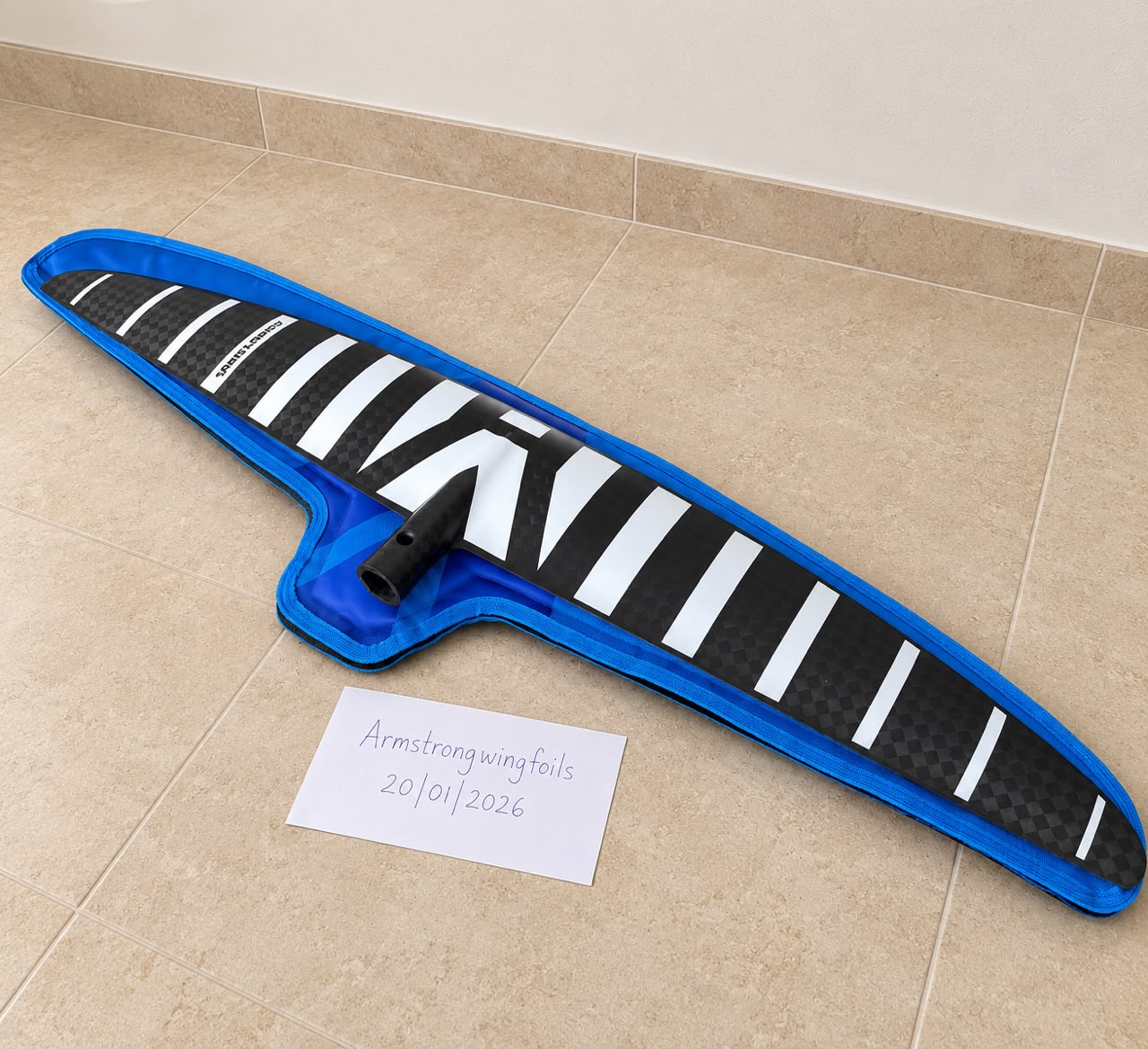
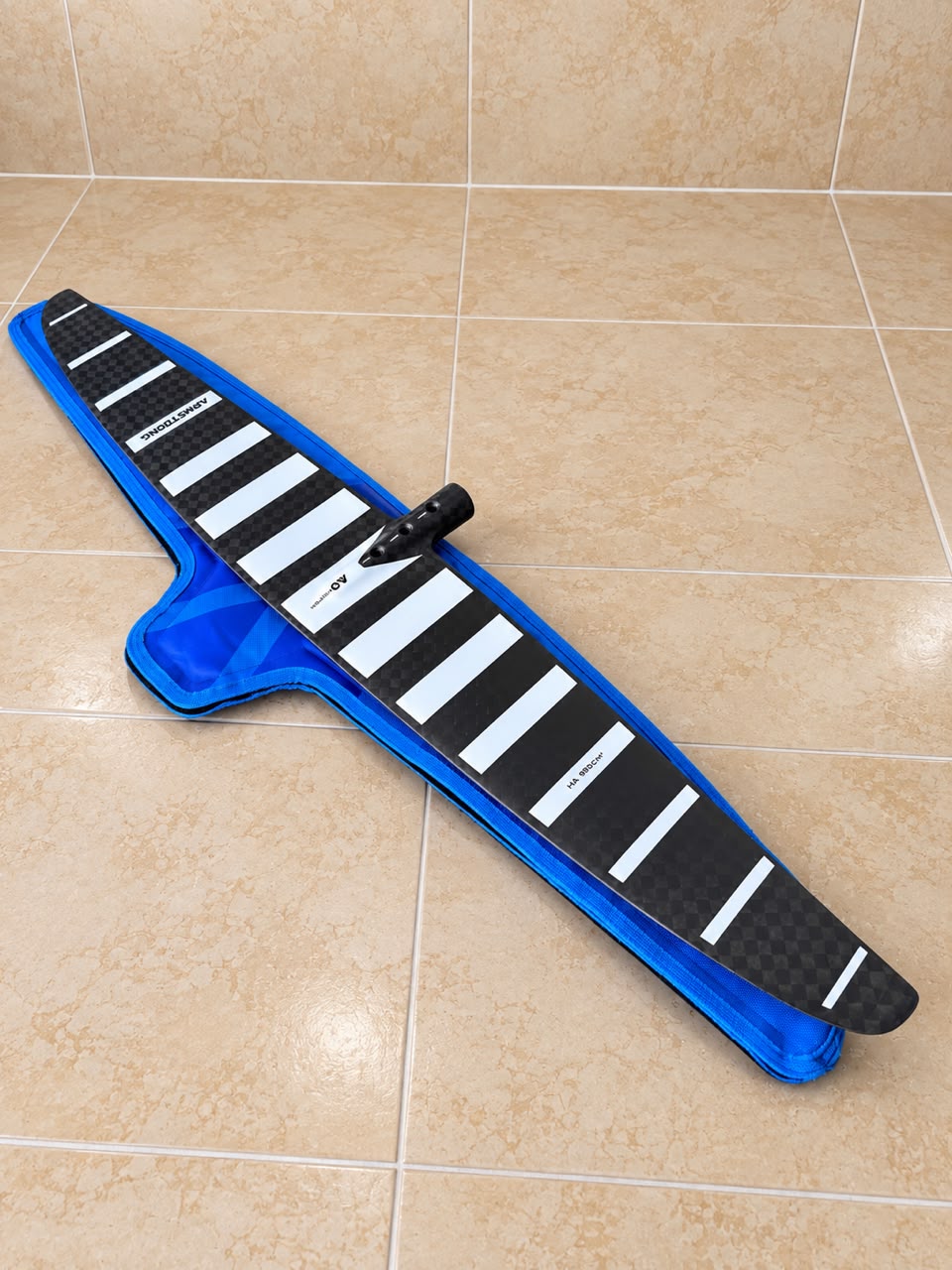


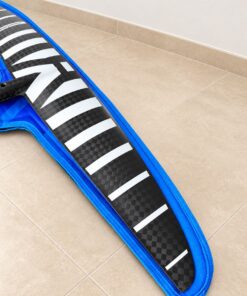
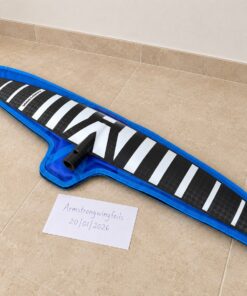
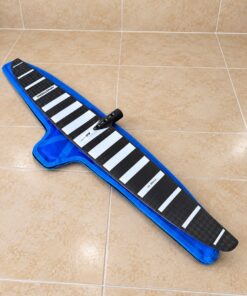
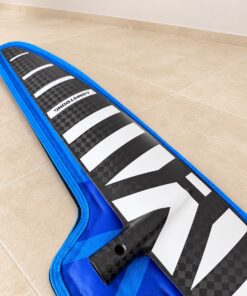
Used Armstrong HA980 Front Foil
€500.00
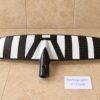
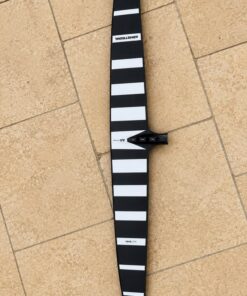
This Used Armstrong HA980 Front Foil is in very good overall condition and is being sold simply because it is no longer being used. It offers a strong balance of glide, pumping efficiency, low-speed lift, stability and responsive turning, making it a versatile option for experienced riders across wing, surf and downwind foiling.
The HA980 features approximately 980 cm² of surface area, a 974 mm span, and a 9.68 aspect ratio, giving it efficient high-aspect performance while still maintaining controlled handling. Its shape helps preserve speed through weaker sections and supports smooth pumping between waves or bumps.
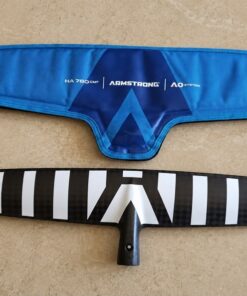
The sale includes the protective foil cover and mounting screws, making it a complete and convenient front-wing package for someone using a compatible Armstrong setup. The foil has been well kept and remains a strong used option for a rider looking for efficient performance without buying new.
Overall, it is a clean, performance-focused front foil with excellent glide characteristics, practical low-speed lift and a versatile size suited to a wide range of foiling conditions.
Used Armstrong HA980 Front Foil – High-Aspect Glide, Efficient Pumping and Versatile Foiling Performance
This Used Armstrong HA980 Front Foil is offered in very good overall condition and is being sold simply because it is no longer being used.
The foil comes complete with its protective cover and mounting screws, making it a practical used option for a rider who already owns a compatible Armstrong foil setup or is building a performance-oriented hydrofoil configuration.
The HA980 sits in Armstrong’s High Aspect family and combines a 980 cm² surface area, approximately 974 mm wingspan, and a 9.68 aspect ratio.
Its design is intended to balance glide, low-speed lift, pumping efficiency, stability and maneuverability rather than focusing on only one characteristic.
This makes the HA980 especially attractive to riders who want a front foil capable of covering several disciplines without feeling excessively large or slow.
The high-aspect shape reduces induced drag and supports efficient forward movement.
At the same time, Armstrong’s foil-section design is intended to produce useful low-speed lift for its size.
Consequently, the rider can benefit from efficient pumping and extended glide while still retaining a responsive feel through turns.
Condition
This foil is described as being in very good used condition.
It is no longer being used by the owner, which is the reason for sale.
As with any used hydrofoil, a prospective buyer should still inspect:
Leading edge condition
Trailing edge condition
Wingtips
Mounting surface
Screw holes
Carbon surface
Any cosmetic scratches
Any evidence of impact
Overall alignment
Minor cosmetic marks may be normal on a used foil, but structural damage should be distinguished carefully from surface wear.
Included Accessories
The sale includes:
Armstrong HA980 front foil
Protective cover
Mounting screws
The inclusion of the cover helps protect the foil during storage and transportation.
The included screws also make the package more complete for a buyer using a compatible Armstrong system.
HA980 Technical Specifications
Surface area: approximately 980 cm²
Span: approximately 974 mm
Aspect ratio: approximately 9.68
Design family: High Aspect
Intended disciplines: surf, wing, downwind and related hydrofoil use
Connection system: Armstrong A+ System
These proportions place the foil in a useful middle-performance range where strong glide can be combined with manageable turning behavior.
Why the High-Aspect Shape Matters
A high-aspect foil has a relatively long span compared with its chord.
This type of geometry generally reduces induced drag and improves glide efficiency.
As a result, less energy can be lost while the foil moves through the water.
For pumping and linking sections, this efficiency can be extremely useful.
Why the HA980 Is a Versatile Size
The HA980 offers a useful compromise between smaller, faster foils and larger, earlier-lifting options.
A smaller front foil may offer more speed and tighter maneuverability.
A larger foil may provide easier low-speed lift.
The HA980 sits between those extremes.
That balance makes it appealing to riders who want good glide without moving into an excessively large wing.
Low-Speed Lift
The foil section is designed to generate useful lift at relatively low speeds.
This helps during takeoff and when maintaining flight through slower sections.
Low-speed lift can also reduce the amount of rider effort needed to stay on foil.
Pumping Efficiency
Efficient pumping is one of the major reasons riders choose high-aspect foils.
The HA980 can carry energy between pump cycles more effectively than many lower-aspect designs.
Good pumping still depends on rider technique, mast choice, stabilizer setup and board weight.
Glide
Glide is one of the strongest characteristics of this design family.
The long span and efficient profile help the foil preserve forward momentum.
This can be particularly useful for connecting waves or maintaining flight through flatter water.
Pitch Stability
The design incorporates trailing-edge reflex intended to improve pitch stability.
This helps the foil feel more predictable when speed changes.
For riders progressing into higher-performance equipment, predictable pitch behavior can improve confidence.
Turning Character
High-aspect does not automatically mean difficult turning.
The HA family is designed to maintain a responsive and flowing feel through turns.
Rider weight, mast length, fuselage length and stabilizer choice can still influence turning behavior significantly.
HA Front Foil
The HA Front Foil family represents Armstrong’s high-aspect performance range.
The HA980 sits between the HA880 and HA1080 in current sizing.
It provides a useful compromise between speed, glide and lift.
armstrong foils
armstrong foils are built around a modular hydrofoil system that allows riders to combine front foils, masts, fuselages and stabilizers according to their needs.
The HA980 forms the front-wing component of that system.
armstrong integrated foil masts price
Searches for armstrong integrated foil masts price generally relate to Armstrong’s integrated mast systems.
Mast choice can significantly influence stiffness, drag and overall foil response.
armstrong foil board
An armstrong foil board can be paired with a compatible hydrofoil system according to discipline, rider weight and board volume.
surf foil board
A surf foil board is typically designed around compact dimensions and efficient takeoff.
The HA980 can be considered within surf-foil setups for riders with appropriate experience.
armstrong downwind board
An armstrong downwind board is designed to support efficient starts and glide in downwind conditions.
Front foil selection should match rider size and conditions.
armstrong midlength
The armstrong midlength concept provides a board format between very compact prone boards and long downwind boards.
armstrong downwind foil
An armstrong downwind foil setup prioritizes glide, efficiency and the ability to connect energy over distance.
The HA980’s high-aspect shape makes it relevant to this style of riding.
armstrong mid length board
An armstrong mid length board can provide additional efficiency and easier paddling compared with very short boards.
armstrong downwind boards
armstrong downwind boards are designed around efficient starts, glide and stability for downwind foiling.
wing foil front wing
As a wing foil front wing, the HA980 can provide a useful balance between speed, glide and manageable lift.
Actual suitability depends on rider weight, wind strength and experience.
HA Front Foil for sale
This HA Front Foil for sale is offered used and includes the protective cover and screws.
Its very good reported condition makes it attractive to someone already invested in the Armstrong system.
kite armstrong
The phrase kite armstrong commonly relates to Armstrong equipment used in kite foiling.
Smaller and faster foil sizes may be preferred depending on rider goals and conditions.
armstrong foil boards
armstrong foil boards are available in multiple formats for wing, surf, downwind and other disciplines.
Board selection should complement the intended front foil.
surf foil
For surf foil use, glide and controlled turning are especially important.
The HA980’s aspect ratio helps maintain momentum between wave sections.
armstrong foiling
armstrong foiling refers broadly to the complete ecosystem of Armstrong boards, foils, wings, masts and related equipment.
foiling board
A foiling board should provide the correct volume, shape and mounting position for the rider’s chosen discipline.
armstrong foils for sale
Buyers searching armstrong foils for sale often compare condition, included hardware, generation, size and compatibility.
This used HA980 comes with cover and screws.
foiling boards
Different foiling boards are optimized for winging, prone surf, downwind, pump and other disciplines.
surf foilboard
A surf foilboard typically uses a compact shape and low swing weight to improve responsiveness.
armstrong performance mast
An armstrong performance mast can influence stiffness and hydrodynamic efficiency.
A high-performance mast can help the rider experience the HA980’s glide and responsiveness more directly.
armstrong wing
An armstrong wing provides handheld power for wing foiling.
Front foil size should be selected according to rider weight and wind conditions.
surf foil boards
surf foil boards are generally compact and designed for efficient control once airborne.
armstrong wings
armstrong wings cover different wind ranges and riding styles.
The front foil remains a separate hydrodynamic component.
armstrong fuselage
The armstrong fuselage connects the mast, front foil and stabilizer.
Armstrong’s A+ System uses a secure connection architecture intended to create a solid overall platform.
armstrong v1 downwind board
The armstrong v1 downwind board belongs to an earlier generation of the company’s downwind-oriented boards.
Compatibility depends primarily on the mast track and complete foil setup.
armstrong integrated foil masts price 2025
The phrase armstrong integrated foil masts price 2025 relates to previous-year mast pricing.
Used-market prices can differ significantly according to condition, length and generation.
foil for sup
A foil for SUP requires sufficient lift and glide for the rider, board and paddling conditions.
The HA980 may suit more experienced riders depending on total system weight and conditions.
armstrong wing foil
An armstrong wing foil setup combines a front foil, mast, fuselage, stabilizer, board and handheld wing.
The HA980 can serve as the front foil in a compatible system.
armstrong downwind foil board
An armstrong downwind foil board generally prioritizes glide, paddling efficiency and controlled takeoff.
hydrofoil front wing
The hydrofoil front wing generates most of the lift in a typical foil system.
Its area, span, aspect ratio and profile strongly influence the feel of the entire setup.
front foil
The front foil is one of the most important performance components of the hydrofoil.
Changing the front foil can significantly alter lift, speed, glide, pumping and turning behavior.
hydrofoil lift stability
Hydrofoil lift stability depends on foil geometry, section shape, rider input, stabilizer choice and speed.
The HA980 is designed to combine efficient lift with predictable pitch behavior.
Why This Used Foil Is Worth Considering
The strongest reason to consider this particular used foil is the combination of very good reported condition and included accessories.
The cover is included.
The mounting screws are included.
The foil is no longer being used rather than being sold because of a stated defect.
That gives a buyer a relatively straightforward used package.
How the HA980 Produces Efficient Glide
The high-aspect shape reduces drag associated with lift generation.
As a result, the foil can maintain momentum efficiently once flying.
This is especially noticeable when pumping or connecting energy between sections.
Why Pumping Performance Matters
Good pumping efficiency allows a rider to continue flying through areas where external energy becomes weaker.
That can increase the length of a ride.
It can also make connecting multiple waves or bumps easier for experienced riders.
Where the HA980 Works Well
The foil can make sense for:
Wing foiling
Surf foiling
Downwind foiling
Pump-oriented riding
General high-performance hydrofoiling
The best discipline depends on rider weight, board choice, mast, stabilizer and conditions.
When the HA980 Makes Sense
The HA980 makes sense when the rider wants:
Strong glide
Efficient pumping
A relatively compact 980 cm² area
High-aspect performance
Useful low-speed lift
Good pitch stability
Responsive turning
Compatibility with the Armstrong ecosystem
Why the Protective Cover Matters
Hydrofoil wings are vulnerable to edge damage during transport.
A protective cover helps reduce accidental scratches and knocks.
It should be used whenever practical.
Why the Included Screws Matter
Correct mounting hardware is essential for a secure connection.
The included screws make the used package more complete.
All threads and screw heads should still be inspected before installation.
Used Foil Inspection
Before installation, inspect:
Leading edge
Trailing edge
Wingtips
Mounting interface
Screw holes
Carbon surface
Any repaired area
Any unusual flex
Small cosmetic scratches may be normal.
Structural cracking or significant impact damage should receive more attention.
Connection Surface
The connection between the front wing and fuselage should be clean and free from damage.
Sand, salt and debris should not be trapped between the mounting surfaces.
Screw Care
Mounting screws should be clean and in good condition.
Damaged screw heads or threads should be replaced before use.
Saltwater Care
After saltwater use, the foil and hardware should be rinsed with fresh water.
Salt residue can accumulate around hardware and connection points.
Storage
The foil should be dried before storage.
The protective cover can then be installed once the foil is clean and dry.
Avoiding Impact Damage
Carbon hydrofoil wings are strong during normal hydrodynamic loading but should still be protected from sharp impacts.
Dropping the foil onto hard ground can damage edges or tips.
Why the Serial Number Can Matter
Armstrong front foils have identifying serial information on the underside near the fuselage connection.
This can help with product identification and support.
Buyer Compatibility Check
Before purchasing, a buyer should confirm that the foil works with the intended Armstrong fuselage and overall system.
The front foil alone does not determine the complete ride.
Rider Weight
A rider’s weight influences how much lift is required.
Heavier riders often use larger foils, while lighter or more experienced riders may prefer smaller sizes depending on conditions.
Conditions
Light conditions generally require more lift.
Strong conditions may allow the rider to use a smaller foil.
The HA980 sits in a useful middle size where it can cover a broad range for appropriately matched riders.
Final Section 1 Assessment
This Used Armstrong HA980 Front Foil is a strong option for a rider looking for efficient high-aspect performance without purchasing a new front foil.
The foil is reported to be in very good condition and is being sold because it is no longer being used.
The sale includes both the protective cover and mounting screws, making the package more complete.
The HA980 provides approximately 980 cm² of surface area, a 974 mm span, and an aspect ratio of 9.68.
Its design emphasizes glide, efficient pumping, low-speed lift, pitch stability and flowing turns.
That combination makes it relevant across wing, surf and downwind foiling.
For the right rider, the HA980 can provide a particularly useful balance between the maneuverability of a smaller foil and the lift and glide of a larger high-aspect wing.
Its long span helps preserve energy.
Its foil section supports useful low-speed lift.
Its pitch-stability design helps keep the ride predictable.
Its size provides enough area for efficient flight without becoming excessively large.
Before purchase or installation, the buyer should inspect the carbon surface, edges, tips, mounting interface and hardware carefully.
Once compatibility is confirmed, this used HA980 can provide an efficient, responsive and versatile front-wing option for riders already using or moving into the Armstrong A+ foil ecosystem.
Section 2 – Real-World Performance, Glide, Pumping, Setup, Maintenance and Buyer Considerations
Understanding the HA980 in Real-World Use
The HA980 is built for riders who want efficient glide, useful low-speed lift, strong pumping potential and a responsive feel from a relatively compact high-aspect front foil.
That balance is one of the main reasons this size can be attractive on the used market.
It is not simply a large beginner foil and it is not an extremely small speed-focused wing.
Instead, it occupies a useful middle ground where a rider can benefit from efficient forward movement without completely sacrificing maneuverability.
For someone who already understands foil control and wants a versatile performance-oriented front wing, the HA980 can provide a very rewarding ride.
Why High-Aspect Geometry Matters
The wing uses a long span relative to its surface area.
That geometry helps reduce induced drag.
Lower induced drag allows the foil to carry speed and momentum more efficiently.
This is especially noticeable once the rider is already on foil and trying to maintain flight through weaker sections.
A lower-aspect foil can feel more compact and turn more tightly.
However, it may not preserve glide as efficiently.
The HA980 is designed to prioritize efficiency while still remaining usable through carving and direction changes.
Glide Performance
Glide is one of the strongest characteristics associated with this type of foil.
Once flying, the rider can often carry energy farther before needing another strong input.
That can make a noticeable difference when connecting waves, moving through soft sections or maintaining speed between wind gusts.
Good glide also reduces the feeling that the foil is constantly slowing down.
Why Glide Matters in Surf Foiling
In surf foiling, sections of a wave can become weak or flatten temporarily.
An efficient foil can carry momentum through those areas.
That gives the rider a better chance of staying airborne long enough to reach another section of usable energy.
Why Glide Matters in Wing Foiling
In wing foiling, efficient glide can make transitions feel smoother.
The rider may be able to coast farther while changing stance, repositioning the wing or moving between gusts.
Why Glide Matters Downwind
In downwind conditions, the ability to preserve momentum is especially important.
The rider is often moving from one small energy source to another.
An efficient front foil helps reduce the amount of effort needed between those energy sources.
Pumping Performance
The HA980 can be attractive to riders who enjoy pumping because its high-aspect design helps convert rider input into forward travel efficiently.
Pumping still depends on technique.
The rider must coordinate body movement, board pitch and foil response.
However, an efficient front wing can make that process feel more productive.
Why Pumping Efficiency Matters
A foil that loses speed quickly demands more frequent and more aggressive input.
A foil that carries energy efficiently can allow a smoother pumping rhythm.
That can reduce fatigue and increase the chance of linking multiple sections.
Rider Timing
Good pumping is not only about power.
Timing matters.
The rider should work with the foil rather than against it.
A smooth rhythm usually produces better results than abrupt movement.
Low-Speed Lift
Another useful characteristic is the ability to generate meaningful lift at relatively low speeds.
This can help during takeoff and when moving through slower sections.
Low-speed lift is especially valuable when the rider is using a board that requires some time to accelerate.
Why Early Lift Can Improve Confidence
A foil that begins producing lift predictably can make takeoffs feel less abrupt.
The rider can feel the wing building support before the board fully releases from the water.
That helps create a smoother transition into flight.
Pitch Stability
Pitch stability influences how predictable the foil feels as speed changes.
A stable foil is easier to control through takeoff, acceleration and slowing down.
The rider still needs to manage front-foot and back-foot pressure, but a predictable platform makes those inputs easier to understand.
Why Predictable Pitch Matters
An overly sensitive foil can feel demanding.
Small changes in foot pressure can create large changes in ride height.
A more controlled pitch response allows the rider to make finer adjustments.
Turning Character
Despite its high-aspect proportions, the HA980 can still feel responsive.
The long span does affect the way the foil rolls into a turn.
However, the rider can still achieve flowing carves with good technique.
Why Turning Feels Different on High-Aspect Foils
A wider span creates more leverage through the water.
That can make the foil feel more deliberate compared with a short, compact wing.
The rider may need to use smoother input.
Banking Into Turns
The rider should allow the foil to bank progressively.
Sudden aggressive input can create unnecessary instability.
A smooth transition helps preserve speed through the turn.
Foot Pressure
Front-foot and back-foot pressure control ride height and pitch.
The HA980 rewards riders who develop a balanced stance.
Too much back-foot pressure can cause excessive rise.
Too much front-foot pressure can drive the foil down.
Board Position
Foot placement on the board influences how much leverage the rider has over the foil.
Small changes in stance can make a large difference.
Mast Track Position
The foil setup should be positioned so the rider can maintain a neutral stance.
If the foil feels excessively front-foot heavy or back-foot heavy, mast position may need adjustment.
Why Setup Should Be Changed Slowly
It is better to make one small adjustment at a time.
Changing multiple variables together makes it difficult to understand which change actually improved the ride.
Fuselage Influence
Fuselage length can affect stability and turning.
A longer fuselage can generally provide more pitch stability.
A shorter fuselage can feel more responsive.
The HA980 will feel different depending on the fuselage used.
Stabilizer Influence
The rear stabilizer also changes the character of the setup.
Different stabilizers can affect pitch stability, turning feel and overall drag.
Why the Front Foil Cannot Be Judged Alone
The front wing is the main lifting surface, but the complete hydrofoil system determines the ride.
The mast, fuselage, stabilizer, board and rider all contribute.
Mast Influence
A stiff mast can provide more direct feedback.
A more flexible mast can change the feel under load.
Mast Length
Longer masts can provide more clearance above chop.
Shorter masts can feel easier during early progression.
The best choice depends on discipline and rider preference.
Board Choice
Board shape and volume influence takeoff, balance and overall handling.
A compact board may feel more responsive once airborne.
A longer board may provide more glide and easier acceleration before takeoff.
Why Board Volume Matters
Higher-volume boards can provide more stability before flight.
Lower-volume boards may feel more compact in the air but can require more skill.
Rider Weight
Rider weight strongly influences foil behavior.
A heavier rider requires more lift from the same front wing.
A lighter rider may find the same wing more powerful.
Why the Same Foil Feels Different for Different Riders
Two riders can use the same HA980 and experience it very differently.
Weight, skill, stance and conditions all affect the result.
Skill Level
The HA980 is likely to appeal most to riders who already understand basic foil control.
It may be less appropriate for someone who is still struggling with fundamental takeoff and height control.
Why Experience Helps
An experienced rider can take better advantage of the wing’s efficiency.
They can use glide and pumping performance rather than simply relying on raw area for stability.
Surf Use
In surf conditions, the HA980 can provide strong glide between sections.
It can also support efficient pumping back toward another wave.
Wave Selection
The rider should choose conditions suited to their experience.
A highly efficient foil can carry speed quickly, so awareness remains important.
Small-Wave Performance
Smaller waves can work well when the foil can maintain speed through weaker sections.
Larger-Wave Considerations
In stronger waves, speed can build rapidly.
A rider should understand how the foil behaves at higher speeds before using it in demanding conditions.
Wing Use
For wing foiling, the HA980 can work well when the rider wants a blend of speed, glide and controlled turning.
Light-Wind Use
In lighter wind, the rider may need more board speed before takeoff.
A larger front foil may still be easier for very light conditions.
Strong-Wind Use
In stronger wind, the HA980 may feel efficient and fast for appropriately sized riders.
Downwind Use
Downwind riding rewards glide and pumping.
The HA980’s efficient profile can help maintain flight between bumps.
Why Downwind Technique Matters
Even a good foil cannot replace reading the water.
The rider still needs to identify usable energy and move efficiently between it.
Pump-Oriented Riding
For riders interested in dock starts or pump practice, the HA980 may offer useful efficiency depending on body weight and skill.
Why Pump Setup Matters
Board weight, mast length and stabilizer choice can significantly affect pumping performance.
Starting Technique
Takeoff technique varies by discipline.
Wing, surf and pump starts all require different inputs.
Why Smooth Inputs Are Better
Abrupt pitch changes waste energy.
Smooth movements help preserve momentum.
Acceleration
Once on foil, the HA980 can accelerate efficiently.
The rider should remain relaxed as speed increases.
Speed Control
Speed can be managed through:
Ride height.
Turning.
Body position.
Power input.
Line choice.
Why Ride Height Matters
Too high increases the risk of ventilation.
Too low increases the chance of the board touching the water.
A balanced ride height provides the best margin.
Ventilation
If a foil tip approaches the surface, air can enter the flow.
This can reduce lift suddenly.
High-aspect foils have wide spans, so tip awareness is important.
Why Tip Awareness Matters
The rider should avoid over-banking near the surface.
Breaching
If the wing comes too close to the surface, control can become less predictable.
Maintaining appropriate ride height helps avoid this.
Choppy Water
Chop can make height control more demanding.
A longer mast can provide more clearance, although it also changes leverage and feel.
Flat Water
Flat water provides a useful environment for testing pumping and setup changes.
Testing a Used Foil
Before aggressive use, a buyer should test the foil in controlled conditions.
The goal should be to confirm:
Stable mounting.
Predictable lift.
Normal stiffness.
Smooth handling.
No unusual vibration.
Why Vibration Matters
Unexpected vibration can sometimes indicate surface damage, contamination or setup problems.
Inspecting the Carbon Surface
The carbon structure should be checked carefully before use.
Look for:
Cracks.
Soft spots.
Deep impact marks.
Delamination.
Unusual flex.
Cosmetic Scratches
Minor scratches can be normal on a used foil.
They should be distinguished from structural damage.
Leading Edge
The leading edge is especially important.
Damage here can affect water flow.
Trailing Edge
The trailing edge should remain reasonably clean and straight.
Wingtips
The tips are vulnerable to ground contact.
Check them for impact damage.
Mounting Surface
The connection surface should be clean and flat.
Screw Holes
Threads should remain in good condition.
Included Screws
The included mounting screws add practical value.
However, they should still be inspected.
Check Screw Heads
Rounded or damaged screw heads can make installation difficult.
Check Threads
Damaged threads should not be forced into the mounting system.
Correct Tightening
Hardware should be tightened according to manufacturer guidance.
Over-tightening can damage components.
Under-tightening can allow movement.
Saltwater Maintenance
After saltwater use, rinse the foil and hardware with fresh water.
Salt can accumulate around connections.
Why Freshwater Rinsing Matters
Regular rinsing helps keep hardware and mounting surfaces clean.
Disassembly
Some riders disassemble their foil after every session.
Others leave the system assembled for short periods.
The important point is to avoid corrosion and seized hardware.
Screw Care
Hardware should remain clean.
Any recommended anti-corrosion treatment should be used according to manufacturer guidance.
Drying
The foil should be dried before long-term storage.
Protective Cover
The supplied cover should be used whenever practical.
It can help protect the wing from accidental impact.
Why the Cover Adds Value
A front foil can be damaged during transport more easily than during normal water use.
The cover reduces that risk.
Transporting the Foil
The foil should not be thrown loosely into a vehicle.
The wing should be supported and protected.
Vehicle Storage
Avoid leaving the foil under heavy objects.
Heat
Extreme heat should be avoided.
Hard-Surface Contact
Do not place the foil directly on sharp or abrasive surfaces when possible.
Beach Use
Sand can enter screw holes and connection surfaces.
The system should be cleaned before assembly.
Why Sand Is a Problem
Small grains can prevent a clean mechanical fit.
Inspection After Impact
If the foil hits a rock, reef or hard object, inspect it carefully before riding again.
Hidden Damage
Carbon components can sometimes show limited visible damage even after a significant impact.
Any unusual flex or sound should be investigated.
Used Equipment Transparency
A seller should describe known damage honestly.
This helps the buyer evaluate value accurately.
Useful Buyer Photos
A good listing should show:
Top surface.
Bottom surface.
Leading edge.
Trailing edge.
Both tips.
Mounting interface.
Serial area.
Cover.
Screws.
Any cosmetic damage.
Why Close-Ups Matter
Wide photos show overall condition.
Close-ups reveal surface details.
Video Inspection
A short video can also show the foil from multiple angles.
Buyer Questions
A prospective buyer may want to ask:
Has the foil hit rocks?
Has it been repaired?
Has it ever been sanded?
Has it been refinished?
Has it been used heavily in saltwater?
Are the screws original?
Is the cover original?
Repair History
A repaired foil is not automatically unsuitable.
However, the buyer should know what was done.
Professional Repair
Structural carbon repairs should be completed properly.
Cosmetic Repair
Minor surface refinishing is different from structural repair.
Why Repair Type Matters
The buyer should understand whether the work was cosmetic or structural.
Price Evaluation
Used value depends on:
Condition.
Generation.
Included hardware.
Cover.
Repair history.
Market demand.
Compatibility.
Why Complete Packages Sell More Easily
A foil with its cover and correct screws is easier for a buyer to integrate into an existing setup.
Compatibility
The buyer should confirm that the HA980 matches the intended fuselage and system generation.
Why Compatibility Should Be Confirmed Before Payment
A front foil that does not match the buyer’s hardware creates unnecessary cost and inconvenience.
Setup Documentation
Keeping manufacturer information can help with assembly and future resale.
Serial Identification
Serial information can help confirm product identity.
Long-Term Ownership
A well-maintained carbon front foil can remain useful for many seasons.
What Helps Preserve It
Good habits include:
Rinsing after saltwater use.
Using the cover.
Avoiding hard impacts.
Keeping mounting surfaces clean.
Checking screws.
Storing it dry.
Why Preventive Care Is Better
Small maintenance tasks are easier than repairing damage later.
Who May Appreciate the HA980
This foil may appeal to riders who value:
Strong glide.
Efficient pumping.
A compact high-aspect platform.
Useful low-speed lift.
Responsive handling.
Compatibility with a modular system.
Who May Prefer a Larger Wing
A heavier rider or someone riding very light conditions may prefer more surface area.
Who May Prefer a Smaller Wing
An advanced rider prioritizing higher speed or tighter maneuverability may prefer a smaller front foil.
Why There Is No Single Perfect Size
Foil selection always depends on rider weight, skill, board, discipline and conditions.
First Sessions on the HA980
A rider moving from another wing should begin conservatively.
Focus on:
Takeoff.
Ride height.
Pitch control.
Turning.
Glide.
Why Comparison Takes Time
A few minutes may not reveal the full character of a foil.
Several sessions provide a better understanding.
Adjusting the Setup
If the foil feels unusual, first confirm the complete setup.
Check mast position.
Check stabilizer.
Check screws.
Check board placement.
Change One Variable at a Time
This makes testing more useful.
Evaluating Glide
Choose a controlled section and compare how long the foil maintains speed.
Evaluating Pumping
Use consistent technique and compare how easily speed is preserved.
Evaluating Turns
Test progressively tighter carves rather than immediately forcing aggressive turns.
Evaluating Takeoff
Observe how the foil builds lift as speed increases.
Evaluating Pitch
Pay attention to how strongly the foil reacts to front and rear foot pressure.
Why Notes Can Help
Riders experimenting with different setups may benefit from recording:
Mast position.
Stabilizer.
Board.
Conditions.
Ride impressions.
Resale Value
The foil will usually retain better value when it remains in good condition and complete with accessories.
Keep the Cover
The cover should be stored carefully.
Keep the Screws
Original or correct hardware improves completeness.
Avoid Unnecessary Sanding
Aggressive sanding can alter surface finish and reduce resale confidence.
Document Any Repairs
Future buyers will appreciate clear repair history.
Final Section 2 Assessment
The used Armstrong HA980 can be an excellent option for a rider who wants high-aspect efficiency without moving into an extremely large front wing.
Its 980 cm² area provides a useful balance between lift and responsiveness.
The long span supports efficient glide.
The high-aspect design helps preserve momentum.
The foil can perform well across surf, wing and downwind disciplines when matched with the right rider and setup.
Its strongest qualities are efficiency, glide and pumping potential.
However, the complete system still matters.
Mast stiffness affects feedback.
Fuselage length affects stability.
The stabilizer influences pitch and turning.
The board affects takeoff and control.
Rider weight changes how much lift is available.
Conditions determine how much performance is needed.
This is why the HA980 should be viewed as part of an integrated foil system rather than as an isolated component.
The used example described here is especially attractive because it is reported to be in very good condition and includes both the protective cover and mounting screws.
Those additions improve convenience and help protect the wing.
Before purchase, the buyer should still inspect the carbon surface, leading edge, trailing edge, wingtips, mounting interface and screws.
Any repair history should be disclosed.
Compatibility with the intended fuselage should be confirmed.
Once those checks are complete, the HA980 can provide a highly efficient and enjoyable ride for someone who wants to combine glide, pumping, low-speed lift and responsive turning in one front foil.
With proper rinsing, careful storage, clean hardware and sensible handling, it can remain a strong part of a foil setup for many sessions to come.
Be the first to review “Used Armstrong HA980 Front Foil”
Related products
Used Product
Used Product
Used Product
Used Product
Used Product
Used Product
Used Product
Used Product
Reviews
There are no reviews yet.