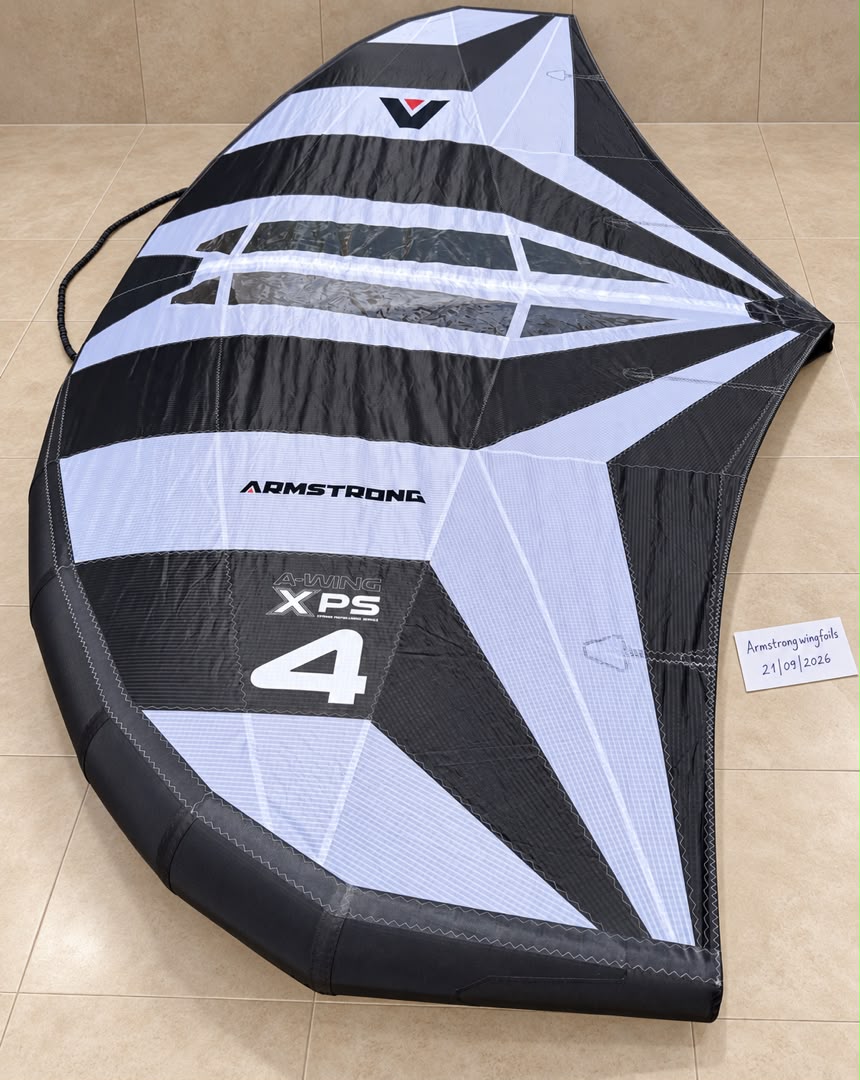
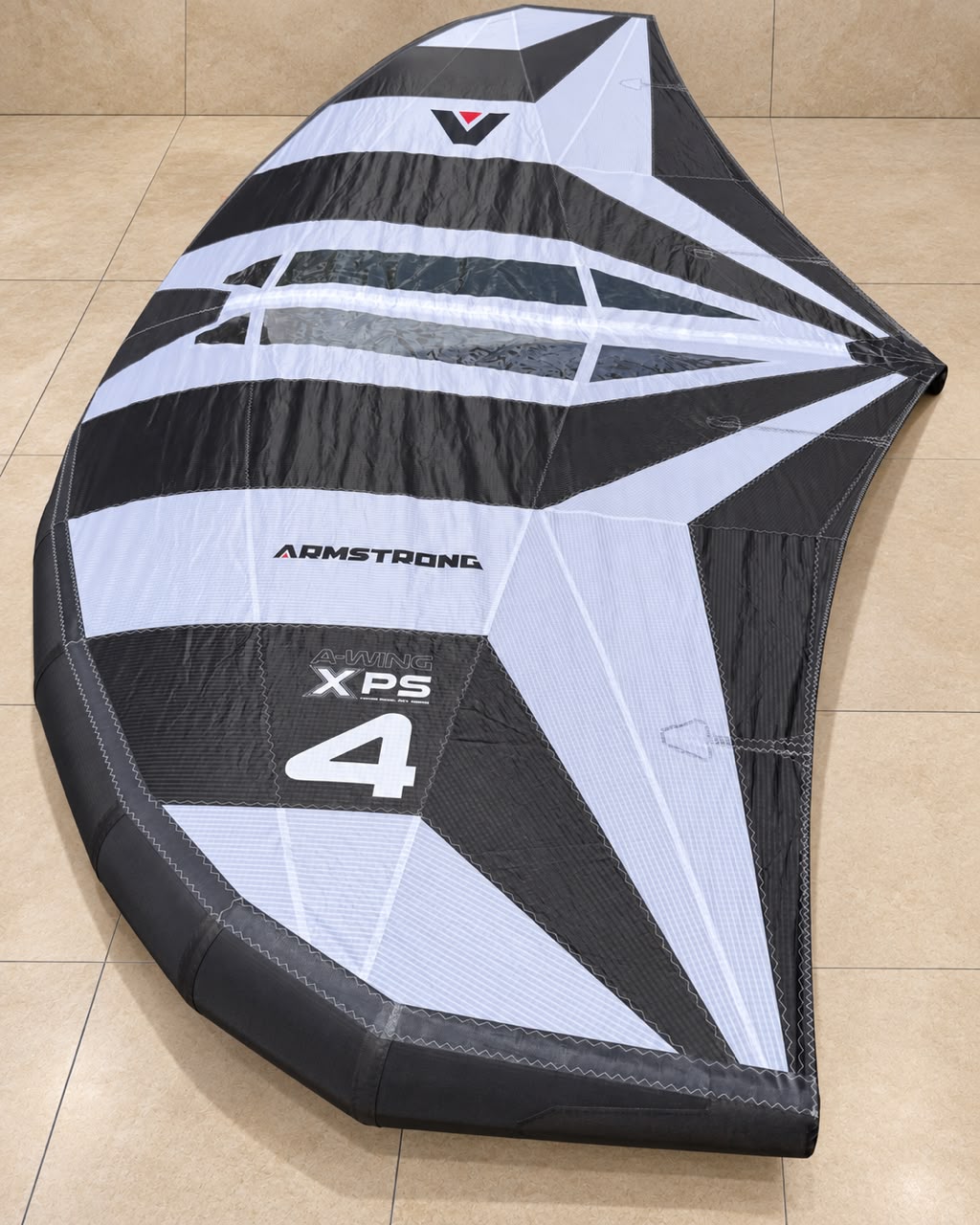



Used Armstrong A Wing XPS 4.0m
€600.00
This Used Armstrong A-Wing XPS 4.0m is in near-new condition with only around 2 hours of use, making it an excellent option for riders looking for high-performance wing-foil equipment without the cost of buying new.
The 4.0m size offers a strong balance of speed, responsive handling, stable power delivery, upwind efficiency, and easy maneuverability, making it well suited to freeride, wave riding, powered sessions, transitions, and performance-focused foiling. Its Cross Panel Sail construction, rigid carbon-supported handles, and carbon trailing-edge battens help maintain canopy stability and provide a direct, precise feel.
The wing comes complete with its carry bag, wrist leash, and spare carbon battens, adding practical value to the package. With such limited previous use, the canopy, handles, and overall structure are reported to remain in excellent condition.
Overall, this is a clean, lightly used 4.0m performance wing for riders who want fast handling, efficient power, compact size, and excellent control in moderate-to-strong wind conditions.
Used Armstrong A-Wing XPS 4.0m – Near-New Performance Wing with Bag, Wrist Leash and Spare Carbon Battens
This Used Armstrong A-Wing XPS 4.0m offers an excellent opportunity for a rider looking for a lightly used, high-performance wing with extremely limited time on the water.
The wing has approximately two hours of use and is therefore described as basically brand new.
It comes with the important original accessories needed for practical ownership, including:
Carry bag
Wrist leash
Spare carbon battens
The 4.0m version provides a useful balance of power, speed, handling and maneuverability for riders who want a responsive wing that works across freeride, wave riding and performance-oriented sessions.
Armstrong designed the original XPS around a Cross Panel Sail layout that distributes canopy loads diagonally rather than relying only on conventional straight panel orientation.
This helps reduce unwanted canopy distortion and contributes to a more connected feel between the rider and the wing.
The design also uses a pre-twisted canopy profile intended to improve upwind performance, stability and speed.
Technical Specifications
Size: 4.0 m²
Span: approximately 295 cm
Weight: approximately 3.0 kg
Recommended wind range: approximately 19–32 knots
Handle system: Hybrid Carbon Handles
Canopy structure: Cross Panel Sail design
Trailing edge support: removable carbon-fibre battens
Included: carry bag, wrist leash and spare carbon battens
Condition: approximately two hours of use
Overall condition: basically brand new
These specifications make the 4.0m size especially useful when the rider wants enough power for moderate-to-strong conditions without carrying the physical size of a much larger wing.
Near-New Used Condition
The strongest selling point of this particular wing is its minimal use.
With approximately two hours on the water, it has seen very little practical wear.
That can be especially attractive when buying inflatable wing equipment because canopy condition, leading-edge condition, handles, seams and valves can gradually show wear over repeated sessions.
A lightly used example may therefore provide much of the condition of new equipment while offering the value of a used purchase.
Before purchase, the buyer should still inspect:
Leading edge
Strut
Canopy
Windows
Handles
Inflation valve
Seams
Trailing edge
Battens
Leash attachment
Any repair areas
The wing should hold pressure properly and show no signs of air leakage.
Why the 4.0m Size Is Useful
A 4.0m wing can be extremely versatile for riders operating in stronger wind ranges.
It is smaller and more maneuverable than large light-wind wings.
As a result, it can feel faster through transitions and easier to control during powered riding.
The smaller surface area can also make handling easier in waves because there is less material to manage when the wing is flagged out.
Cross Panel Sail Construction
The Cross Panel Sail design is one of the defining features of the original XPS.
Instead of relying solely on conventional panel alignment, the canopy panels are arranged to distribute loads through the sail more effectively.
This helps maintain canopy shape under power.
A more stable shape can improve control and reduce unnecessary movement.
Why Canopy Stability Matters
A wing that deforms excessively under load can feel disconnected.
Power delivery may become inconsistent.
By maintaining its designed shape more effectively, the wing can provide a more predictable response.
This is especially useful when:
Going upwind
Accelerating
Carving
Wave riding
Preparing for jumps
Changing direction
Pre-Twist Canopy Geometry
The canopy incorporates pre-twist geometry.
This helps different areas of the wing operate at suitable angles relative to the airflow.
The goal is to improve efficiency across the span.
This contributes to useful upwind drive and high-speed stability.
Upwind Performance
Efficient upwind ability is important because it allows the rider to return to position more easily after long downwind reaches or wave rides.
A wing that travels efficiently into the wind can reduce the amount of effort needed to regain ground.
Speed
The 4.0m size can feel fast because its compact area produces less drag than a larger wing.
When conditions are strong enough, the rider can use that efficiency to maintain speed without carrying excessive wing area.
Hybrid Carbon Handles
The wing uses Armstrong’s Hybrid Carbon Handle system.
The internal carbon structure provides stiffness.
The exterior padding improves comfort.
A rigid handle transfers rider input more directly than a very soft webbing handle.
Why Rigid Handles Matter
Rigid handles can provide better control over:
Wing angle
Power delivery
Sheeting
Transitions
Pumping
They can also make it easier to locate the same hand position consistently.
Ergonomic Handle Position
The strut and handle placement are designed to support a natural riding position.
Good ergonomics reduce unnecessary wrist and forearm strain.
This can improve comfort during longer sessions.
Carbon Battens
The wing uses removable carbon-fibre battens along the trailing-edge area.
These help reduce flutter.
Spare carbon battens are included with this particular wing.
That adds practical value because replacement components are already available if a batten becomes lost or damaged.
Why Trailing-Edge Flutter Matters
Excessive flutter wastes aerodynamic energy.
It can also create noise and vibration.
Reducing flutter helps the wing maintain a cleaner airflow.
Bag Included
The original-style carry bag is included.
This is useful for:
Storage
Transportation
Protection
Organizing the wing and accessories
The wing should be completely dry before long-term storage in the bag.
Wrist Leash Included
A wrist leash is included.
The leash helps keep the rider connected to the wing after releasing the handles.
It should still be inspected before every session for:
Cord wear
Attachment damage
Cuff condition
Stretch degradation
Loose stitching
Why a Wing Leash Matters
Without a leash, an inflatable wing can quickly blow away after a fall.
This can create both inconvenience and safety issues.
HA Front Foil
An HA Front Foil can pair well with a 4.0m performance wing when the rider wants efficient glide, speed and pumping characteristics.
The correct foil size depends on rider weight and wind conditions.
armstrong foils
armstrong foils can be combined with the wing to create a complete Armstrong foil setup.
Different foil sizes change takeoff speed, glide and turning behaviour.
armstrong integrated foil masts price
Searches for armstrong integrated foil masts price often come from riders building a complete high-performance setup.
The mast affects stiffness, drag and overall control.
armstrong foil board
An armstrong foil board provides the platform connecting the rider to the foil.
Board volume should match rider weight and experience.
surf foil board
A surf foil board is generally compact and optimized for responsive foil control.
The 4.0m wing may also be used by riders moving between wave and wing disciplines.
armstrong downwind board
An armstrong downwind board is designed around long waterlines and efficient acceleration.
Such boards are usually used differently from compact wing boards.
armstrong midlength
An armstrong midlength board provides a compromise between compact foil boards and long downwind shapes.
armstrong downwind foil
An armstrong downwind foil setup emphasizes glide and energy efficiency.
A performance wing can complement such a foil when wind power is available.
armstrong mid length board
An armstrong mid length board can offer easier acceleration while maintaining good maneuverability once flying.
armstrong downwind boards
armstrong downwind boards are designed to generate speed efficiently before takeoff.
wing foil front wing
The wing foil front wing has a major effect on how quickly the board rises and how the complete setup feels.
A larger wing provides more lift.
A smaller wing can offer greater speed and maneuverability.
HA Front Foil for sale
Riders looking for an HA Front Foil for sale may combine one with this 4.0m wing for a high-efficiency performance setup.
kite armstrong
The phrase kite armstrong often relates to Armstrong hydrofoil components used with kite or wind-powered systems.
This product itself is an inflatable handheld wing.
armstrong foil boards
armstrong foil boards are available in several shapes and volumes to match different levels and disciplines.
surf foil
In surf foil conditions, riders often prioritize glide and maneuverability.
A compact 4.0m wing can be useful when enough wind is available to support wave riding.
armstrong foiling
armstrong foiling equipment includes wings, boards, masts and foil components that can be combined into a complete system.
foiling board
A foiling board should be selected according to rider weight, skill, conditions and intended foil size.
armstrong foils for sale
Buyers searching armstrong foils for sale may already own a board and wing and be looking for compatible underwater components.
foiling boards
Different foiling boards provide different levels of flotation, acceleration and airborne responsiveness.
surf foilboard
A surf foilboard typically uses compact dimensions to reduce swing weight and improve turning.
armstrong performance mast
An armstrong performance mast can increase stiffness and efficiency in the underwater portion of the setup.
armstrong wing
This armstrong wing is a 4.0m performance model designed to provide a connected feel, strong upwind ability and stable handling.
surf foil boards
surf foil boards prioritize maneuverability and low swing weight.
They can complement a wave-oriented riding style.
armstrong wings
armstrong wings have been produced in different generations, sizes and performance categories.
The original XPS represented a major development in canopy structure and control.
armstrong fuselage
The armstrong fuselage connects the mast, front foil and rear stabilizer.
Its geometry contributes to pitch stability and turning behaviour.
armstrong v1 downwind board
The armstrong v1 downwind board belongs to Armstrong’s earlier downwind-focused board generation.
armstrong integrated foil masts price 2025
Searches for armstrong integrated foil masts price 2025 can help riders compare previous retail pricing with current used equipment values.
foil for sup
A foil for SUP should provide suitable lift for rider weight, paddling speed and intended conditions.
armstrong wing foil
An armstrong wing foil setup combines the inflatable wing with a foil board, mast, fuselage, front foil and stabilizer.
armstrong downwind foil board
An armstrong downwind foil board is generally longer than a conventional wing board and designed for efficient acceleration.
hydrofoil front wing
The hydrofoil front wing generates most of the lift in the underwater foil system.
It should be selected according to rider weight, conditions and desired performance.
front foil
The front foil significantly influences takeoff, speed, glide and turning.
hydrofoil lift stability
Hydrofoil lift stability depends on the relationship between front foil, rear stabilizer, mast, fuselage, board and rider input.
The handheld wing provides power, while the foil system controls underwater lift.
Why This Near-New Wing Is Worth Considering
The condition is one of the strongest reasons to consider this particular wing.
Approximately two hours of use is exceptionally limited compared with most used wings.
The buyer receives a lightly used performance wing without the typical wear associated with multiple seasons.
It also comes with the important accessories.
The bag is included.
The leash is included.
Spare battens are included.
This makes the package much more complete.
How the Wing Produces Power
The wing creates aerodynamic lift as wind moves across its canopy.
The rider controls the angle of the wing through the handles.
By changing the wing angle and sheeting position, the rider can regulate power.
The XPS canopy structure helps maintain a stable profile when the wing is loaded.
Why Controlled Power Is Important
Useful performance is not only about maximum pull.
A wing should deliver power predictably.
Controlled power helps during:
Starts
Acceleration
Upwind riding
Transitions
Wave riding
Jumps
Why the 4.0m Can Feel Precise
Several features contribute to precise handling.
The rigid handles reduce unwanted movement.
The canopy structure limits distortion.
The battens help control trailing-edge flutter.
The compact size reduces rotational inertia.
Together, these characteristics can make the wing feel direct and connected.
Wave Riding
The XPS was designed to remain stable when depowered and flagged.
This is particularly useful when the rider wants to surf a wave using foil energy rather than continuous wing power.
Why Flagged Stability Matters
When a wing is held by the front handle and allowed to depower, excessive movement can distract the rider.
A stable wing allows more attention to remain on the wave and foil.
Freeride Use
The 4.0m size can work well as a general freeride wing in suitable wind.
It offers enough power for controlled foiling while remaining compact.
Freestyle Use
Rigid handles and canopy stability can also support freestyle riding.
The wing can provide predictable input during jumps and transitions.
Upwind Riding
The wing’s efficient profile helps generate forward drive rather than excessive sideways pull.
This can improve upwind angles.
Wind Range
Armstrong lists the original 4.0m XPS with an approximate wind range of 19–32 knots.
Actual usable range depends on:
Rider weight
Board volume
Foil size
Skill
Water conditions
Wind quality
A heavier rider may require more wind.
A lighter rider may use the wing in less wind.
Why Wind Quality Matters
Steady 20-knot wind feels very different from gusty conditions ranging between 15 and 25 knots.
Riders should always consider gusts rather than relying only on average wind speed.
Inflation
The wing should be inflated to the manufacturer’s specified pressure.
Correct inflation helps maintain frame stiffness.
Why Proper Pressure Matters
Too little pressure can make the frame feel soft.
Too much pressure can place unnecessary stress on seams and bladders.
Valve Inspection
The inflation valve should remain:
Clean
Undamaged
Free of sand
Properly sealed
Any slow leak should be addressed before use.
Canopy Inspection
A near-new canopy should still be inspected for:
Pinholes
Cuts
Abrasion
Stretching
Repairs
Loose stitching
Leading Edge Inspection
The leading edge should be checked for:
Scuffs
Cuts
Seam damage
Valve damage
Bladder problems
Strut Inspection
The center strut supports the handles and contributes to overall wing stiffness.
It should hold pressure properly.
Window Condition
Any window material should be inspected for cracking, clouding or creasing damage.
Handle Inspection
The carbon handles should remain securely attached.
The padded exterior should also be checked for excessive wear.
Batten Inspection
The installed carbon battens should remain straight and secure.
The included spares provide useful backup.
Why Spare Battens Add Value
Batten replacement can be necessary if a component is damaged during transport or use.
Having spares available reduces inconvenience.
Storage
The wing should be clean and dry before storage.
It should not remain wet inside the bag.
Saltwater Care
After saltwater use, the wing can be rinsed with fresh water when appropriate and dried thoroughly.
Particular attention should be given to:
Handles
Valve area
Leash attachment
Zippers
Battens
Drying
The wing should preferably be dried away from prolonged harsh sunlight.
UV Exposure
Extended ultraviolet exposure can gradually weaken canopy fabric.
The wing should not be left inflated on the beach for unnecessary periods.
Sand
Sand can enter valves and abrasive areas.
The inflation valve should remain clean.
Transport
The included bag makes transportation easier.
The wing should not be stored underneath heavy objects that may damage battens or windows.
Why This 4.0m Is a Strong Used Option
This example combines:
Minimal use
Performance canopy design
Rigid handles
Carbon battens
Spare battens
Wrist leash
Carry bag
Versatile 4.0m size
For a rider who already knows that a 4.0m wing fits their wind range, the package can offer excellent practical value.
Final Section 1 Assessment
This Used Armstrong A-Wing XPS 4.0m is an especially attractive used-wing option because it has seen only around two hours of use and is described as basically brand new.
It includes the carry bag, wrist leash and spare carbon battens, giving the buyer a much more complete package.
The 4.0m size combines approximately 4.0 m² of area, a 295 cm span, around 3.0 kg of weight, and an original manufacturer wind-range guideline of roughly 19–32 knots.
Its performance character comes from several engineering features.
The Cross Panel Sail architecture improves load distribution.
The pre-twisted canopy supports speed and upwind efficiency.
The Hybrid Carbon Handles provide a rigid and direct connection.
The removable carbon battens help control trailing-edge flutter.
The compact 4.0m size keeps the wing responsive during transitions, wave riding and powered freeride sessions.
For wave-oriented riding, the wing’s ability to remain stable when depowered can help the rider concentrate on foil control rather than managing excessive wing movement.
For freeride, its broad operating character makes it useful across varied conditions.
For freestyle, the rigid handles, power delivery and canopy stability provide a responsive platform.
The buyer should still inspect the canopy, seams, leading edge, strut, windows, valve, handles, battens and leash before use, even with such limited previous use.
With correct inflation, careful storage, fresh-water maintenance where appropriate and protection from excessive UV exposure, this lightly used XPS 4.0m can provide a precise, powerful and versatile wing for many future sessions.
Section 2 – Real-World Performance, Power Delivery, Handling, Durability, Care and Buyer Considerations
Understanding the Wing in Real-World Conditions
The Armstrong A-Wing XPS 4.0m is designed for riders who want a compact, high-performance handheld wing with direct handling, efficient power delivery, and strong control across a wide range of powered riding conditions.
At 4.0 square metres, the wing is small enough to remain highly maneuverable while still offering useful drive for appropriately matched riders.
Its character becomes especially noticeable when the wind increases.
A smaller wing can feel more manageable during acceleration, carving, transitions, and wave riding because there is less canopy to control.
That reduced physical size can also make the wing feel more precise when changing angle or depowering it.
The wing is therefore particularly well suited to riders who already understand foil control and want a responsive tool rather than an oversized light-wind wing.
Why the 4.0m Size Is Important
Wing size strongly affects how the complete setup behaves.
A larger wing can generate more power in lighter wind.
A smaller wing generally offers:
Less drag
Faster handling
Better maneuverability
Easier flagging
Reduced physical bulk
More control in stronger wind
The 4.0m size provides a useful compromise for riders who want enough power to ride efficiently while keeping the wing compact.
Rider Weight and Wing Size
The same 4.0m wing can feel very different for riders of different weights.
A lighter rider may be able to use it in relatively moderate wind.
A heavier rider may require stronger wind to reach the same level of power.
This is why wind-range numbers should be treated as guidance rather than absolute rules.
Foil Size Also Changes the Wind Range
A large, efficient foil can lift at lower speeds.
That allows the rider to use a smaller wing in less wind.
A smaller high-speed foil may need more speed before takeoff.
Therefore, the wing should always be considered together with the foil.
Board Volume and Takeoff
Board volume also influences how easily the rider can start.
A larger board provides more flotation and stability.
A smaller board may require more wind and better technique.
The same 4.0m wing may therefore feel powerful enough on one board and underpowered on another.
Why Wind Quality Matters
Wind speed alone does not tell the full story.
A steady wind feels very different from gusty conditions.
For example, stable wind allows the rider to maintain consistent power.
Gusty wind requires more active wing control.
The XPS design aims to remain controlled as power changes, which can help the rider manage variable conditions more confidently.
Power Delivery
A good wing should not only create power.
It should deliver that power smoothly.
The XPS canopy structure helps the wing maintain its designed aerodynamic shape under load.
This can make the pull feel more consistent.
Why Smooth Power Matters
Smooth power helps during:
Water starts
Acceleration
Foil takeoff
Upwind riding
Transitions
Jumps
Wave entries
Sudden power spikes can make control more difficult.
Predictable power allows the rider to make smaller adjustments.
Canopy Stability
Canopy stability is one of the most important qualities in a performance wing.
When the canopy remains tensioned and controlled, the wing feels more connected to the rider.
Less unwanted deformation also means less wasted aerodynamic energy.
Why Canopy Shape Matters
The shape of the canopy determines how efficiently the wing converts wind into usable forward drive.
If the canopy distorts excessively, some of that energy is lost.
A stable shape helps preserve both power and control.
Cross-Panel Construction
The wing uses a panel layout designed to distribute load efficiently across the canopy.
This contributes to structural stability when the wing is powered.
Why Load Distribution Matters
Wind pressure is not equal across the entire wing.
Some areas carry more load than others.
A good panel layout helps spread that stress through the sail.
This can improve both performance and long-term durability.
Pre-Twist Geometry
The canopy shape incorporates designed twist across the span.
Different parts of the wing therefore meet the airflow at different angles.
This can improve efficiency across the entire wing rather than forcing every section to operate identically.
Upwind Performance
Efficient upwind riding is useful for almost every discipline.
A wing that travels efficiently upwind allows the rider to recover ground after:
Wave rides
Downwind reaches
Long carving runs
Freestyle attempts
Upwind performance also reduces the amount of walking required after a session.
Why Upwind Ability Depends on More Than the Wing
The foil plays a major role.
An efficient foil with low drag can travel upwind more effectively.
Board size, rider technique, wind strength, and stance also matter.
Handling
The 4.0m size provides quick handling.
The wing can be repositioned rapidly.
This is useful during transitions and wave riding.
Why Smaller Wings Often Feel Faster
A smaller wing has less rotational inertia.
That means it can change angle more quickly.
The rider may therefore find it easier to move the wing through:
Tacks
Jibes
Jump setups
Transitions
Wave manoeuvres
Handle Stiffness
The carbon-supported handles create a rigid connection between the rider and wing.
That gives more immediate feedback.
Why Rigid Handles Improve Control
Soft handles can flex when loaded.
Rigid handles reduce that movement.
As a result, the rider can feel small changes in wing angle more clearly.
Hand Position
Consistent hand placement helps improve control.
A rider who knows exactly where to grip can reproduce the same stance more easily.
Front Handle
The front handle is commonly used when flagging the wing.
It should remain secure and comfortable.
Rear Handle
The rear handle helps control power.
Moving the rear hand or changing pressure can alter the wing’s sheeting angle.
Why Hand Pressure Matters
Too much rear-hand pressure can oversheet the wing.
Too little can reduce power.
The rider should find a balanced position where the wing produces efficient drive.
Neutral Handling
A well-balanced wing should not require excessive effort to keep it stable.
This reduces fatigue during longer sessions.
Wrist and Forearm Fatigue
A compact wing can reduce physical effort compared with a larger size.
The rigid handle system also allows more direct control.
Why Ergonomics Matter
Small improvements in hand and wrist position can make a noticeable difference over a long session.
Pumping the Wing
Wing pumping is often used to generate initial speed.
The rider moves the wing through a controlled motion to create bursts of power.
Why Canopy Stiffness Helps Pumping
A stable canopy responds quickly to rider input.
Less deformation means more of the movement can produce useful drive.
Pumping and Foil Takeoff
Takeoff is most efficient when wing pumping and board pumping work together.
The rider should build speed progressively.
Why Timing Matters
Poor timing wastes energy.
Smooth coordinated movements usually work better than aggressive random pumping.
Acceleration
Once the board begins moving, the wing should continue producing forward drive.
The rider can then gradually reduce pumping as the foil lifts.
Foil Takeoff
As the foil begins lifting the board, the rider should maintain balanced power.
Sudden oversheeting can disturb the takeoff.
Cruising
Once fully on foil, the wing can be held in a more relaxed position.
The rider may require less power to maintain speed than during takeoff.
Why Foiling Requires Less Power After Takeoff
Once airborne, most of the board is no longer dragging through the water.
Resistance drops significantly.
This allows the rider to continue with less wing pressure.
Speed
The 4.0m size can feel fast in powered conditions.
Less canopy area can reduce drag.
Why Speed Depends on the Foil Too
A high-speed foil can carry more speed than a large beginner foil.
The wing provides power, but the underwater setup determines much of the final speed potential.
High-Speed Stability
A stable canopy becomes increasingly important as speed rises.
Flapping or deformation can become distracting.
Carbon Battens
The removable carbon battens support the trailing edge.
They help control flutter.
Why Reduced Flutter Matters
Flutter can create:
Noise
Vibration
Energy loss
Additional material fatigue
Reducing it helps the wing feel cleaner.
Spare Battens
The included spare battens are a valuable addition.
A rider has replacement parts available if one becomes damaged or lost.
Why Spare Parts Matter
Specialized components are easier to manage when spares are already on hand.
Wave Riding
The compact 4.0m size is especially useful in waves.
The rider can depower the wing and focus on the foil.
Flagging
When held by the front handle, the wing can be allowed to drift with the wind rather than producing strong power.
Why Flagging Stability Matters
A wing that moves excessively while flagged can distract the rider.
Stable flagging allows attention to remain on:
Wave shape
Foil control
Turning
Positioning
Entering a Wave
The rider can use wing power to position for the wave.
Once enough foil speed is available, the wing can be depowered.
Re-Powering
After the wave section ends, the rider can grab the main handles again and generate power.
Why Compact Wings Are Useful Here
Less wing area means less material moving around while surfing.
Freeride Use
The wing is also well suited to general freeride sessions.
It offers a mix of:
Speed
Control
Maneuverability
Upwind efficiency
Comfort
Transitions
Quick wing response can help with both tacks and jibes.
Jibes
During a jibe, the rider redirects the board while moving the wing across the body.
A compact wing can be easier to reposition.
Tacks
Tacks require careful wing movement over or around the rider.
Reduced wing size can make this easier in strong wind.
Freestyle
The wing can also suit freestyle-oriented riders.
Its rigid handles and compact shape provide precise control during jumps.
Jump Preparation
Before jumping, the rider typically creates speed and controlled power.
Why Predictable Power Helps
A consistent power source makes timing easier.
Airborne Control
Once airborne, the rider can use the wing’s angle to influence stability and landing position.
Landing
A controlled landing requires coordination between foil angle, board position, and wing power.
Why the Wing Should Not Be Overpowered
An overpowered wing can become physically demanding.
The rider may struggle to control speed and sheeting.
Selecting the correct size for conditions is important.
Underpowered Conditions
If the wind is too light, the rider may struggle to build enough board speed.
A larger wing or larger foil may be required.
Choosing the Correct Day
The 4.0m size is most useful when the wind is strong enough to generate reliable power for the rider.
Wind Range as a Guideline
The original recommended wind range provides useful context.
However, actual usability depends on:
Rider weight
Experience
Board volume
Foil efficiency
Water state
Wind quality
Gust Management
In gusty conditions, the rider can reduce power by changing wing angle.
Depowering
Depowering is achieved by reducing the wing’s effective angle to the wind.
Why Depowering Matters
This allows the rider to manage sudden increases in wind.
Overhead Position
The wing can be held overhead during certain transitions or while resting.
Why Balance Matters
A balanced wing should remain manageable without excessive effort.
Leading Edge
The leading edge provides the main inflatable structure.
It should remain stiff during use.
Why Leading-Edge Pressure Matters
Correct inflation maintains the wing’s designed shape.
Center Strut
The center strut supports the handles and connects the rider’s input to the wing.
Why Strut Stiffness Matters
A soft strut can reduce responsiveness.
Inflation Pressure
The wing should be inflated according to manufacturer guidance.
Avoiding Underinflation
Underinflation can cause:
Frame flex
Reduced control
Less efficient pumping
Poor canopy tension
Avoiding Overinflation
Too much pressure can increase stress on seams and bladders.
Valve Care
The inflation valve should remain clean.
Sand and debris should be removed before inflation.
Leak Inspection
A near-new wing should hold pressure properly.
If pressure drops unexpectedly, inspect:
Valve
Leading edge
Strut
Bladder
Seams
Bladder Condition
Internal bladders should remain airtight.
Why Slow Leaks Matter
A small leak can become inconvenient or unsafe during a session.
Canopy Inspection
The canopy should be checked before each session.
Look for:
Pinholes
Small tears
Abrasion
Loose stitching
Repairs
Stretching
Why the Trailing Edge Deserves Attention
This area can experience flutter and repeated loading.
Leading-Edge Inspection
Inspect for:
Scuffs
Cuts
Stitching damage
Valve issues
Handle Inspection
Check handle attachment areas carefully.
Why Handle Connections Matter
These areas transfer significant rider load into the wing.
Leash Inspection
The wrist leash should be inspected before every session.
Look for:
Elastic degradation
Cuts
Loose stitching
Damaged cuff
Attachment wear
Why Leash Condition Matters
The leash keeps the wing connected after a fall.
Bag Condition
The included carry bag should also be kept in good shape.
Why Proper Packing Matters
The wing should not be forced into the bag while wet or filled with sand.
Drying
The wing should be dried thoroughly before long-term storage.
Why Moisture Matters
Trapped moisture can contribute to:
Odour
Mildew
Material degradation
Corrosion on small hardware
Saltwater Use
After saltwater sessions, freshwater rinsing can help remove salt residue.
Why Salt Removal Helps
Salt crystals can become abrasive.
Sand
Sand can damage valves and scratch materials.
Beach Handling
The wing should not be dragged across rough surfaces.
UV Exposure
Long periods in direct sunlight can gradually weaken canopy fabric.
Why UV Protection Matters
A wing spends much of its useful life exposed outdoors.
Reducing unnecessary UV exposure can extend material life.
Storage
The wing should be stored:
Dry
Cool
Out of direct sunlight
Away from sharp objects
Away from strong chemicals
Long-Term Storage
For extended storage, the wing should be fully dry and loosely packed.
Avoiding Heavy Compression
Very tight long-term compression can create unnecessary creasing.
Carbon Batten Protection
The battens should not be bent sharply.
Spare Batten Storage
The spare battens should be stored somewhere protected.
Used Condition Evaluation
This particular wing has only around two hours of reported use.
That is extremely limited compared with most used wings.
Why Low Use Matters
Low use may mean less wear on:
Canopy
Handles
Valves
Seams
Leash
Battens
Leading edge
Why Low Use Does Not Replace Inspection
A lightly used wing can still be damaged during:
Transport
Storage
Impact
Improper inflation
Heat exposure
Therefore, inspection remains important.
What a Buyer Should Ask
Useful questions include:
Has the wing ever been repaired?
Has it ever had a bladder replaced?
Has it ever been left inflated for long periods?
Has it been stored dry?
Has it been used in saltwater?
Are the spare battens original?
Does it hold pressure overnight?
Why Repair History Matters
A professional repair is not automatically a problem.
The buyer should simply know what work has been done.
Repair Areas
Look closely at:
Canopy patches
Leading-edge seams
Handle attachments
Windows
Strut
Valve area
Cosmetic Wear
Small surface marks may have no effect on performance.
Structural Concerns
More serious concerns include:
Air leaks
Large canopy tears
Damaged seams
Loose handles
Valve damage
Structural frame damage
Buyer Value
The package has strong value because several accessories are included.
Included Bag
The bag avoids the need to source separate storage.
Included Wrist Leash
The leash makes the package more complete.
Included Spare Battens
The extra battens reduce future inconvenience.
Why Complete Packages Are Attractive
Used equipment is easier to buy when important original accessories remain with it.
Compatibility with Boards
The wing can be used with many foil boards.
The ideal board size depends on rider weight and experience.
Compatibility with Foils
The wing can work with different foil sizes.
The rider should choose the foil according to conditions.
Larger Foil
A larger foil can help with earlier takeoff.
Smaller Foil
A smaller foil can improve speed and maneuverability.
High-Aspect Foils
Efficient high-aspect foils can pair especially well with a performance wing.
Why System Balance Matters
If the foil is too large for the conditions, the setup can feel slow.
If the foil is too small, takeoff may become difficult.
Board-Foil-Wing Relationship
These three components should be considered together.
Rider Progression
The wing is best suited to riders who already have some wing-foiling experience.
Why Experience Helps
A rider who understands foil control can better use the wing’s responsiveness.
Beginner Use
A complete beginner may prefer a larger and more forgiving wing depending on conditions.
Intermediate Use
An intermediate rider may appreciate the direct handling and manageable size.
Advanced Use
An advanced rider can use the wing for:
Wave riding
High-speed freeride
Freestyle
Transitions
Strong-wind sessions
Why It Can Be a Useful Quiver Size
Many riders use several wing sizes.
A 4.0m can be an important strong-wind option within a larger quiver.
Quiver Planning
A rider may combine the 4.0m with larger wings for lighter conditions.
Why Size Gaps Matter
Large gaps between wing sizes can leave difficult wind ranges.
Session Preparation
Before riding, check:
Wind strength
Canopy
Inflation pressure
Leash
Handles
Battens
Board
Foil
Why Pre-Session Inspection Helps
Small issues are easier to address before entering the water.
During the Session
The rider should remain aware of:
Wind changes
Equipment feel
Pressure loss
Leash condition
Any unusual flutter
After the Session
Inspect the wing again.
Why Post-Session Checks Matter
Damage can occur without immediately being noticed.
Carrying the Wing
Avoid dragging it across the ground.
Packing the Wing
Deflate carefully.
Keep sand away from the valve.
Fold or roll according to manufacturer recommendations.
Transport
Do not place heavy sharp objects on top of the packed wing.
Vehicle Heat
Avoid leaving the wing for long periods in extremely hot vehicles.
Why Heat Can Affect Inflatable Equipment
High temperature can increase pressure in trapped air.
Long-Term Ownership
A well-maintained wing can remain useful for many sessions.
What Helps Preserve It
Good habits include:
Correct inflation
Dry storage
UV protection
Freshwater rinsing
Careful handling
Regular inspections
Preventive Maintenance
Address small issues early.
Small Canopy Damage
Minor fabric damage can often be repaired before it expands.
Valve Problems
Valve issues should be corrected promptly.
Leash Replacement
A worn leash should be replaced.
Batten Replacement
Damaged battens should be replaced rather than used.
Why Preventive Care Is Cheaper
Early maintenance is usually easier than major repair later.
Resale Value
The wing will retain better value when it remains:
Clean
Complete
Undamaged
Properly stored
Well documented
Keeping Accessories Together
The bag, leash, and spare battens should remain with the wing.
Why Accessories Help Resale
A complete package is easier for a future buyer to assess.
Who May Appreciate This Wing
The wing may suit riders who want:
A compact 4.0m size
Strong-wind control
Responsive handling
Rigid handles
Stable canopy behaviour
Efficient upwind performance
Good wave-riding characteristics
Minimal previous use
Included original accessories
Who May Prefer a Larger Wing
A heavier rider or someone riding in lighter wind may need more area.
Who May Prefer a Smaller Wing
A very light rider or someone frequently riding in extremely strong wind may prefer less area.
Why There Is No Universal Perfect Size
The correct wing depends on:
Rider weight
Wind
Foil size
Board volume
Skill
Riding style
First Session on This Wing
A buyer moving from a softer or larger wing should start in familiar conditions.
What to Focus On
Pay attention to:
Handle feel
Power delivery
Flagging
Transitions
Depowering
Takeoff timing
Why Adaptation Takes Time
Even experienced riders may need a few sessions to understand the exact balance of a new wing.
Final Section 2 Assessment
This lightly used Armstrong A-Wing XPS 4.0m offers a strong combination of compact size, precise handling, stable canopy structure, efficient power delivery, and useful versatility.
Its approximately two hours of reported use make it particularly attractive for a buyer who wants near-new condition without necessarily purchasing a brand-new wing.
The 4.0m size is especially useful in moderate-to-strong wind for appropriately matched riders.
Its compact span helps keep handling fast.
The rigid carbon-supported handles provide direct control.
The canopy architecture helps maintain shape under load.
The removable carbon battens support the trailing edge and reduce unnecessary flutter.
The included spare battens add practical value.
The wrist leash is included.
The carry bag is included.
Together, these details create a very complete used package.
The wing can work well for freeride, wave riding, transitions, powered riding, and suitable freestyle use.
It can also form part of a broader quiver where larger wings cover lighter wind.
Before purchase, the buyer should still inspect the canopy, leading edge, strut, handles, valve, leash, windows, seams, and battens.
The wing should hold pressure correctly.
Any repair history should be disclosed.
Once those checks are complete, this near-new 4.0m wing can provide a responsive, efficient, and highly enjoyable performance option for riders who want strong control without the bulk of a larger canopy.
Be the first to review “Used Armstrong A Wing XPS 4.0m”
Related products
Used Product
Used Product
Used Product


Used Product
Used Product
Used Product
Used Product
Used Product
Reviews
There are no reviews yet.