

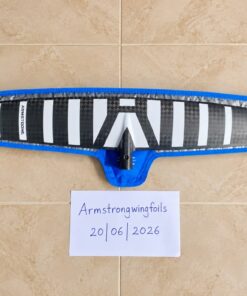
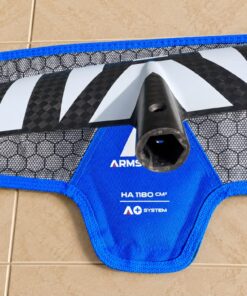
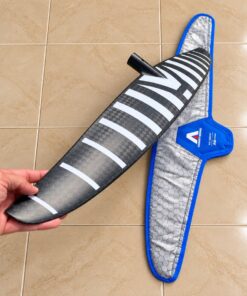
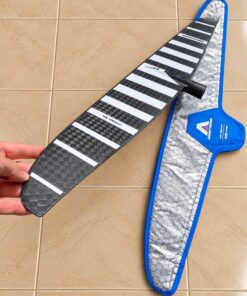
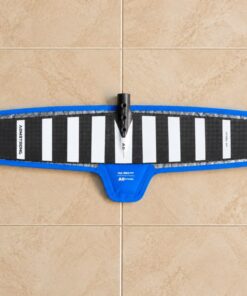
Used Armstrong HA 1180 Front Wing
€500.00
Used Armstrong HA 1180 Front Wing
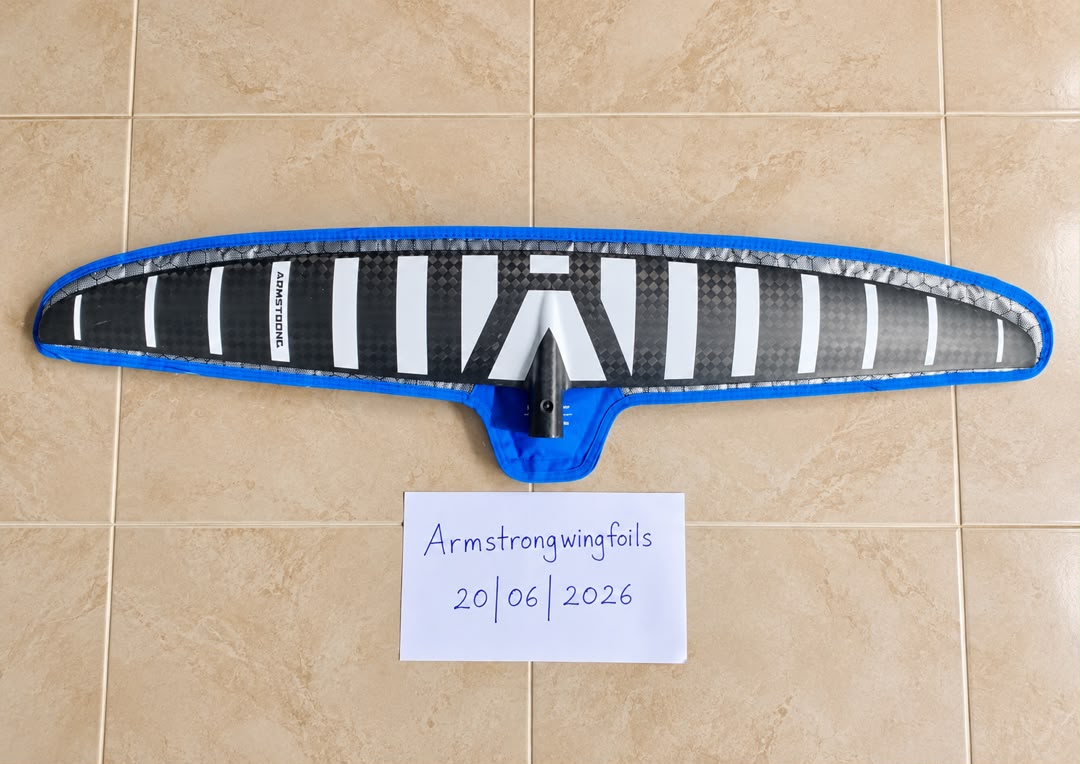
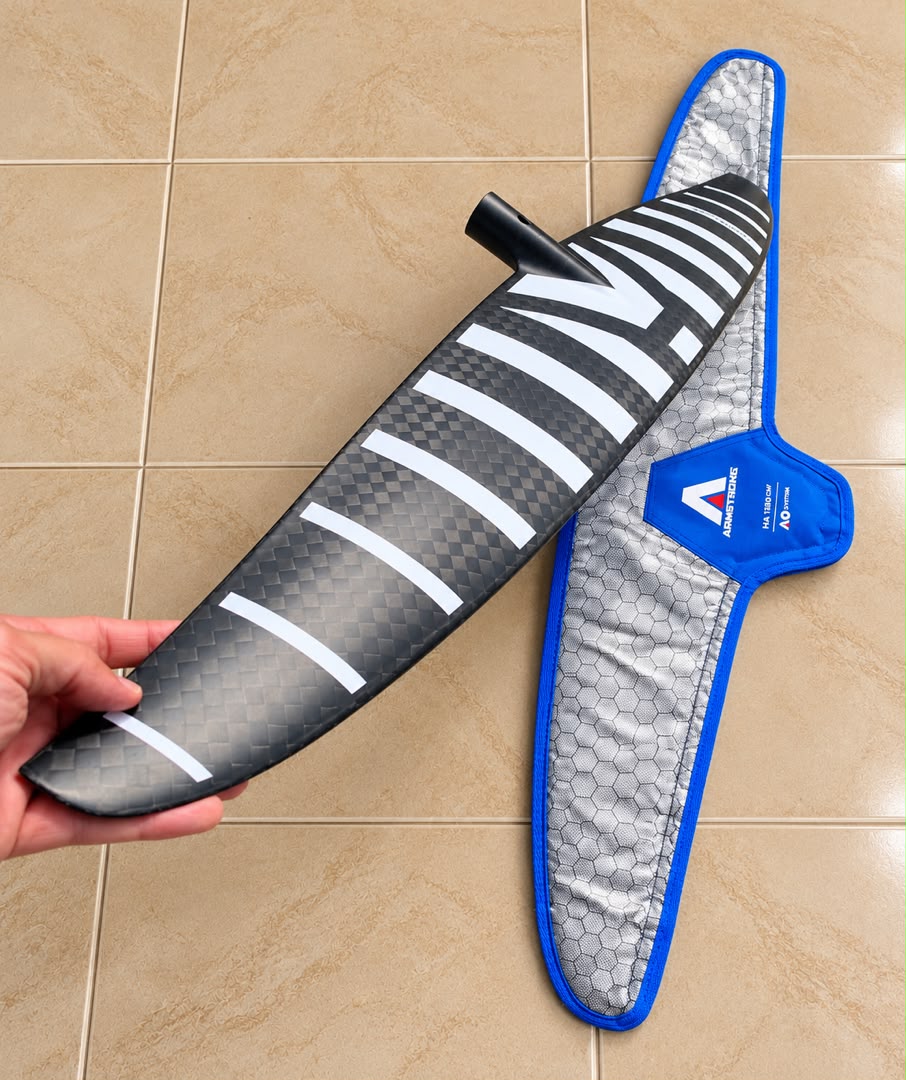
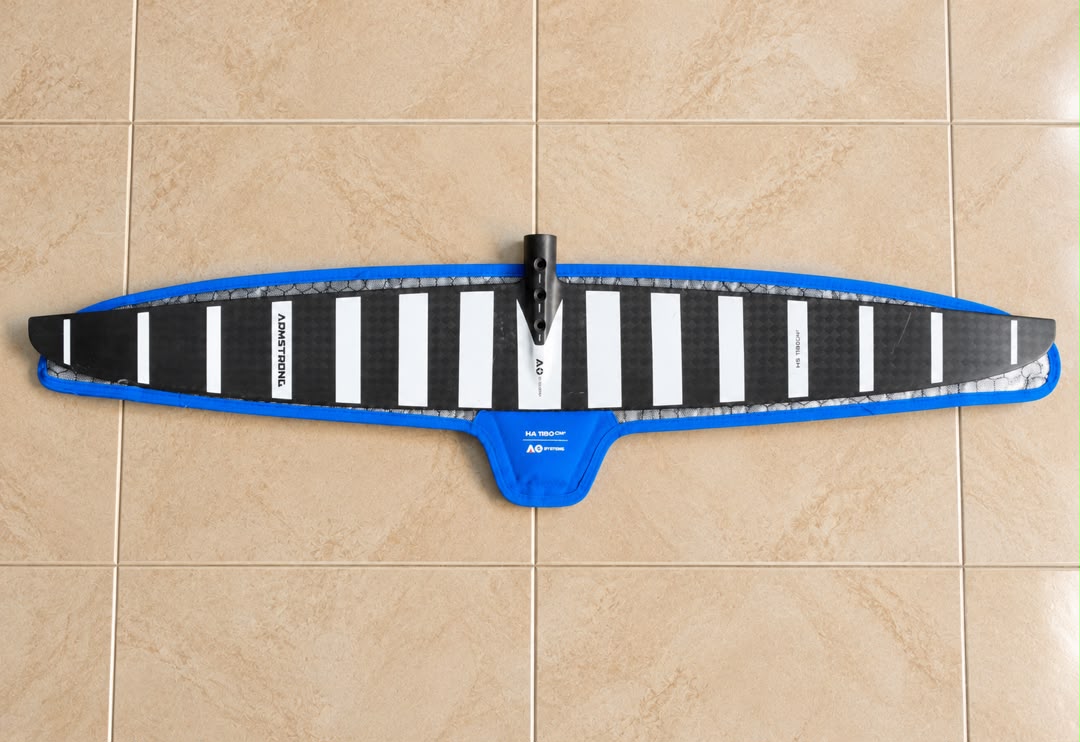
Used Armstrong HA 1180 Front Wing in excellent condition, with only a couple of very minor cosmetic scuffs. A protective wing cover is included, making it a strong option for riders looking for a versatile high-aspect foil at used-equipment value.
Key specifications:
- Surface area: 1180 cm²
- Span: 1066 mm
- Aspect ratio: 9.63
- Excellent reported overall condition
- Minor cosmetic scuffs only
- Wing cover included
- Strong glide and pumping efficiency
- Useful low-speed lift
- Stable pitch response
- Suitable for wing, surf, downwind and pump foiling
The HA 1180 is an excellent all-rounder for riders who want efficient glide without giving up useful lift and maneuverability. Its high-aspect design helps carry speed through soft sections, link swell efficiently and maintain momentum between pumping inputs.
Before use, buyers should inspect the leading edge, trailing edge, wing tips and mounting interface to confirm structural condition and compatibility with their Armstrong foil setup.
Used Armstrong HA 1180 Front Wing – High-Aspect Carbon Foil for Glide, Pumping, Surf, Wing and Downwind Performance
The Used Armstrong HA 1180 Front Wing is a high-aspect hydrofoil front wing developed for riders who want an efficient combination of glide, low-speed lift, pumping ability, speed and controlled maneuverability.
According to the supplied condition information, this front wing is in excellent condition, with only a couple of very minor cosmetic scuffs. A protective wing cover is included, providing additional protection during transport and storage.
The HA1180 has a confirmed surface area of 1180 cm², a span of 1066 mm, and an aspect ratio of 9.63. Those dimensions place it firmly within Armstrong’s high-aspect performance family while still giving it enough area to generate meaningful low-speed lift and efficient pumping.
Armstrong describes its HA range as combining strong glide with early lift, useful turning ability and stable performance at speed. The manufacturer specifically highlights the foil section’s ability to produce significant low-end lift for its area, allowing riders to use a smaller and more maneuverable foil across a broad range of conditions.
This makes the HA1180 particularly attractive as an all-rounder for riders who want one front wing capable of covering several disciplines.
Seller-Stated Condition
This particular front wing is described as:
- Armstrong HA 1180
- Excellent overall condition
- Only a couple of minor cosmetic scuffs
- No reported structural damage
- Protective wing cover included
- 1180 cm² surface area
- 1066 mm span
- 9.63 aspect ratio
- Strong all-round performance
Why Cosmetic Scuffs Usually Matter Less Than Structural Condition
Minor surface marks can occur through normal transport, assembly and use.
What matters more is the condition of:
The leading edge
Trailing edge
Wing tips
Mounting interface
Carbon structure
Fastener holes
Underside mounting area
A used foil should always be checked for structural cracks, deep impacts or delamination rather than judged only by superficial marks.
1180 cm² Surface Area
The HA1180 provides 1180 cm² of planform area.
Why Surface Area Matters
Surface area strongly influences:
Low-speed lift
Takeoff characteristics
Rider weight suitability
Pumping efficiency
Turning response
Why 1180 cm² Makes Sense as an All-Round Size
The 1180 sits in a useful middle-to-larger zone within Armstrong’s HA family.
It offers more lift than the smaller HA sizes while preserving the efficient characteristics of a high-aspect profile.
1066 mm Span
The wing measures 1066 mm across the span.
Why Span Matters
A wider foil generally offers stronger glide efficiency and reduces induced drag.
Why This Helps in Real Use
More efficient span can improve:
Long glides
Linking swell
Pumping distance
Downwind efficiency
Light-wind winging
9.63 Aspect Ratio
The HA1180 has an aspect ratio of 9.63.
Why Aspect Ratio Matters
Aspect ratio compares wingspan with surface area.
A higher aspect ratio generally favors:
Reduced induced drag
Longer glide
Better pumping efficiency
Higher speed efficiency
Why 9.63 Is Important
It provides high-aspect efficiency without pushing the design into an extremely narrow, specialist-only flight envelope.
High-Aspect Design
The HA series is designed to deliver efficient glide while remaining enjoyable through turns.
Why High Aspect Works
A longer span combined with an efficient foil section helps reduce drag.
Why Lower Drag Matters
Less drag allows the foil to maintain speed longer.
Early Lift
Armstrong emphasizes strong low-end lift from the HA foil section.
Why Early Lift Is Useful
The foil can rise onto foil at lower speeds than its efficient profile might suggest.
Why This Broadens the Usable Range
A rider can enjoy:
Light-wind winging
Small-wave surf
Pumping
Downwind starts
Glide
Glide is one of the defining strengths of the HA design.
Why Glide Matters
Once on foil, maintaining speed with minimal drag allows the rider to cover more distance with less energy.
Where Glide Helps Most
Connecting waves
Downwind runs
Pumping
Light-wind riding
Long carving lines
Pumping Efficiency
A high-aspect wing is well suited to pumping.
Why This Matters
Efficient pumping allows the rider to generate or preserve speed without relying continuously on a wave or wing.
Why the HA1180 Works Well for Pumping
The combination of 1180 cm² area and 1066 mm span offers substantial lift while retaining glide efficiency.
Turning Performance
High-aspect foils are sometimes associated with slow turning.
However, Armstrong specifically designed the HA around a more flowing and responsive turn character.
Why This Matters
The foil can still be enjoyable in surf rather than feeling locked into a straight line.
Pitch Stability
One of Armstrong’s key design features is trailing-edge reflex.
The manufacturer says this contributes to active pitch stability, particularly at speed and during maneuvers.
Why Pitch Stability Matters
A stable pitch response makes the foil easier to control through speed changes.
Why This Benefits Progressing Riders
The foil becomes less demanding when conditions become more dynamic.
High-Speed Control
The HA design remains stable as speed increases.
Why This Matters
Some high-aspect foils become highly sensitive at higher speeds.
Stable pitch behavior can improve confidence.
Surf Performance
The HA1180 can be used for surf foiling.
Why It Works in Surf
Its combination of glide and low-speed lift allows riders to connect sections and stay on foil efficiently.
Why Turning Still Matters
The foil is designed to retain enough roll response for carving lines through waves.
Wing Foiling
Wing foiling is another strong use case.
Why the HA1180 Works for Winging
Its efficient glide can reduce the amount of wing power required once on foil.
Why Early Lift Matters
It can help riders get onto foil in marginal conditions.
Downwind Foiling
High-aspect wings naturally suit downwind use.
Why Downwind Efficiency Matters
Long glide allows the rider to connect rolling energy more effectively.
Why Pumping Matters
Efficient pumping can help bridge gaps between bumps.
Foil Front Wing Armstrong HA 1180
The Foil Front Wing Armstrong HA 1180 combines 1180 cm² of area with a 1066 mm span and 9.63 aspect ratio.
That configuration is designed for efficient glide, useful low-speed lift and versatile performance across multiple foil disciplines.
HA Front Foil
The HA Front Foil range is Armstrong’s high-aspect design family.
It emphasizes glide, pumping, speed efficiency and stable handling.
armstrong foils
armstrong foils are designed as modular hydrofoil components for surf, wing, downwind, pump and other foil disciplines.
The HA1180 is one of the front-wing options within that ecosystem.
armstrong integrated foil masts price
A search for armstrong integrated foil masts price concerns the mast component rather than this front wing.
Mast stiffness and construction still influence how directly the rider feels the front wing.
armstrong foil board
An armstrong foil board can be paired with a compatible Armstrong foil system to build a complete setup.
Board selection should match the rider’s discipline, weight and skill level.
surf foil board
A surf foil board is commonly shorter and optimized for efficient takeoff and maneuverability.
The HA1180 can be paired with an appropriately sized surf board for prone foiling.
armstrong downwind board
An armstrong downwind board is designed around efficient displacement and takeoff characteristics for downwind foil use.
The HA1180 can form part of a downwind-oriented setup.
armstrong midlength
armstrong midlength typically refers to longer foil-board shapes that provide more glide and easier paddle or wing starts.
armstrong downwind foil
An armstrong downwind foil should emphasize glide and efficiency.
Those qualities are central to the HA1180.
armstrong mid length board
An armstrong mid length board can offer a balance between compact foil-board handling and longer-board efficiency.
armstrong downwind boards
armstrong downwind boards are designed to support efficient acceleration and lift-off in rolling open-water conditions.
wing foil front wing
A wing foil front wing determines much of the lift, glide and turning feel of a wingfoil system.
The HA1180 provides a high-aspect option with strong glide and useful low-speed lift.
HA Front Foil for sale
A HA Front Foil for sale can appeal to riders seeking higher efficiency than a lower-aspect freeride wing.
This used HA1180 offers that performance profile with only minor reported cosmetic marks.
kite armstrong
The phrase kite armstrong commonly relates to Armstrong equipment used for kite foiling.
Compatibility and size selection should reflect discipline and rider experience.
armstrong foil boards
armstrong foil boards include surf, wing and downwind-oriented shapes designed to integrate with foil systems.
surf foil
A surf foil should allow efficient wave entry, controlled lift and smooth carving.
The HA1180 emphasizes glide while retaining usable turning response.
armstrong foiling
armstrong foiling refers broadly to the brand’s integrated boards, wings, masts, fuselages and stabilizers.
foiling board
A foiling board provides the platform from which the rider starts, balances and controls the foil.
armstrong foils for sale
armstrong foils for sale span beginner-oriented through high-performance categories.
The HA series sits toward the performance end of the range.
foiling boards
foiling boards vary significantly in length, volume and intended discipline.
The front wing should be matched appropriately to the chosen board.
surf foilboard
A surf foilboard is optimized for foil surfing rather than conventional surfboard rail engagement.
armstrong performance mast
An armstrong performance mast can increase stiffness and reduce unwanted flex in a high-performance foil system.
Why Mast Stiffness Matters
A stiff mast helps transfer rider input more directly to the front wing.
armstrong wing
An armstrong wing provides the handheld aerodynamic power source used in wing foiling.
surf foil boards
surf foil boards are designed around compact dimensions and foil-specific balance.
armstrong wings
armstrong wings are separate from foil front wings and provide propulsion for wing foiling.
armstrong fuselage
An armstrong fuselage connects the mast, front wing and stabilizer.
The HA1180 uses Armstrong’s A+ System interface.
armstrong v1 downwind board
The armstrong v1 downwind board belongs to an earlier generation of Armstrong downwind equipment.
A front wing with strong glide can complement downwind-focused board designs.
armstrong integrated foil masts price 2025
The phrase armstrong integrated foil masts price 2025 concerns another component category.
Pricing may vary by mast length, generation and construction.
foil for sup
A foil for sup should provide enough lift and glide for the rider and board combination.
The HA1180 may suit experienced SUP foilers depending on rider mass and conditions.
armstrong wing foil
An armstrong wing foil system combines board, mast, fuselage, front wing, stabilizer and handheld wing.
The HA1180 can form the primary lifting surface within such a setup.
armstrong downwind foil board
An armstrong downwind foil board emphasizes glide and efficient acceleration.
Pairing it with a high-aspect foil can further support long-distance efficiency.
hydrofoil front wing
A hydrofoil front wing generates most of the system’s lift.
Its area, span, foil section and aspect ratio strongly influence performance.
front foil
The front foil is the main lifting surface beneath the water.
The HA1180 is specifically engineered to combine lift with high-aspect efficiency.
hydrofoil lift stability
hydrofoil lift stability refers to how predictably the foil maintains height and responds to changes in speed and rider input.
Armstrong’s trailing-edge reflex is specifically intended to improve pitch stability within the HA family.
Why the HA1180 Is a Strong All-Rounder
The seller describes this wing as a great all-rounder, and its specifications support that positioning.
It Combines
1180 cm² area
1066 mm span
9.63 aspect ratio
Strong low-speed lift
Efficient glide
Useful pumping
Stable pitch behavior
Flowing turns
Why 1180 cm² Is Versatile
The area is large enough to provide useful lift without becoming excessively bulky for an experienced rider.
Why This Matters
A single front wing may cover:
Surf
Wing
Downwind
Pump
Light-wind riding
Why the 1066 mm Span Helps Glide
A longer span reduces induced drag.
Why Reduced Drag Matters
The foil maintains speed more efficiently between power inputs.
Why 9.63 Aspect Ratio Matters
The high-aspect geometry improves glide and pumping efficiency.
Why It Still Remains Usable Through Turns
Armstrong shaped the outline and section specifically to prevent the HA from feeling excessively locked in.
Why Early Lift Is Important
A foil that lifts efficiently at lower speed can broaden the practical wind and wave range.
Where This Helps
Light wind
Small waves
Pumping starts
Downwind acceleration
Why Pitch Stability Is Important
Pitch stability gives the rider more confidence when the foil accelerates.
Why This Helps During Progression
Less pitch sensitivity means fewer abrupt height changes.
Why the Wing Can Work for Advanced Riders
Experienced riders can use the efficient profile to push:
Speed
Glide
Pumping
Carving
Long connections
Why Rider Skill Still Matters
High-aspect foils generally reward more precise control than beginner-oriented low-aspect wings.
Why This Matters
The HA1180 may be manageable and stable for its category, but it should not automatically be treated as a first-ever foil.
Why Front Wing Selection Depends on Rider Weight
Armstrong has historically advised that larger surface areas generally suit heavier riders better while smaller wings tend to suit lighter riders.
Why This Matters
A lighter rider may find the HA1180 very lift-oriented.
A heavier rider may appreciate the additional low-end support.
Why Conditions Matter
The same wing can feel different in:
Flat water
Small surf
Large surf
Strong wind
Light wind
Downwind swell
Why Stabilizer Choice Matters
The rear stabilizer contributes to pitch stability, turning feel and overall balance.
Why This Matters
Changing stabilizer size or shape can noticeably alter how the HA1180 feels.
Why Mast Choice Matters
Mast stiffness influences feedback and control.
A Stiffer Mast Can Improve
Response
High-speed control
Carving precision
Pump efficiency
Why Fuselage Choice Matters
The fuselage determines the spacing and structural relationship between the main components.
Why Correct Compatibility Matters
The HA1180 is designed around Armstrong’s A+ System.
A+ System Compatibility
Armstrong describes the A+ System as its proprietary connection method joining mast, fuselage, front foil and stabilizer to create a solid, smooth feel on the water.
Why This Matters
A secure interface minimizes unwanted movement between components.
Why Hardware Condition Matters
The mounting interface should be checked carefully on a used foil.
Inspect
Bolt holes
Countersunk areas
Thread interface
Mounting surface
Why This Matters
Damage around the mounting area can affect assembly and alignment.
Why the Leading Edge Matters
The leading edge should remain smooth and structurally sound.
Why Small Surface Imperfections Can Matter
Rough damage can increase drag or disturb water flow.
Why Minor Cosmetic Scuffs Are Different
Small superficial marks may have little practical effect if they do not penetrate the structural laminate.
Why the Trailing Edge Matters
The trailing edge should remain straight and undamaged.
Why This Matters
A clean trailing edge supports predictable water release.
Why Wing-Tip Condition Matters
Tips are more exposed to impacts during transport and shallow-water use.
Inspect For
Chips
Cracks
Deep scratches
Delamination
Why Carbon Condition Matters
Carbon construction provides stiffness at low weight.
Why Structural Integrity Is Essential
Deep impact damage can compromise laminate strength.
Why a Wing Cover Adds Value
The protective cover included with this foil is useful for storage and travel.
Why This Matters
Front wings have large exposed leading edges and tips.
A cover reduces the chance of:
Scratches
Transport damage
UV exposure
Contact with other hardware
Why Transport Care Matters
The foil should not be placed loose against masts, boards or metal hardware.
Why This Matters
Hard components can chip or scratch the carbon surface.
Why Fresh-Water Rinsing Matters
After saltwater use, the foil and hardware should be rinsed with fresh water.
Why Salt Matters
Salt can accumulate around hardware and mounting surfaces.
Why Drying Matters
The foil should be allowed to dry before long-term storage.
Why This Helps
Moisture can remain around hardware interfaces.
Why the Foil Should Be Disassembled Periodically
Regular inspection allows mounting surfaces and hardware to be checked.
Why This Matters
Salt, sand and debris can collect between components.
Why Correct Fasteners Matter
Only compatible hardware should be used.
Why This Matters
Incorrect bolt length or thread type can damage the assembly.
Why Over-Tightening Should Be Avoided
Fasteners should be installed to the manufacturer’s recommended procedure.
Why Excessive Torque Is Unhelpful
It can damage threads or mounting surfaces.
Why Serial Number Verification Can Help
Armstrong states that front-foil serial numbers are located on the underside where the fuselage connects.
Why This Is Useful
Serial information can help with:
Product identification
Support
Ownership records
Why This Used Foil Can Offer Strong Value
A used front wing in excellent condition can offer the same fundamental shape and performance characteristics at a lower purchase cost than a new example.
Why Condition Matters
The best used-value examples show:
Clean mounting surfaces
No structural cracks
No repaired impacts
Minimal edge wear
Only superficial cosmetic marks
Why This Particular Example Is Attractive
The supplied condition information indicates:
Excellent overall condition
Only minor cosmetic scuffs
Protective cover included
No reported structural problems
Why It Can Work as a One-Wing Solution
The combination of lift, glide and turning ability makes the HA1180 useful across several riding styles.
Potential Uses
Wing foiling
Surf foiling
Downwind foiling
Pumping
SUP foiling
Why It Works for Wing Foiling
Once flying, the efficient profile can maintain speed with reduced wing power.
Why This Helps in Light Wind
The rider may be able to keep foiling through softer patches.
Why It Works for Surf Foiling
Glide helps connect wave energy.
Why Turning Ability Matters
The rider can still carve rather than simply run straight down the line.
Why It Works for Downwind
Long glide and pumping efficiency are particularly useful in rolling swell.
Why Lift Matters
The 1180 cm² area provides useful support while connecting bumps.
Why It Works for Pumping
Reduced drag makes each pump stroke more efficient.
Why This Matters
The rider can cover more distance before losing speed.
Precision and Control
Precision in hydrofoiling comes from the interaction between the rider and a stiff, predictable foil system.
Why the HA1180 Can Feel Precise
Its pitch-stability features help reduce unnecessary height changes.
Why Roll Control Still Requires Technique
The 1066 mm span provides efficiency but also demands deliberate carving input.
Why Setup Position Matters
Mast-track position influences front-foot and back-foot pressure.
Why Small Changes Matter
Moving the mast can noticeably change balance.
Why Stabilizer Setup Matters
The rear foil influences pitch feel.
Why Tuning Should Be Incremental
Small changes are easier to evaluate than multiple changes at once.
Why Board Choice Matters
Board volume and shape influence takeoff, stability and maneuverability.
Why a Downwind Board Feels Different
Longer shapes accelerate efficiently.
Why a Compact Wing Board Feels Different
Shorter boards reduce swing weight once on foil.
When to Use the HA1180
The HA1180 can be especially useful when a rider wants:
Efficient glide
Reasonable low-end lift
Strong pumping
Multi-discipline versatility
A high-aspect feel without choosing the smallest possible wing
Where the HA1180 Performs Well
It can be used across:
Ocean swell
Wingfoil locations
Surf breaks
Downwind runs
Flat-water pumping sessions
Who May Appreciate It Most
The HA1180 may especially appeal to:
Intermediate riders
Advanced riders
Heavier riders wanting efficient lift
Riders building a multi-discipline setup
Riders prioritizing glide
Who May Prefer a Larger Front Wing
A larger wing may make more sense for:
Very light wind
Very heavy riders
Beginning foil riders
Maximum low-speed lift
Who May Prefer a Smaller Front Wing
A smaller front wing may appeal to riders prioritizing:
Higher top speed
Sharper turning
Large waves
Powered conditions
Why This Foil Is Good
Its strength lies in balance.
It combines:
Efficient high-aspect glide
Useful lift
Stable pitch response
Pumping performance
Multi-discipline use
Flowing maneuverability
Important Used-Buyer Inspection
Before purchase or first use, inspect:
Leading edge
Trailing edge
Wing tips
Mounting surface
Fastener holes
Carbon laminate
Serial number area
Protective cover
Why Structural Inspection Matters More Than Minor Scuffs
Small superficial marks usually matter much less than:
Cracks
Delamination
Deep gouges
Impact damage
Damaged mounting holes
Final Section 1 Assessment
The Used Armstrong HA 1180 Front Wing is a highly versatile high-aspect foil designed around glide, low-speed lift, efficient pumping, stable pitch behavior and enjoyable turning performance.
Its confirmed dimensions are a 1180 cm² area, 1066 mm span and 9.63 aspect ratio. Armstrong specifically markets the HA family around a combination of early lift, long glide and maneuverability across surf, wing and downwind foiling.
The manufacturer’s design approach helps explain why the HA1180 works as an all-rounder.
Its foil section is engineered to generate useful low-end lift for its size, while the high-aspect planform reduces drag and supports long glide. Armstrong’s trailing-edge reflex also contributes to pitch stability, giving the rider greater control as speed changes.
For practical use, that translates into a front wing capable of covering several disciplines.
In wing foiling, the efficient glide can help the rider maintain foil through lighter patches.
In surf, the combination of glide and turning response can make it easier to connect sections.
For downwind riding, long glide and pumping efficiency become especially valuable.
For pump foiling, reduced drag helps preserve momentum between strokes.
This particular example is described as being in excellent condition, with only a couple of minor cosmetic scuffs, and it includes a protective wing cover.
Those condition details are encouraging, although a used carbon front foil should always be checked carefully around the leading edge, tips, trailing edge, mounting interface and bolt holes before use.
The included cover adds practical value because it protects the wide 1066 mm span during transport and storage.
Compatibility is another important consideration.
The HA1180 is built around Armstrong’s A+ System, which Armstrong describes as its proprietary connection system joining the mast, fuselage, front foil and stabilizer into a solid assembly.
Therefore, buyers should verify that their existing fuselage and hardware match the required generation and interface.
Rider skill should also be considered.
Although the HA1180 offers useful pitch stability and low-speed lift, high-aspect foils generally reward riders who already have basic foil control. Armstrong’s historical buyer guidance positioned the HA category as a more performance-oriented range than its beginner-focused foil families.
For an intermediate or experienced rider seeking a front wing that can deliver glide without giving up useful lift or carving ability, the HA1180 offers a compelling balance.
Its 1180 cm² surface area provides meaningful support, while the 1066 mm span and 9.63 aspect ratio deliver the efficient character expected from a modern high-aspect foil.
With the included protective cover, excellent reported condition and only minor cosmetic scuffs, this used HA1180 can be a strong option for riders wanting Armstrong performance across winging, surf, pumping and downwind sessions without purchasing a separate front wing for every discipline.
Section 2 – Ride Feel, Setup, Compatibility, Condition, Maintenance, Tuning and Real-World Ownership
Overall Character of the Front Wing
The Armstrong HA 1180 is best understood as an efficient, performance-oriented front wing that balances glide, low-speed support, pumping ability and controlled maneuverability.
It is not simply designed to go fast in a straight line.
Instead, its shape allows the rider to carry speed efficiently while still maintaining enough control for carving, linking sections and managing changing water conditions.
That balance is one of the reasons the 1180 can work across several foil disciplines.
According to the supplied condition information, this particular example is in excellent condition and shows only a couple of very minor cosmetic scuffs.
A protective cover is included.
Those details make the wing particularly attractive for a rider who wants proven performance without necessarily paying for a brand-new front foil.
How the 1180 Feels on the Water
The riding character is influenced by three main dimensions:
Surface area
Span
Aspect ratio
At 1180 cm², the wing carries enough area to provide useful lift.
At 1066 mm of span, it offers a broad working surface.
At 9.63 aspect ratio, it sits firmly in high-aspect territory.
Together, those characteristics create a foil that rewards smooth technique and efficient riding.
Why the Wing Feels Efficient
Efficiency comes from reducing unnecessary drag while maintaining useful lift.
The wide span helps the wing maintain momentum.
Therefore, once the foil is up to speed, it tends to continue carrying energy forward instead of slowing abruptly.
Why This Matters in Real Conditions
That efficiency can be useful when:
The wind temporarily drops
A wave loses power
A downwind bump flattens
The rider needs to pump across dead water
A section must be linked without touching down
Takeoff Characteristics
A high-aspect foil does not have to feel difficult at low speed.
The 1180 provides enough surface area to generate lift without requiring extremely high initial speed.
Why Takeoff Technique Still Matters
Good pumping and board acceleration remain important.
The rider should build speed smoothly rather than trying to force the foil upward.
Why Smooth Lift-Off Is Better
A progressive rise allows the rider to establish pitch control early.
Sudden lift can make the board climb too aggressively.
Board Speed Before Lift
The board should be allowed to accelerate.
Why This Matters
A foil becomes more controllable when it is generating clean, predictable lift.
Pitch Control
Pitch control is one of the most important skills when riding a high-aspect foil.
Why the 1180 Can Feel Stable
Its design aims to provide a predictable relationship between speed and lift.
That means the rider can make small front-foot and back-foot adjustments without constantly fighting abrupt pitch changes.
Why Speed Changes Still Require Attention
Any foil produces more lift as speed increases.
Therefore, the rider must remain aware of increasing front-foot pressure or ride height as acceleration builds.
How to Manage Acceleration
Use gradual pressure changes.
Keep the board level.
Avoid abrupt back-foot loading.
Why Small Inputs Work Better
A high-aspect foil responds efficiently.
Large movements can create larger-than-necessary reactions.
Roll Control
Roll determines how easily the foil moves from rail to rail.
Why Span Affects Roll
A 1066 mm span creates leverage.
That efficiency helps glide, but it can make the wing feel less twitchy than a much smaller, narrower front wing.
Why This Can Be Positive
A calmer roll response helps riders draw longer, smoother turns.
Why Technique Still Matters
The rider should initiate turns through coordinated body movement rather than forcing the board aggressively.
Carving Feel
The 1180 can be enjoyable through broad, flowing turns.
Why High Aspect Does Not Mean Straight-Line Only
Foil outline, section shape and stabilizer choice all influence carving.
A well-balanced setup can retain good roll while preserving glide.
Surf Use
In surf, the wing works best when the rider wants to connect multiple sections efficiently.
Why Glide Helps
Instead of relying entirely on the power of one wave, the rider can carry speed from one section to the next.
Why Pumping Helps in Surf
When a wave softens, pumping can bridge the gap.
Why Turning Matters
A surf foil still needs enough roll response to stay connected to the wave face.
Small-Wave Conditions
The 1180 can be particularly useful in smaller surf because it combines area with efficiency.
Why This Helps
Weak waves may not provide much continuous energy.
A foil that carries momentum well can compensate.
Larger-Wave Conditions
In more powerful surf, some riders may prefer a smaller front wing.
Why
Smaller wings can provide:
Higher speed tolerance
Quicker direction changes
Lower lift at high speed
Why Rider Weight Changes This Decision
A heavier rider may still prefer the 1180 in conditions where a lighter rider would choose something smaller.
Wing-Foiling Use
The 1180 can be a strong choice for wing foiling.
Why It Works
Once on foil, the wing’s glide efficiency can reduce the amount of power needed from the handheld wing.
Why This Helps in Gusty Wind
The foil can continue carrying speed when the wind temporarily softens.
Light-Wind Sessions
The surface area can help in lighter wind.
Why Board Choice Becomes Important
A more efficient board can help the rider accelerate onto foil sooner.
Why Pumping Technique Matters
Coordinated board and wing pumping can reduce the wind required for takeoff.
Strong-Wind Sessions
The 1180 can still be used when powered, but some riders may prefer a smaller foil.
Why
A smaller front wing may reduce lift and improve top-end control.
Downwind Use
The 1180’s glide is well suited to open-water downwind riding.
Why Downwind Riding Rewards Efficiency
The rider moves from one piece of swell energy to another.
Why the Foil Must Preserve Speed
Losing too much speed between bumps makes the next connection harder.
Why the 1180 Can Help
The high-aspect design reduces drag and supports longer transitions.
Pumping Between Bumps
Efficient pumping can extend the rider’s range.
Why Technique Matters
Pumping should use coordinated body movement rather than large, inefficient bouncing.
Flat-Water Pumping
The wing can also work for dock-start or flat-water pumping.
Why Surface Area Helps
The 1180 cm² area gives useful low-speed support.
Why High Aspect Helps
The long span improves glide between pump cycles.
Why Cadence Matters
The rider should find a rhythm that matches the foil’s natural response.
Too Fast
Rapid pumping can waste energy.
Too Slow
The foil may lose too much speed.
Rider Weight
Rider mass has a major effect on how the wing feels.
Lighter Riders
A lighter rider may experience:
Earlier lift
More low-speed support
Greater sensitivity to excess lift
Heavier Riders
A heavier rider may appreciate:
Extra lift
Better pumping support
Improved low-speed stability
Why Body Weight Is Only One Variable
Skill level, board efficiency, stabilizer choice and mast setup also matter.
Skill Level
The wing is more suitable for riders who already understand basic foil control.
Why
High-aspect wings reward precision.
What a Rider Should Already Understand
Pitch control
Ride height
Foot pressure
Carving input
Pumping rhythm
Why It Can Still Be Friendly
The 1180 is not necessarily extreme.
Its area gives useful support, while its design emphasizes stable and predictable lift.
Board Compatibility
The front wing can be paired with different board types depending on discipline.
Compact Wing Board
A shorter wing board reduces swing weight.
Why This Helps
The setup can feel more responsive once flying.
Mid-Length Board
A mid-length shape can improve acceleration.
Why This Matters
Better hull efficiency can reduce the amount of energy required to reach takeoff speed.
Downwind Board
A longer displacement-style board can accelerate efficiently in light wind or rolling swell.
Why This Pairs Well With the 1180
The board gets moving easily, while the foil maintains glide after takeoff.
Surf Board
A compact surf-focused board may be preferred for prone use.
Why
Lower swing weight can improve carving.
Mast Choice
The mast influences stiffness and feedback.
Why a Stiff Mast Helps
A rigid mast transfers input more directly between the rider and foil.
Why This Becomes More Important With a Wide Wing
A 1066 mm span creates meaningful leverage.
Therefore, unwanted mast flex can reduce precision.
Mast Length
Mast length affects riding height and practical conditions.
Shorter Mast
Can feel more manageable in shallow water.
Longer Mast
Provides more vertical range in chop and swell.
Why Longer Is Not Always Better
Greater mast length can increase leverage and reduce maneuverability.
Fuselage Setup
The fuselage links the front wing to the mast and stabilizer.
Why Correct Interface Matters
A secure connection maintains alignment.
Why Alignment Matters
Small misalignment can change tracking and handling.
Fastener Condition
Bolts should be checked regularly.
Why
Loose hardware can create movement.
Why Movement Is Undesirable
Play between components reduces precision.
Tightening Practice
Fasteners should be tightened correctly.
Why Over-Tightening Is a Problem
Excess torque can damage threads or mounting surfaces.
Why Under-Tightening Is Also a Problem
Loose bolts can allow movement.
Thread Care
Threads should remain clean.
Why Sand and Salt Matter
Debris can damage threads and make accurate tightening difficult.
Stabilizer Choice
The rear stabilizer can significantly change the feel of the foil.
Larger Stabilizer
Generally adds more pitch stability.
Smaller Stabilizer
Can create a looser, faster-feeling setup.
Why Balance Matters
The front and rear wings work together.
Why One Change Can Alter the Whole System
Changing the stabilizer affects lift balance and turning feel.
Shimming and Tuning
Some setups allow fine tuning through stabilizer angle.
Why Small Adjustments Matter
Even minor changes can affect front-foot and back-foot pressure.
Why Incremental Changes Are Best
One adjustment at a time makes the effect easier to understand.
Mast-Track Position
The foil can usually be moved forward or backward in the board track.
Moving Forward
Typically increases front-foot pressure and earlier lift.
Moving Backward
Generally reduces front-foot pressure.
Why Small Movements Matter
A few millimeters can noticeably alter balance.
Why Riders Should Mark a Baseline
A known starting point makes tuning easier.
Establishing a Baseline Setup
Start with:
Normal mast position
Familiar stabilizer
Normal stance
Consistent conditions
Why Baseline Matters
It gives the rider something to compare against.
Foot Position
Foot placement influences pitch control.
Why Front-Foot Pressure Matters
A high-aspect foil can accelerate efficiently.
The rider should manage lift through controlled pressure.
Why Rear-Foot Dominance Can Be Problematic
Too much rear pressure can cause unnecessary climbing.
Stance Width
A comfortable stance should allow smooth weight transfer.
Why Extremely Wide Stance Can Be Limiting
It may reduce fluidity.
Why Extremely Narrow Stance Can Reduce Control
There may be less leverage over pitch.
Ride Height
The foil should not constantly run at maximum mast height.
Why
Operating too close to the surface increases ventilation risk.
Why Moderate Ride Height Helps
It leaves space for pitch corrections.
Breaching
A front wing tip can breach the surface during aggressive turns.
Why This Matters
Air can be drawn into the foil.
Why Smooth Roll Helps
Controlled carving reduces sudden tip breaches.
Ventilation
Ventilation can cause temporary loss of lift.
Why It Happens
Air is drawn along the foil surface.
How to Reduce Risk
Avoid excessive ride height.
Use smooth turns.
Maintain clean foil surfaces.
Cavitation
At high speed, local pressure changes can create cavitation.
Why This Is Different From Ventilation
Cavitation comes from vapor formation rather than air entering from the surface.
Why Surface Condition Matters
Clean edges help preserve predictable water flow.
Leading-Edge Condition
The leading edge should remain smooth.
Why Small Surface Damage Can Matter
Deep chips or gouges may disturb flow.
Why Minor Cosmetic Scuffs Are Different
Very light marks often affect appearance more than structural performance.
Trailing Edge
The trailing edge should remain straight.
Why
It controls how water leaves the wing.
Why Damage Here Should Be Checked Carefully
Sharp or uneven damage can affect flow.
Wing Tips
Tips are especially exposed during transport.
Inspect For
Chips
Cracks
Impact marks
Why Tip Damage Can Be Significant
The wing is relatively thin near the tips.
Carbon Laminate
The structure should remain rigid.
Why This Matters
Carbon fiber depends on an intact laminate.
Signs of Possible Structural Damage
Soft spots
Cracks
Unusual flex
Delamination
Deep impacts
Why Tapping Alone Is Not Enough
Professional inspection may be required if damage is suspected.
Cosmetic Marks
The seller reports only a couple of minor cosmetic scuffs.
Why This Is Encouraging
Superficial marks are common on used foils.
Why Structural Inspection Still Comes First
A foil can look clean while having damage around the mount.
Mounting Interface
The fuselage connection should be inspected carefully.
Why This Area Matters
Loads are concentrated here.
Check
Mounting faces
Bolt holes
Threads
Carbon around the connection
Why Clean Contact Surfaces Matter
Smooth mating surfaces improve alignment.
Why Debris Should Be Removed
Sand or salt trapped between parts can damage the interface.
Protective Cover
The included cover is useful.
Why
It protects the leading edge and tips during transport.
Why the Wing Should Be Covered When Not in Use
A large carbon wing is vulnerable to accidental impacts.
Why the Cover Should Be Dry
Wet covers can trap moisture and salt.
Saltwater Care
Rinse the wing after saltwater use.
Why
Salt residue can build up around hardware.
Freshwater Rinse
Use clean water.
Why High-Pressure Washing Is Unnecessary
Strong jets can force debris into small gaps.
Drying
Allow components to dry before storage.
Why
Moisture around hardware can encourage corrosion.
Disassembly
Periodic disassembly is useful.
Why
It allows inspection of:
Bolts
Threads
Mounting faces
Salt buildup
Why Every Session Does Not Always Require Full Disassembly
Repeated unnecessary handling can also increase wear.
Storage
Store the foil in a clean, dry environment.
Avoid
Direct sunlight
Extreme heat
Sharp objects
Heavy items resting on the wing
Why UV Matters
Long exposure can affect surface finishes and materials.
Why Heat Matters
Extreme temperature can affect adhesives and composite finishes.
Vehicle Storage
Avoid leaving the foil for long periods inside a hot vehicle.
Why
Interior temperatures can become very high.
Travel
Use the cover during transport.
Why
Vehicle movement can cause components to strike each other.
Air Travel
Extra protection may be required.
Why
Baggage handling can be rough.
Packing Strategy
Protect:
Wing tips
Leading edge
Mounting interface
Why These Areas Matter Most
They are vulnerable to impact.
Beach Handling
Do not drag the wing through sand.
Why
Sand can scratch surfaces and enter hardware.
Shallow Water
Use caution around reef, rocks and sandbars.
Why
High-aspect wings have wide spans.
Why Wide Span Increases Contact Risk
Tips extend farther from the mast.
Carrying the Foil
Hold the system securely.
Why Wind Can Be a Problem
A wide foil can catch wind unexpectedly on land.
Pre-Session Check
Before riding, inspect:
Bolts
Wing surface
Mounting area
Mast connection
Stabilizer
Why This Takes Little Time
A quick check can prevent equipment problems on the water.
Post-Session Check
After riding, look for:
New scratches
Impact marks
Loose bolts
Damage from shallow water
Why Immediate Inspection Helps
The rider can remember when and how damage occurred.
Performance in Choppy Water
The wing’s efficiency can be helpful in chop.
Why Mast Length Matters More
Enough mast height allows the board to clear surface movement.
Why Stable Pitch Helps
The rider can maintain height through changing water texture.
Performance in Smooth Water
Flat conditions are excellent for learning the wing’s pumping and glide characteristics.
Why
The rider can feel the foil without wave-induced disturbance.
Performance in Small Swell
The 1180 can connect rolling energy efficiently.
Why
Its glide helps bridge low-energy gaps.
Performance in Strong Swell
The rider may need to manage speed carefully.
Why
Additional energy can increase lift rapidly.
Why Some Riders Size Down
A smaller foil may provide more top-end control.
Learning the Wing
The first sessions should focus on understanding balance.
Priorities
Takeoff
Ride height
Pitch
Turns
Pump rhythm
Why Maximum Speed Should Not Be the First Goal
Efficiency and control are more important.
Why Consistency Comes Before Performance
A rider who can reproduce the same flight behavior has a better base for progression.
Tuning for More Glide
The rider may experiment with stabilizer and mast position.
Why Small Changes Are Better
Large changes can make diagnosis difficult.
Tuning for More Turning
A smaller or looser-feeling rear setup can increase maneuverability.
Why
It reduces resistance to pitch and roll movement.
Tuning for More Stability
A more supportive rear setup can provide a calmer feel.
Why
It increases the system’s resistance to sudden pitch changes.
Rider Progression
The 1180 can remain useful as skill improves.
Why
It has enough performance to reward better technique.
Early Intermediate Rider
May appreciate:
Lift
Stability
Glide
Advanced Rider
May use it for:
Long pumping
Downwind efficiency
Light-wind riding
Small-wave linking
Why It Can Stay Relevant
A good all-round wing can remain part of a quiver even after smaller front wings are added.
Quiver Role
The 1180 can occupy the efficient, lift-oriented slot.
Smaller Companion Wing
Can cover:
Strong wind
Large surf
Higher speed
Larger Companion Wing
Can cover:
Very light wind
Heavier riders
Ultra-low-speed starts
Why Quiver Strategy Matters
No single foil is perfect for every condition.
Why the 1180 Is Still Versatile
Its specifications place it near a useful middle ground for riders who prioritize efficiency.
Used-Value Considerations
A front wing in excellent condition can offer strong value.
Why
The fundamental foil shape does not degrade simply because the wing has been used.
What Matters More
Structural condition
Mounting interface
Edge condition
Repair history
Questions to Ask
Has it ever been repaired?
Has it struck reef or rocks?
Has the mount been damaged?
Has it been sanded?
Why Repair History Matters
Professional cosmetic refinishing is different from structural repair.
Why Sanding History Matters
Aggressive sanding can alter foil geometry.
Why Edge Repairs Matter
The profile should remain consistent.
Surface Finish
Light scuffs are usually cosmetic.
Why Smoothness Still Helps
Cleaner surfaces reduce unnecessary drag.
Minor Maintenance
Light cleaning may improve appearance.
Why Abrasive Polishing Should Be Avoided
It can change the foil surface or edges.
Professional Repair
Structural damage should be handled properly.
Why DIY Carbon Repair Can Be Risky
The wing carries significant hydrodynamic loads.
Why Weight Alone Does Not Determine Suitability
A rider’s skill and riding style are equally important.
Aggressive Rider
May prefer a smaller foil in powered conditions.
Efficiency-Focused Rider
May value the 1180’s glide.
Light-Wind Rider
May appreciate its area.
Pump-Focused Rider
May value the span and reduced
Be the first to review “Used Armstrong HA 1180 Front Wing”
Related products


Used Product
Used Product

Used Product
Used Product
Used Product
Used Product
Used Product
Used Product
Reviews
There are no reviews yet.