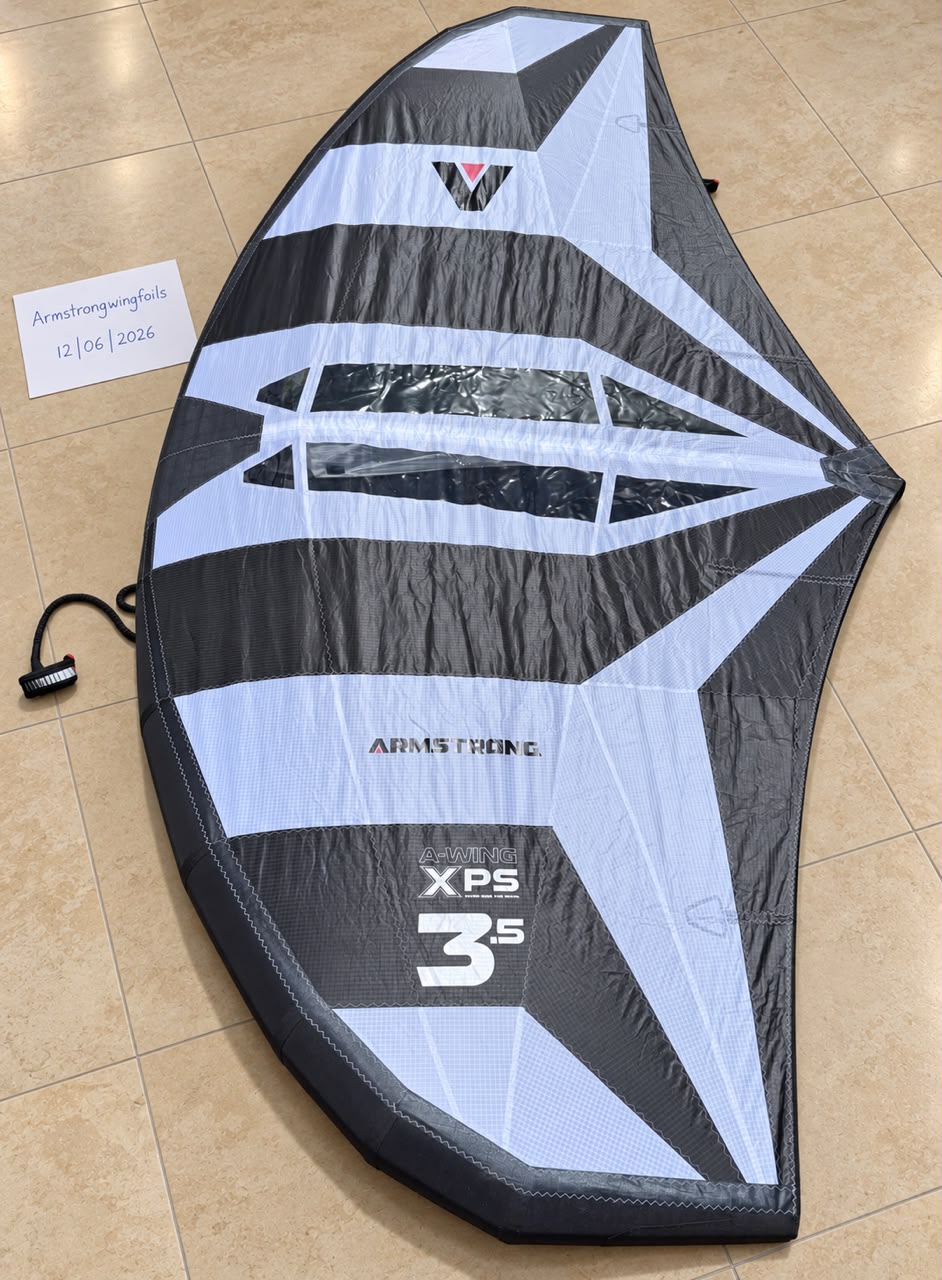
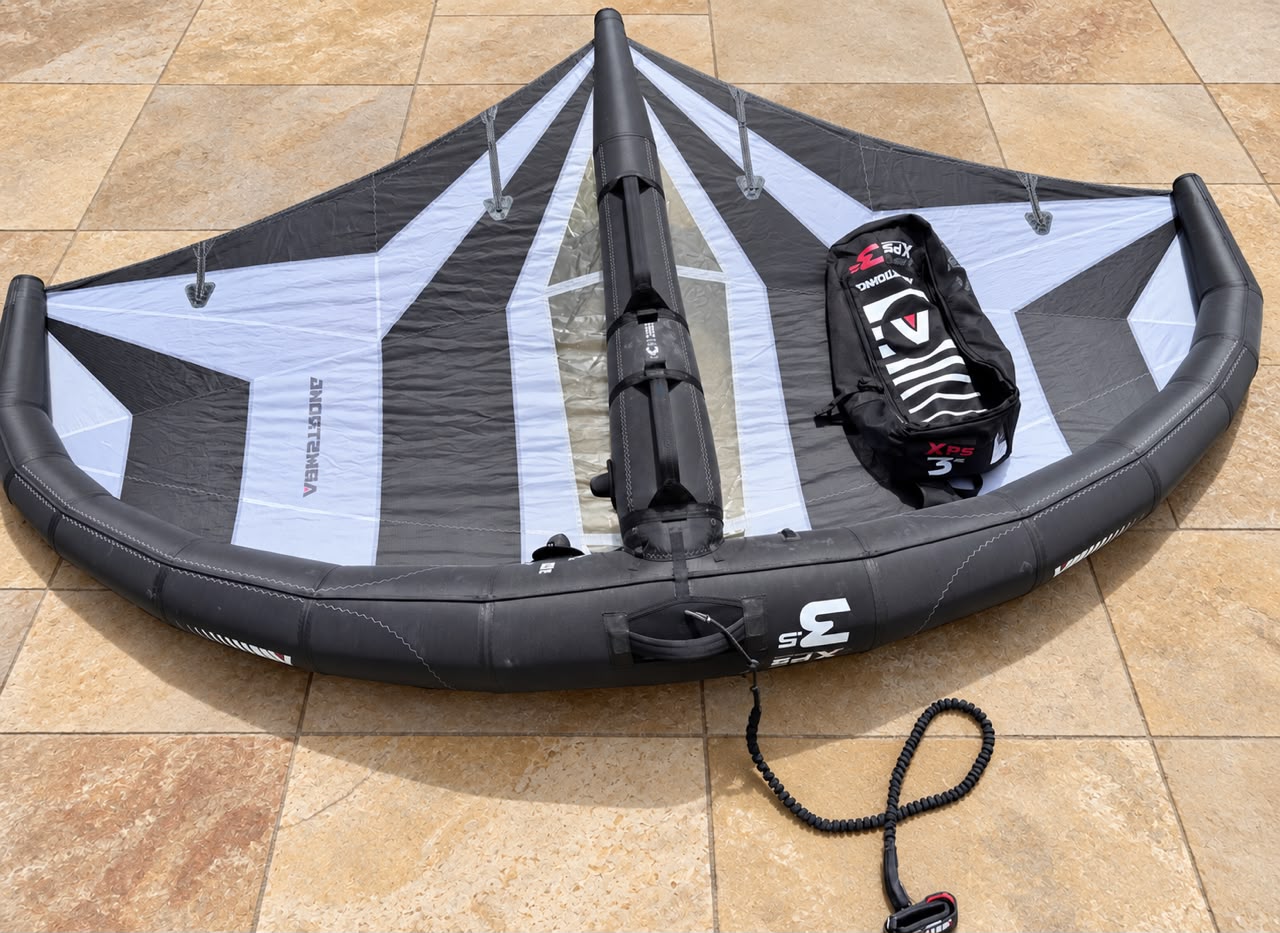
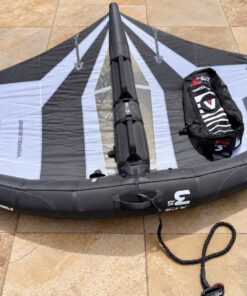
Used Armstrong A Wing XPS 3.5m
€489.00
This Used Armstrong A-Wing 3.5m is in near-new condition with approximately 1 hour of total use. It has seen very limited time on the water, making it an excellent option for riders who want premium performance equipment with minimal previous wear.
The compact 3.5 m size is well suited to stronger wind conditions, offering responsive handling, controlled power delivery, and easier maneuverability during transitions, wave riding, and freeride sessions.
Key Details
- Model: Armstrong A-Wing
- Size: 3.5 m
- Condition: Near-new
- Usage: Approximately 1 hour
- Included: Wing bag
- Included: Wrist leash
- Included: Spare carbon battens
- Best For: Stronger wind, freeride, wave riding, and performance sessions
- Handling: Compact, responsive, and easy to position
- Overall: Very lightly used and well preserved
The included bag makes transport and storage easier, while the wrist leash adds an essential safety connection during use. Spare carbon battens are also included, adding extra long-term value.
Overall, this is a clean, very lightly used 3.5 m wing with minimal wear and a complete accessory package. It is a strong choice for riders looking to add a smaller high-wind wing to their setup without paying full new-equipment pricing.
Used Armstrong A-Wing 3.5m Wingfoil
Used Armstrong A-Wing 3.5m Overview
This Used Armstrong A-Wing 3.5m is a near-new wing with approximately one hour of total use, making it an excellent option for riders who want premium performance equipment without the cost of buying completely new. The wing comes with its bag, wrist leash, and spare carbon battens, giving the buyer the key accessories needed for storage, transport, control, and long-term ownership.
Because it has seen such limited use, the canopy, frame, handles, and overall structure remain exceptionally fresh. For anyone comparing an armstrong wing, armstrong wings, or a complete armstrong wing foil setup, this 3.5 m size provides a compact, responsive option for stronger wind conditions and more performance-oriented riding.
3.5m Size and Riding Characteristics
The 3.5 m size is designed for riders who want a smaller, easier-to-control wing when the wind becomes stronger.
Compared with larger wing sizes, a 3.5 m wing generally feels quicker through transitions, lighter in the hands, and easier to position while carving or riding waves Used Armstrong A Wing XPS 3.5m.
It can be especially valuable for riders who already have a larger wing and want to expand their quiver for stronger days.
The smaller surface area can reduce unnecessary pull when wind strength increases, while still providing enough power when paired with an efficient board and foil setup.
Near-New Condition
One of the strongest selling points of this wing is its condition.
It has approximately one hour of use, which means it has experienced very little wear compared with wings that have been ridden for entire seasons.
The canopy has not been heavily cycled through repeated inflation, packing, UV exposure, and water use.
Likewise, the structural frame has seen minimal loading.
For buyers who want something close to new without paying full retail pricing, this limited-use history adds significant value.
Bag Included
The included bag makes storage and transportation easier.
A proper wing bag helps protect the canopy and frame from dirt, abrasion, and unnecessary contact with other equipment.
It also allows the wing to remain organized between sessions.
For riders transporting a complete setup that may include an armstrong foil board, armstrong foil boards, or other foiling boards, having a dedicated bag helps keep the wing separate from harder foil components.
Wrist Leash Included
The included wrist leash is an essential practical accessory.
A leash keeps the wing connected to the rider if the handles are released accidentally.
This is particularly important in stronger wind, where an unsecured wing can move away quickly.
Before use, the leash should always be inspected for wear and connected properly.
For a lightly used wing such as this one, the included leash adds convenience and makes the package more complete.
Spare Carbon Battens Included
The spare carbon battens are another valuable addition.
Battens help support canopy shape and can reduce excessive flutter during riding.
Having spares available can be useful for long-term ownership, especially for riders who spend significant time on the water.
Because replacement structural accessories can sometimes be inconvenient to source separately, the inclusion of spare battens improves the overall value of this package.
Armstrong Foiling Compatibility
This wing can form part of a larger armstrong foiling setup.
Riders may combine it with armstrong foils, an armstrong fuselage, an armstrong performance mast, and a suitable underwater wing based on riding style and conditions.
Some buyers may also research armstrong integrated foil masts price or armstrong integrated foil masts price 2025 when building or upgrading a complete system.
However, the mast and foil assembly perform a different function from the handheld wing.
The inflatable wing generates wind-powered propulsion, while the underwater foil produces lift beneath the board.
Front Wing and Foil Pairing
Riders may pair the 3.5 m wing with a suitable wing foil front wing, hydrofoil front wing, or front foil depending on their preferred balance of lift, speed, and maneuverability.
Those comparing an HA Front Foil, HA Front Foil for sale, or other armstrong foils for sale are typically choosing the underwater component responsible for glide and lift.
A higher-efficiency foil can reduce the amount of wing power required once the rider is flying.
That relationship is important because hydrofoil lift stability depends on the complete system rather than the handheld wing alone.
Board Pairing Options
The wing can be used with different board formats depending on rider weight, skill, and intended conditions.
An armstrong foil board can provide a conventional wingfoiling platform.
Meanwhile, an armstrong downwind board, armstrong downwind boards, armstrong downwind foil board, or armstrong v1 downwind board may offer improved acceleration and glide.
Riders who want something between a compact board and a longer displacement-style board may consider an armstrong midlength or armstrong mid length board.
Other options include a surf foil board, surf foilboard, and surf foil boards for riders who combine different foiling disciplines.
Surf and Downwind Applications
The smaller wing size can be particularly attractive for wave-focused riding in stronger conditions.
When the wave begins providing enough energy, the rider can depower the wing and focus more on board and foil control.
For surf foil riders transitioning into wind-powered sessions, the compact size can feel less intrusive once flagged out.
Likewise, riders using an armstrong downwind foil or foil for sup may appreciate a smaller wing as an additional propulsion option when conditions are suitable.
Kite and Multi-Discipline Riders
Some riders searching kite armstrong equipment may also explore wingfoiling because several skills transfer between the disciplines.
Wind awareness, board control, and foil management all remain important.
However, the handheld wing creates a different riding experience from a kite.
The 3.5 m size is particularly useful for riders who already understand powered foiling and want a compact wing for stronger wind sessions.
Why Choose This Used 3.5m Wing?
The biggest reason to consider this wing is its exceptionally low use.
With only about one hour on the water, it offers a condition level much closer to new than typical second-hand equipment.
The included bag, wrist leash, and spare carbon battens further strengthen the package.
For someone already using Armstrong equipment, it can fill an important smaller-wing position in a multi-size setup.
For a new buyer, it provides an opportunity to access premium equipment with very limited previous use.
Overall Value
This Used Armstrong A-Wing 3.5m provides a strong combination of compact handling, practical accessories, and near-new condition.
Its approximately one hour of use is the standout feature.
The included storage bag, safety leash, and spare battens make the package more complete, while its 3.5 m size suits riders looking for responsive performance in stronger wind.
When paired with an appropriate board, mast, fuselage, and foil, it can become an efficient and versatile part of a complete setup for freeride, wave riding, progression, and higher-wind sessions.
Performance, Handling, Control, Durability, and Real-World Use
This 3.5 m wing is best suited to riders who want a compact, responsive setup for stronger wind conditions and more active riding. Because this particular example has only about one hour of total use, it remains especially appealing for someone who wants equipment that is close to new in overall condition.
The smaller size provides a very different riding feel compared with larger wings. It is easier to move through transitions, less cumbersome when flagged out, and generally more manageable when wind strength increases. However, the overall experience still depends on rider weight, board size, foil efficiency, water conditions, and skill level.
Power Delivery
A well-designed smaller wing should provide controlled power rather than simply producing aggressive pull.
When the rider sheets in, the wing should accelerate the board smoothly.
This helps maintain balance and reduces unnecessary movement during takeoff.
In stronger wind, the ability to manage power becomes especially important.
The rider should not need to fight the wing constantly.
Instead, small changes in hand position and wing angle should allow the power level to be adjusted naturally.
This creates a more relaxed riding experience.
Strong-Wind Handling
The 3.5 m size becomes particularly useful when larger wings begin to feel excessive.
A smaller surface area reduces the amount of pull generated by stronger wind.
This can make the wing feel lighter and easier to control.
Experienced riders may appreciate how quickly it responds to steering input.
The compact size also reduces the amount of fabric moving through the air during transitions.
That can make gybes, tacks, and wave riding feel cleaner and more direct.
Takeoff Performance
Takeoff depends on more than wing size alone.
The rider needs enough forward speed for the foil to begin producing lift.
In stronger wind, the 3.5 m wing can provide enough drive without overwhelming the rider.
The goal is to build speed progressively.
Once the board begins releasing from the water, the rider can shift weight gradually and allow the foil to rise.
A smooth takeoff is usually more efficient than trying to force the board upward.
Low-End Limitations
Because the wing is relatively small, it is not primarily designed for very light wind.
Lighter conditions may require more advanced pumping technique, a larger foil, or a more efficient board.
A heavier rider may also need more wind than a lighter rider.
This is why the 3.5 m size works especially well as part of a multi-wing setup.
It can complement larger sizes and become the preferred option when conditions increase.
Upwind Performance
Once the board is flying, the reduced water resistance allows the rider to maintain speed more easily.
This can help with upwind progress.
The rider should keep the wing positioned efficiently while maintaining enough foil speed.
Trying to point too aggressively into the wind can slow the board.
A smoother angle often provides better overall progress.
The rider’s body position also matters.
Using the legs and core helps reduce fatigue in the arms.
Downwind Riding
Downwind riding places less emphasis on constant wing power.
Once the rider is moving with swell or wind-driven water, the wing can be held in a more neutral position.
A smaller wing can feel particularly comfortable in this situation because it takes up less space and is easier to manage.
The rider can focus more on foil control.
This can make the overall ride feel more fluid.
Wave Riding
Wave riding is one of the areas where a compact wing can feel especially useful.
Once the rider catches wave energy, the wing can be depowered and held out of the way.
The smaller size makes it easier to position without interfering with turns.
The rider can then concentrate on carving and maintaining speed.
A balanced wing also reduces unnecessary movement while flagged out.
This can make the experience feel more natural.
Gybes and Direction Changes
Gybes require coordinated movement between the wing and board.
The rider should enter the turn with enough speed.
As the board begins to carve, the wing is moved across the body.
The hands then change position before power is restored on the new side.
A smaller wing can simplify this process because there is less canopy to move.
That can make the transition feel faster and more controlled.
Tacking
Tacking generally requires more precise timing.
The board passes through the wind while the rider moves the wing around the body.
Maintaining speed is important.
The wing should remain balanced throughout the maneuver.
The compact size can make overhead movement easier, especially for experienced riders.
However, technique remains more important than equipment.
Consistent practice improves control.
Jumping and Freestyle
A smaller wing can also suit more dynamic riding.
In powered conditions, it can provide useful lift without creating excessive pull.
For jumping, the rider builds speed and loads the foil before releasing from the water.
The wing then helps control body position during the jump.
Landing requires coordination.
The rider should avoid allowing the board or foil to strike the water aggressively.
Higher-load riding also makes regular equipment inspection more important.
Handle Control
Handle feel has a major influence on riding precision.
A secure and direct connection allows the rider to make small adjustments quickly.
This can be especially important in stronger wind.
The rider should be able to sheet in or release power without exaggerated hand movement.
Comfort also matters during longer sessions.
A relaxed grip reduces fatigue.
The included wrist leash should remain securely attached during use.
Canopy Stability
Canopy tension helps determine how efficiently the wing converts wind into forward drive.
A firm canopy usually feels more precise.
Excessive flutter can reduce efficiency and create unnecessary noise.
Because this wing has only about one hour of use, the canopy has seen very limited repeated loading.
That is a meaningful advantage for overall condition.
The rider should continue protecting it from sharp objects and rough surfaces.
Carbon Batten Support
The included spare carbon battens add practical value.
Battens help support the intended canopy shape.
They can also reduce unnecessary movement along the trailing edge.
Having spare components available is useful for long-term ownership.
The rider should inspect battens periodically and confirm that they remain seated correctly.
They should also be protected during transport.
Inflation and Frame Stiffness
Correct inflation is essential.
A properly inflated wing maintains its shape and responds more predictably.
Underinflation can make the frame feel soft.
This can reduce control.
Overinflation can place unnecessary stress on seams and internal components.
The recommended pressure should always be followed.
A reliable pump gauge helps ensure consistency.
Pre-Session Inspection
Before entering the water, the entire wing should be inspected.
The canopy should be checked for cuts.
The leading edge should remain clean.
Handles should feel secure.
The valve should close correctly.
The leash should be in good condition.
The battens should also be checked.
This routine only takes a few minutes and can identify minor issues before they become serious.
Care After Use
After saltwater use, fresh-water rinsing is recommended.
Salt residue can remain around seams, handles, and valves.
The wing should then be allowed to dry before storage.
If it must be packed wet, it should be opened again later and dried properly.
This helps preserve the materials.
Because this example has seen so little use, continuing good care will help maintain its near-new condition.
Packing and Storage
The wing should be deflated fully before being packed.
It should not be folded aggressively.
Sharp creases should be avoided where possible.
The bag should remain clean and dry.
Heavy objects should not be placed on top of it.
The wing should also be kept away from excessive heat and direct sunlight during storage.
Proper storage is one of the easiest ways to preserve long-term condition.
Transport Protection
During transport, the wing should be separated from sharp foil components and other hard equipment.
Carbon parts, bolts, and board hardware can damage fabric if they are allowed to rub against it.
The included bag provides useful protection.
The bag should be secured so it does not move freely inside a vehicle.
This simple habit can prevent accidental damage.
Overall Condition and Long-Term Value
The most important advantage of this particular wing is its extremely limited use.
Approximately one hour on the water means the canopy, handles, inflatable structure, and accessories have all experienced very little wear.
The included bag, wrist leash, and spare carbon battens also increase the overall value.
For a rider who wants a smaller wing for stronger conditions, wave riding, freeride sessions, or a multi-size setup, this example offers a strong combination of responsiveness, practical accessories, and near-new condition.
With correct inflation, regular inspection, careful transport, and dry storage, it should continue delivering reliable performance for many future sessions.
Real-World Riding, Tuning, Safety Checks, and Long-Term Ownership
This 3.5 m wing is especially well suited to riders who want a compact, responsive setup for stronger wind, faster transitions, and more active sessions on the water. Because this particular example has only about one hour of total use, it offers a condition level that is much closer to new than most second-hand wings.
Its smaller size can provide quick handling and reduced pull when conditions increase. However, the best experience still depends on how well the rider matches the wing to body weight, board size, foil efficiency, wind strength, and skill level. Understanding these relationships helps improve control while also reducing unnecessary stress on the equipment.
Real-World Riding Feel
A smaller wing often feels more direct and easier to position.
There is less canopy moving through the air, so changes in angle can happen quickly.
This can help the rider respond faster during gusts, transitions, and wave riding.
The wing should feel balanced in the hands rather than heavy or slow.
In properly powered conditions, the rider can use relatively small movements to adjust power.
That makes the setup feel more precise and less tiring over time.
Power Control in Gusty Wind
Gusty conditions require smooth reactions.
When a stronger gust arrives, the rider can reduce power by slightly opening the wing or changing its angle.
When the wind drops, the rider can sheet in again.
The key is to avoid overreacting.
Abrupt movements can disturb board balance and make the foil less stable.
A smaller wing can make these adjustments easier because there is less surface area producing force.
This is one of the reasons compact sizes are often preferred once the wind becomes stronger.
Stance and Body Position
Good body position improves both comfort and control.
The rider should avoid relying entirely on arm strength.
Instead, the legs and core should carry much of the load.
A stable stance allows the rider to resist wing pressure without becoming tense.
The front and rear hands should remain relaxed.
A tight grip usually increases fatigue.
When the rider is balanced properly, the wing can be controlled with smaller movements and less effort.
Speed Management
Speed should be built progressively.
Too little speed can make takeoff difficult.
Too much uncontrolled speed can make the foil feel nervous.
The rider should focus on maintaining a steady amount of power while allowing the board to accelerate naturally.
Once the foil rises, resistance decreases sharply.
At that point, the rider can reduce input and allow the setup to glide more efficiently.
Smooth power management generally creates a calmer and more predictable ride.
Riding Through Lulls
A smaller wing can become more demanding when the wind drops.
The rider may need to pump the wing or use body movement to preserve momentum.
An efficient board and foil combination can help.
The rider should avoid making large, slow movements.
Short, coordinated pumping actions are generally more effective.
Maintaining board speed is especially important because once the foil drops back onto the water, significantly more power may be needed to take off again.
Higher-Wind Performance
As wind strength increases, the 3.5 m size becomes increasingly useful.
The smaller surface area helps reduce excessive pull.
This can improve comfort and make the wing easier to manage.
The rider should still remain aware of rapidly changing conditions.
Strong gusts can increase force quickly.
A good stance and controlled hand position help keep the wing stable.
If the conditions become stronger than the rider can manage comfortably, the session should be shortened.
Turning With Control
Turning should be smooth and deliberate.
The rider enters the turn with enough speed to remain on foil.
The board is then carved gradually.
The wing moves across the body while the rider changes hand position.
A smaller wing can make this process feel quicker because it requires less movement.
The goal is to preserve momentum.
If the turn is too abrupt, speed can disappear and the board may touch down.
Improving Gybes
A consistent gybe comes from timing.
The rider should avoid switching the wing too early or too late.
Entering with enough speed is important.
The board should begin carving first.
Then the wing can be transferred.
Once the rider is facing the new direction, power can be reapplied.
Repeated practice helps the movement become smoother.
A compact wing can make this transition feel especially clean because it is easier to move around the body.
Improving Tacks
Tacks require more precision.
The rider passes through the wind while moving the wing across the front or overhead.
The board must retain enough speed to complete the turn.
The wing should remain controlled throughout the maneuver.
The rider should avoid pulling aggressively during the hand change.
A calm, balanced movement is more effective.
Once the new side is established, power can be restored gradually.
Wave Riding Control
In waves, the wing can become less important once the rider has enough energy from the water.
The rider may hold it in a neutral position while focusing on carving.
A smaller wing can be easier to keep out of the way.
This can create a more natural feeling on the wave.
The rider should still maintain awareness of wing position.
Poor positioning can interfere with turns or cause the wingtip to touch the water.
Flagged-Out Stability
When the wing is held by the front handle and allowed to float neutrally, balance becomes important.
The rider should avoid forcing the wing into position.
Instead, it should be allowed to follow the airflow naturally.
A stable flagged-out position reduces arm effort.
This is useful during wave riding and downwind sections.
If the wing begins moving excessively, the rider can adjust hand position or angle slightly.
Jumping and Higher Loads
Jumping places greater stress on the wing.
The rider builds speed, loads the foil, and then releases upward.
During this process, the wing can experience higher forces than during normal cruising.
Handles, seams, and attachment points should therefore be inspected regularly.
Because this example has only about one hour of use, the overall structure has seen very little repeated loading.
That is a strong advantage Used Armstrong A Wing XPS 3.5m for someone planning more dynamic riding.
Checking the Canopy
The canopy should be examined before and after sessions.
Look for small cuts, abrasion, or areas that appear stretched.
Even small damage can grow if ignoredUsed Armstrong A Wing XPS 3.5m .
Because the canopy is a large structural surface, keeping it intact helps preserve the intended shape and performance.
The wing should never be dragged across rough ground.
Sharp equipment should also be kept away from the fabric Used Armstrong A Wing XPS 3.5m Used Armstrong A Wing XPS 3.5m.
Checking the Leading Edge
The leading edge provides the primary inflatable structure.
It should remain firm when correctly inflated Used Armstrong A Wing XPS 3.5mUsed Armstrong A Wing XPS 3.5m.
The rider should inspect the surface for cuts, wear, or unusual soft areas.
Seams should also be checked.
If pressure drops noticeably during a session, the valve and bladder system should be investigated.
A stiff and secure frame helps the wing respond predictably.
Handle Condition
The handles experience repeated force every time the wing is used.
They should feel secure and free from unusual movement.
Attachment points should be inspected carefully.
If stitching begins to loosen, the issue should be addressed before riding again.
Direct handle control is especially important in stronger wind because precise sheeting adjustments depend on a solid connection.
Wrist Leash Care
The included wrist leash should also be checked regularly.
Look for fraying, cuts, or weakened stitching.
The connection point on the wing should remain secure.
A damaged leash should be replaced.
This is especially important in stronger conditions because an unsecured wing can move away very quickly if released.
The leash should always be attached before entering the water.
Carbon Batten Care
The included spare carbon battens add useful long-term value.
Battens should be inspected for cracks or damage.
They should remain properly seated.
If one becomes damaged, the spare allows the wing to remain functional without waiting for a replacement.
Carbon components should not be bent unnecessarily.
They should also be protected from heavy impacts during transport.
Inflation Routine
A consistent inflation routine helps protect the wing.
The rider should check the valve before pumping Used Armstrong A Wing XPS 3.5mUsed Armstrong A Wing XPS 3.5m.
The wing should be inflated gradually.
Pressure should be monitored with a reliable gauge Used Armstrong A Wing XPS 3.5mUsed Armstrong A Wing XPS 3.5m.
Once the correct pressure is reached, the valve should be closed properly.
The frame should feel firm and evenly pressurized.
The wing should never be intentionally overinflated in an attempt to make it feel stiffer.
Deflation and Packing
After the session, the wing should be moved to a clean area.
The valve can then be opened and the air released gradually.
The wing should be allowed to dry before being packed for storage.
Once deflated, the fabric should be folded carefully.
Very sharp creases should be avoided.
Handles and valves should not be crushed inside the bag.
A gentle packing method helps reduce unnecessary wear.
Fresh-Water Rinsing
After saltwater use, fresh-water rinsing is strongly recommended.
Salt can remain around seams, handles, valves, and the canopy.
Rinsing helps remove that residue.
The wing should then be allowed to dry in a shaded, ventilated area.
Direct sunlight should not be used as the primary drying method.
Long exposure to strong UV can gradually affect materials.
Avoiding Sand Damage
Sand can work into valves and folds.
It can also create abrasion when the wing is packed.
The rider should use a clean area whenever possible.
A board bag, mat, or grassy surface is preferable to rough sand.
If sand gets onto the wing, it should be rinsed or gently removed rather than rubbed into the fabric.
This helps preserve the near-new condition.
Transport Protection
The wing should be kept separate from sharp foil parts during transport.
Bolts, carbon edges, and tools can damage the canopy Used Armstrong A Wing XPS 3.5mUsed Armstrong A Wing XPS 3.5m.
The included bag provides useful protection, but it should not be treated as a heavy-duty shield against sharp objects.
The bag should be secured inside the vehicle.
Heavy equipment should not be stacked on top of it Used Armstrong A Wing XPS 3.5m.
Long-Term Storage
For storage over several weeks or months, the wing should be completely dry.
The bag should be kept in a cool location. Used Armstrong A Wing XPS 3.5m
Direct sunlight should be avoided.
The wing should not be compressed under heavy items.
If possible, it should be inspected occasionally Used Armstrong A Wing XPS 3.5m.
This helps identify moisture, damage, or material issues before the next session Used Armstrong A Wing XPS 3.5m.
Near-New Condition Advantage
The condition of this particular wing remains one of its biggest strengths.
Approximately one hour of use means very little repeated loading has occurred.
The canopy has seen minimal wind cycling.
The handles have experienced limited pulling force.
The inflation structure has also been used only briefly.
For a second-hand buyer, that low-use history provides a significant advantage over equipment with unknown or heavy previous use.
Overall Ownership Value
This 3.5 m wing offers a strong combination of responsive handling, compact size, useful accessories, and near-new condition.
The included bag, wrist leash, and spare carbon battens make the package more complete.
For riders who need a smaller wing for stronger wind, wave riding, freeride sessions, or an expanded multi-size setup, it provides practical versatility.
With careful inflation, regular inspections, proper rinsing, clean packing, and protected storage, it should continue to deliver reliable performance for many sessions while maintaining strong long-term value.
Be the first to review “Used Armstrong A Wing XPS 3.5m”
Related products
Used Product
Used Product
Used Product
Used Product
Used Product
Used Product
Used Product
Used Product
Reviews
There are no reviews yet.