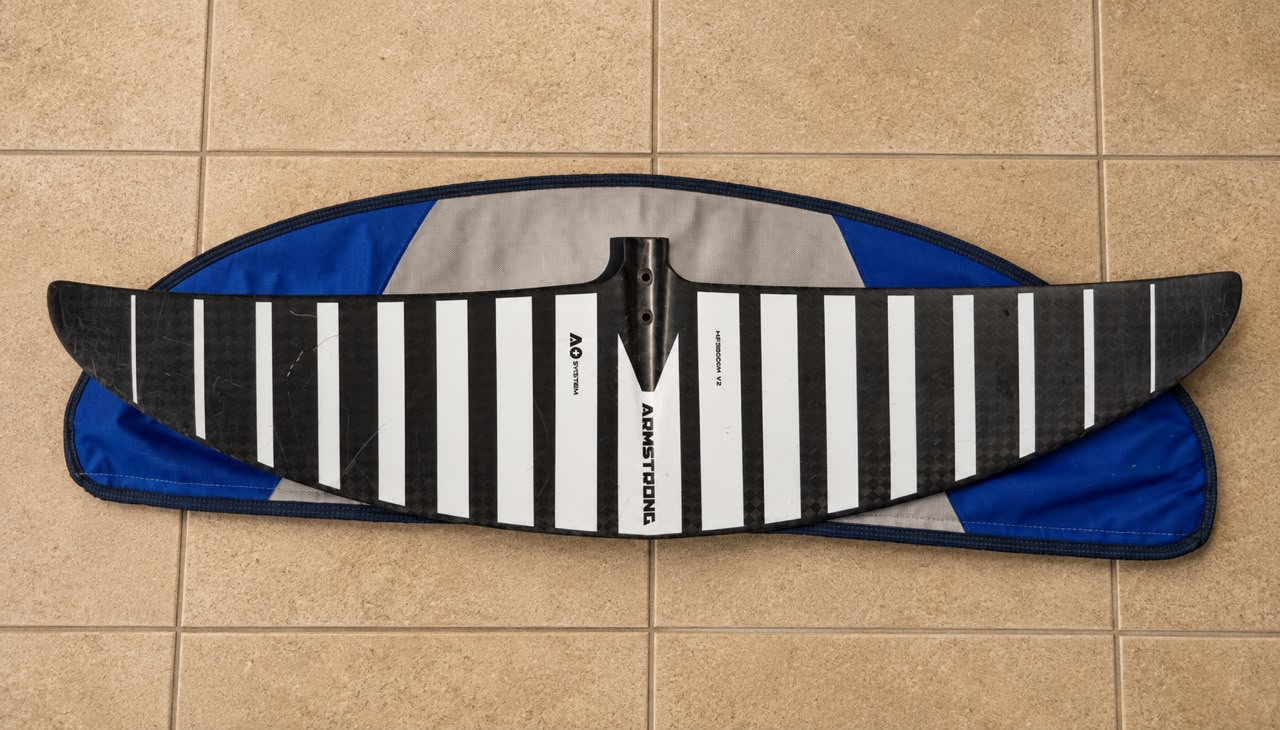
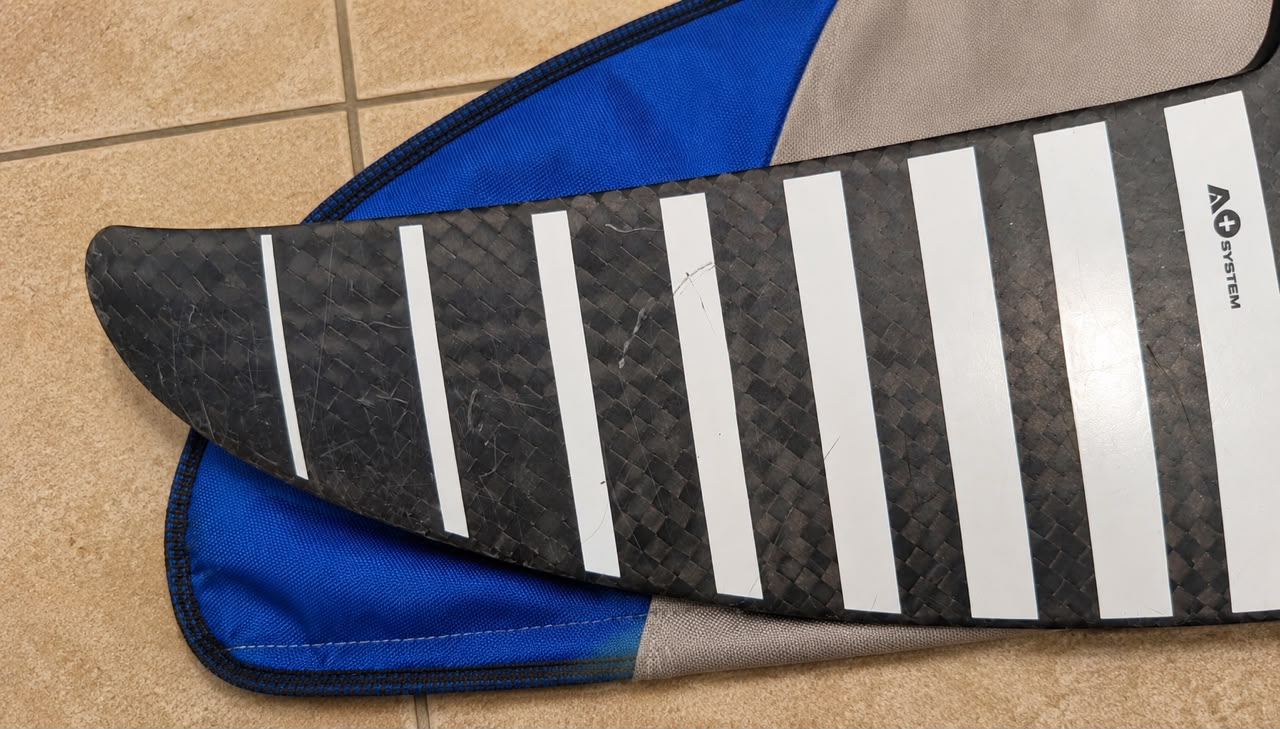


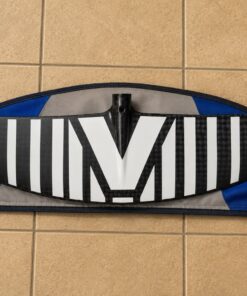
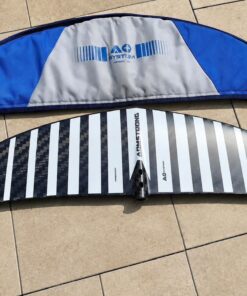
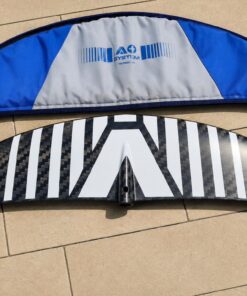
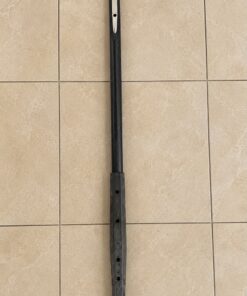
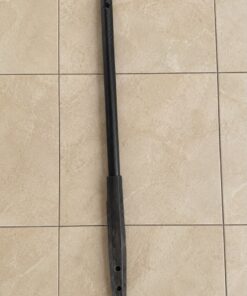
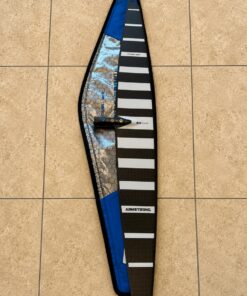
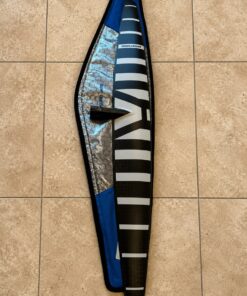
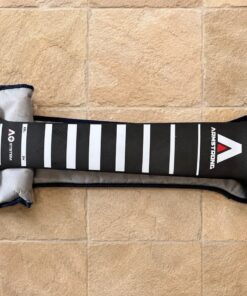
Use Armstrong HS1550 V2 A+ System

€260.00
The Used Armstrong HS1550 V2 A+ System is a versatile mid-aspect carbon hydrofoil platform designed to bridge accessible low-speed lift with noticeably greater speed, glide and agility than progression-focused freeride foils. Armstrong developed the HS range for intermediate-to-advanced riders wanting a foil that could work across surf, wing, SUP, wake, kite and downwind disciplines without becoming excessively technical. Armstrong’s buyer guide specifically positions the HS family above its CF range in speed, glide and reactivity while retaining broad crossover usability.
The HS1550 V2 front wing measures 1550 cm², spans approximately 938 mm, and weighs about 1125 g. Its construction uses a high-density foam core wrapped in intermediate- and high-modulus carbon. Compared with the earlier generation, the V2 received increased aspect ratio, a thinner foil section and a revised planform. These refinements were intended to make it faster, smoother, more agile, easier to pump and more progressive in pitch response.
The A+ System adds another important engineering advantage. Armstrong designed its modular HEX-based connection system to increase stiffness, distribute loads more effectively and reduce movement between the mast, fuselage, front foil and stabilizer. Titanium hardware and reinforced structural interfaces further support durability and direct power transfer.
Used Armstrong HS1550 V2 A+ System – High-Speed Carbon Foil for Surf, SUP, Wing and Crossover Foiling
Performance, A+ Construction, Lift, Carving, Glide and Armstrong Foil Compatibility
HA Front Foil
An HA Front Foil emphasizes higher aspect ratio and maximum glide efficiency. By comparison, the HS1550 V2 occupies a more versatile middle ground, combining generous low-speed lift with stronger turning capability and a broad comfortable speed range. Armstrong places the HS family between its forgiving CF range and higher-performance HA designs.
Armstrong Foils
armstrong foils are built around a modular component ecosystem. The HS1550 V2 remains notable because its A+ interface can work within Armstrong’s broader mast, fuselage and stabilizer architecture.
Armstrong Integrated Foil Masts Price
The phrase armstrong integrated foil masts price concerns newer mast generations rather than the HS1550 V2 front wing itself. Mast selection influences stiffness, drag, feedback and overall system value.
Armstrong Foil Board
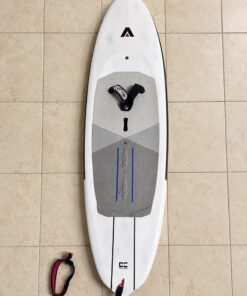
An armstrong foil board can complement the HS1550 V2 when its volume, dimensions and foil mounting configuration suit the rider’s weight and intended discipline.
Surf Foil Board
A surf foil board paired with this wing can provide an engaging combination of manageable takeoff, pumping capability and carving response in smaller or moderate surf.
Armstrong Downwind Board
An armstrong downwind board emphasizes efficient waterline acceleration and early release. When paired appropriately, this can complement the HS1550 V2’s useful low-speed lift and pumping ability.
Armstrong Midlength
The armstrong midlength concept combines additional waterline efficiency with more compact dimensions than a dedicated downwind board.
Armstrong Downwind Foil
An armstrong downwind foil generally emphasizes sustained glide. Earlier Armstrong guidance included the HS1550 V2 as a downwind option, particularly for lighter and medium-weight riders Use Armstrong HS1550 V2 A+ System.
Armstrong Mid Length Board
An armstrong mid length board can make acceleration easier while maintaining a relatively manageable overall package for wing and crossover use.
Armstrong Downwind Boards
armstrong downwind boards can reduce the effort required to build board speed before takeoff, especially in marginal conditions.
Wing Foil Front Wing
As a wing foil front wing, the HS1550 V2 offers a useful combination of lift, glide, carving ability and speed range. Independent testing describes it as a strong all-rounder with reassuring stability and an entertaining surf-oriented turning character.
HA Front Foil for Sale
Searches for HA Front Foil for sale usually target faster, higher-aspect equipment. A Used HS1550 V2 A+ System can instead appeal to riders wanting more forgiving crossover performance without moving directly into highly specialized high-aspect designs.
Kite Armstrong
The phrase kite armstrong relates to using Armstrong hydrofoil equipment with kite propulsion. Armstrong’s earlier foil chart included HS-series options for kite use, although wing size should always reflect rider weight and conditions.
Armstrong Foil Boards
armstrong foil boards cover surf, wing, midlength and downwind applications. Correct board choice can substantially influence how quickly the HS1550 V2 reaches takeoff speed.
Surf Foil
For surf foil sessions, the design’s carving response and pumping efficiency are particularly relevant. Testers praised the HS1550 V2 for its ability to link swell sections while retaining controlled banked turns.
Armstrong Foiling
armstrong foiling uses a modular philosophy that allows riders to combine compatible front wings, stabilizers, fuselages and masts according to discipline and progression.
Foiling Board
A suitable foiling board should provide enough volume and waterline efficiency for the intended rider while maintaining the appropriate mounting interface.
Armstrong Foils for Sale
When evaluating armstrong foils for sale on the used market, condition matters greatly. Current 2026 second-hand listings confirm that HS1550 V2 A+ front wings remain in circulation.
Foiling Boards
Different foiling boards change takeoff behavior, stability before flight, swing weight and pumping characteristics.
Surf Foilboard
A compact surf foilboard can highlight the responsive carving personality of the HS1550 V2 once airborne.
Armstrong Performance Mast
An armstrong performance mast can provide a stiffer and more direct connection between rider input and underwater components, complementing the front wing’s speed and carving range.
Armstrong Wing
An armstrong wing provides handheld wind power for wing foiling and works independently from the hydrofoil front wing below the board.
Surf Foil Boards
surf foil boards generally prioritize compact dimensions and reduced swing weight while still providing sufficient volume for takeoff.
Armstrong Wings
armstrong wings span several sizes and design generations intended for different wind strengths and riding styles.
Armstrong Fuselage
The armstrong fuselage is critical to the A+ System. Armstrong’s current design uses reinforced structural interfaces and a titanium spine to reduce flex and improve power transfer.
A documented complete HS1550 V2 setup has also been offered with a TC60 A+ fuselage and HS232 tail, illustrating one established system configuration.
Armstrong V1 Downwind Board
The armstrong v1 downwind board represents an earlier generation of efficient downwind-oriented board design and can be considered within compatible legacy Armstrong setups.
Armstrong Integrated Foil Masts Price 2025
The phrase armstrong integrated foil masts price 2025 refers to newer-generation mast pricing rather than the used value of an HS1550 V2 front wing.
Foil for SUP
As a foil for SUP, the HS1550 V2 has genuine historical relevance. Armstrong’s earlier rider chart recommended it widely for small-wave SUP use across several weight ranges.
Armstrong Wing Foil
For armstrong wing foil use, this design offers more speed and reactivity than the company’s progression-oriented range while retaining relatively accessible lift. This balance helps explain its broad crossover appeal.
Armstrong Downwind Foil Board
An armstrong downwind foil board can provide efficient acceleration and easier release from the water, potentially complementing the wing’s pumping and low-speed characteristics.
Hydrofoil Front Wing
A hydrofoil front wing generates the majority of the system’s lift. Surface area, span, aspect ratio, section thickness and planform all influence takeoff, speed, glide, roll response and pitch characteristics.
Front Foil
The front foil therefore determines much of the personality of the complete setup. At 1550 cm² and 938 mm span, this design aims for a balance between accessible lift and improved speed rather than an extreme specialization.
Hydrofoil Lift Stability
hydrofoil lift stability is an important strength here. Reviews describe the HS1550 V2 as stable and confidence-inspiring across variable water conditions while still allowing tight banked turns and responsive carving.
Why the 1550 cm² Size Matters
A 1550 cm² surface area provides substantially more low-speed support than smaller high-speed wings while remaining compact enough to deliver meaningful agility.
Consequently, the wing can suit riders who want progression beyond entry-level equipment without sacrificing accessible takeoff.
Why the V2 Design Matters
The second-generation design received a higher aspect ratio, reduced foil-section thickness and redesigned planform. These changes were intended to improve speed, smoothness, pumping performance, agility and progressive pitch behavior.
Why the A+ System Matters
Armstrong developed A+ to increase stiffness and durability as modern foil wings began producing greater torsional loads. Titanium barrel nuts and reinforced connections lock components more securely while retaining modular compatibility.
Armstrong’s current system retains the same philosophy through its HEX connection, titanium hardware and reinforced fuselage structure.
Why Pumping Performance Matters
Efficient pumping allows riders to maintain flight between waves, swell sections or periods of reduced power.
Independent testing found the HS1550 V2 straightforward and efficient to pump, making it suitable for linking sections rather than relying continuously on external propulsion.
Why Carving Performance Matters
A good crossover foil should not simply glide efficiently. It should respond naturally when banked.
The HS1550 V2 has been noted for a distinctly surf-oriented turning character, allowing controlled carving without becoming excessively sensitive.
Used Condition and Inspection
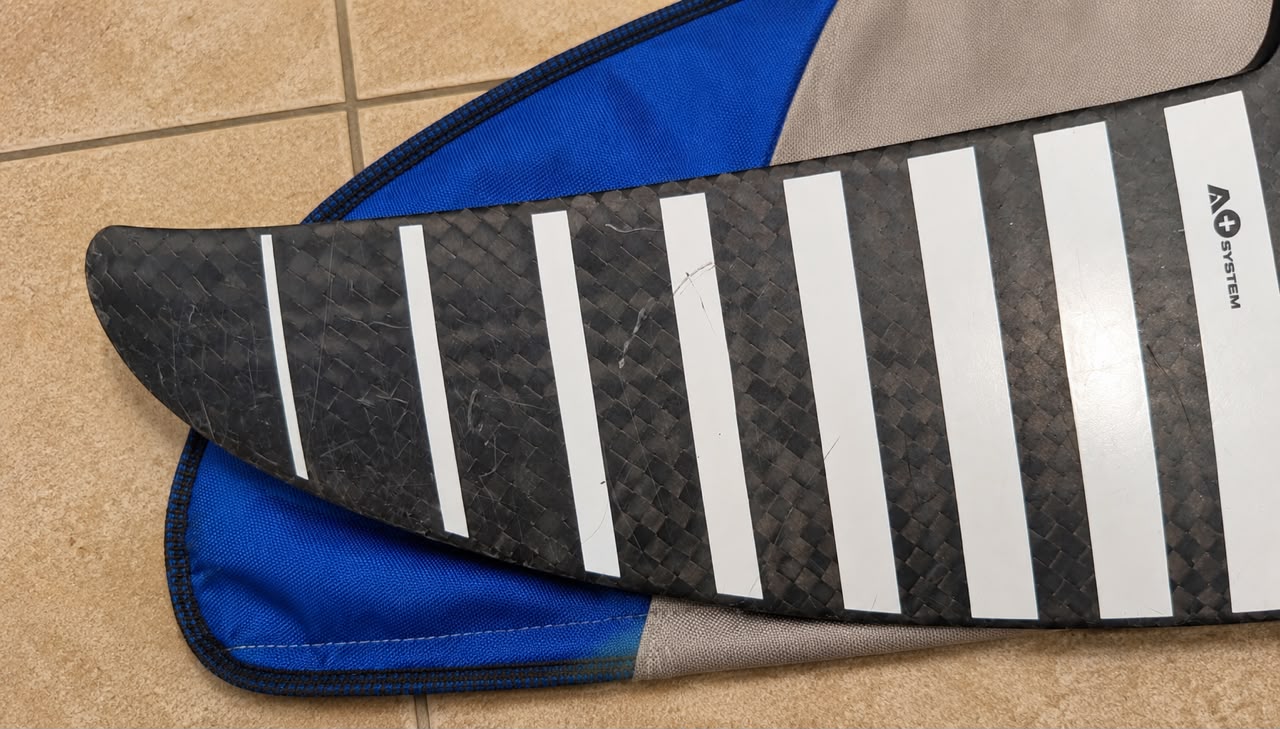
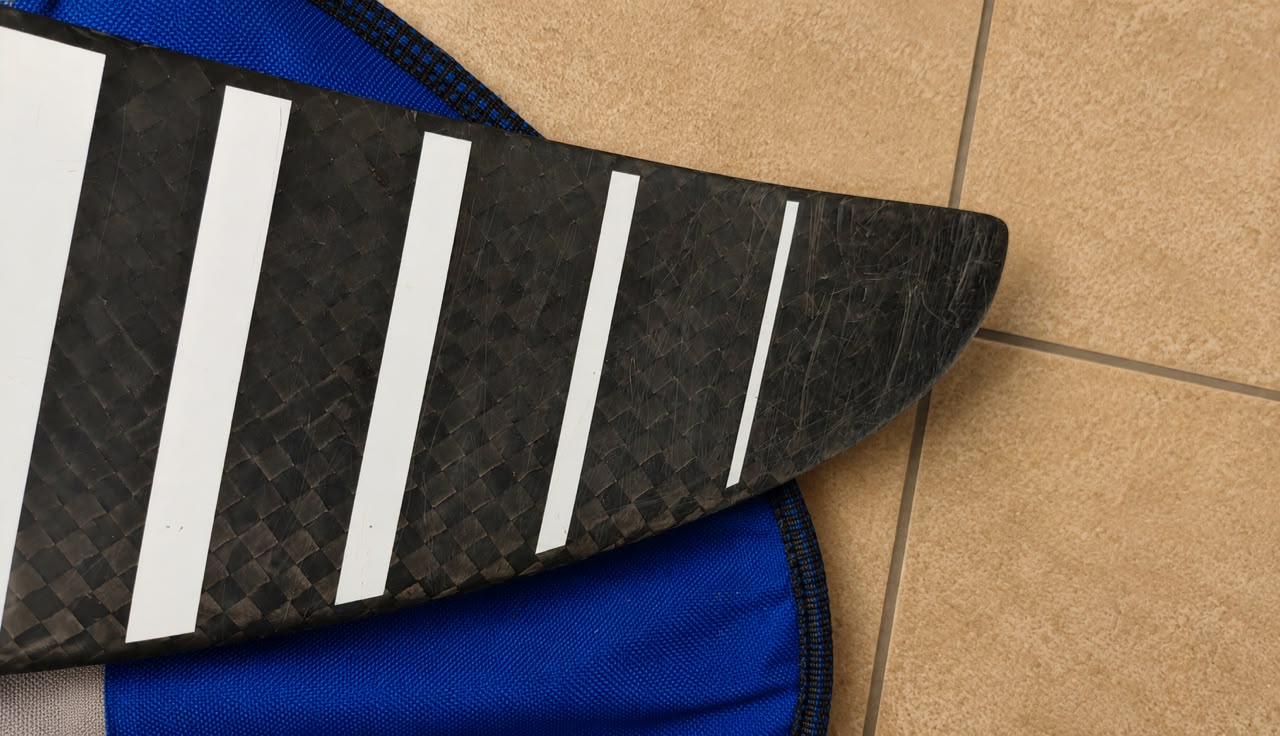
For a Used Armstrong HS1550 V2 A+ System, inspect the leading edge, trailing edge, carbon surfaces, fuselage interfaces, mast connection, stabilizer connection, hardware and any previous repairs.
Small cosmetic marks may have limited consequence, whereas cracks, delamination, damaged A+ mounting points or heavily worn hardware deserve considerably more scrutiny.
Overall Technical Perspective
The Used Armstrong HS1550 V2 A+ System remains a highly versatile mid-aspect foil platform for riders who value a broad speed range, smooth progressive lift, carving capability, efficient pumping and modular Armstrong compatibility. Its 1550 cm² area, 938 mm span, approximately 1125 g front-wing weight, high-density foam core and high-modulus carbon construction provide a proven technical foundation.
Compared with a progression-focused large foil, it offers more speed and reactivity; compared with an extreme high-aspect design, it remains more approachable and surf-oriented. For wing, SUP, surf, wake and crossover riding, a structurally sound used example can therefore continue to provide strong practical value, particularly when combined with compatible A+ components and selected according to rider weight, board choice and intended conditions.
Carbon Construction, Lift, Glide, Carving Performance, Stability, and Real-World Riding
A performance-oriented hydrofoil system should provide more than simple lift. It needs to combine predictable takeoff, structural stiffness, efficient glide, controlled pitch behavior, responsive turning, and enough versatility to perform across changing water conditions. The relationship between the front lifting surface, mast, fuselage, rear stabilizer, board, and rider determines how the complete setup feels. Consequently, evaluating performance requires looking beyond one specification and considering how the entire assembly responds during takeoff, sustained flight, pumping, carving, and transitions.
Carbon Composite Construction
Carbon composite construction provides an effective combination of rigidity and relatively low weight.
Stiffness matters because rider inputs must travel through the board and supporting structure before reaching the underwater lifting surfaces. Excessive flex can make those inputs feel delayed or imprecise.
A rigid assembly therefore supports direct feedback.
Structural Strength
Hydrofoil components experience substantial loads during normal riding.
Turning, pumping, acceleration, and changes in ride height repeatedly place forces through the structural interfaces.
For this reason, the carbon surfaces and connection points should remain structurally sound.
High-Modulus Material
High-quality carbon reinforcement can increase stiffness without requiring excessive material thickness.
This helps create a responsive riding character.
However, composite performance depends on manufacturing quality and structural condition rather than carbon terminology alone.
Refined Foil Profile
Foil-section geometry influences how water moves across the lifting surface.
A refined profile can help balance low-speed support against drag at higher speeds.
Consequently, the rider can experience useful lift without the equipment feeling excessively resistant as speed builds.
Progressive Takeoff
Progressive lift can make takeoff easier to anticipate.
Instead of suddenly rising with little warning, a well-balanced system develops increasing support as water speed builds.
This gives the rider time to adjust body position.
Low-Speed Support
Useful low-speed performance increases versatility.
When available wind or wave energy decreases, additional support can help the rider maintain flight.
Nevertheless, sufficient forward momentum remains essential.
Acceleration
Acceleration after takeoff determines how quickly the system transitions into efficient sustained flight.
A refined hydrodynamic profile can reduce unnecessary resistance.
As a result, speed can build smoothly when sufficient energy is available.
Broad Speed Range
Versatile equipment should remain controllable across more than one narrow speed window.
Stable lower-speed behavior supports takeoff and transitions, while efficient higher-speed performance allows the rider to accelerate without immediately encountering excessive drag.
This broad operating range increases practical usability.
Glide Efficiency
Glide describes the ability to preserve forward momentum when external power decreases.
Efficient geometry allows the rider to travel farther using available energy.
Technique, however, remains equally important because unnecessary body movement can rapidly reduce momentum.
Pumping Capability
Pumping allows the rider to generate or preserve forward movement through coordinated body motion.
A balanced system should respond predictably to rhythmic loading and unloading.
Smooth timing generally produces better results than excessive physical force.
Linking Sections
Efficient pumping and glide become particularly valuable when connecting separate areas of usable energy.
A rider can potentially continue through weaker sections instead of immediately returning to the water surface.
This ability can significantly extend recreational riding time.
Pitch Stability
Pitch describes front-to-back rotational movement.
Predictable pitch behavior helps the rider maintain consistent ride height.
When the platform responds progressively, smaller body movements can produce controlled corrections.
Height Control
Ride-height management becomes increasingly important as speed rises.
Excessive upward movement can bring the lifting surface too close to the water surface, while insufficient height increases the chance of board contact.
Stable feedback helps the rider maintain an appropriate position.
Roll Response
Roll determines how easily the system banks from side to side.
Responsive roll behavior contributes directly to carving.
However, excessive sensitivity can make progression more demanding, so balanced response is generally desirable.
Carving Character
Carving performance depends on the relationship between roll response, speed, lift distribution, and rider input.
A well-balanced system can enter a turn progressively and maintain predictable support throughout the arc.
This creates a flowing rather than abrupt riding character.
Banked Turns
More committed turns require confidence in the lifting surface.
As bank angle increases, the rider must coordinate speed, height, and body position.
Predictable feedback allows these movements to develop naturally.
Turning Radius
Turning radius changes according to speed, rider input, and equipment geometry.
Moderate inputs can create wide, flowing arcs, while stronger controlled pressure can tighten the turn.
Technique remains central to the final result.
Surf-Oriented Control
In waves, rapid changes in direction may be required to remain connected to usable energy.
A responsive system can allow the rider to redirect without feeling excessively locked into a straight line.
Smooth roll behavior becomes particularly valuable here.
Wing Riding Performance
Wind-powered riding demands a combination of early lift, acceleration, stability, and maneuverability.
A versatile system can support relaxed cruising while still providing enough responsiveness for more dynamic riding.
Board selection and available wind strength remain important.
Small-Wave Performance
Smaller waves generally provide less sustained energy.
Efficient glide and pumping can help the rider make better use of these conditions.
A supportive lifting surface also reduces dependence on extremely high initial speed.
Open-Water Performance
Open water can introduce chop and irregular energy.
Stable pitch behavior helps manage these changes.
Nevertheless, rider experience and appropriate environmental judgment remain essential.
Board Influence
Board design significantly affects the takeoff process.
Volume provides flotation, while length and hull shape influence acceleration and water release.
Once airborne, board weight and dimensions can also affect maneuverability.
Mast Influence
The mast transfers rider input between the board and underwater assembly.
Stiffness can improve precision, while profile design influences hydrodynamic resistance.
Mast length also determines available ride height.
Fuselage Influence
The central structural connection determines the relative position of the lifting surfaces.
A rigid interface supports predictable feedback.
Wear or looseness can reduce the precise feeling expected from a performance-oriented setup.
Rear Stabilizer Influence
The rear surface contributes to pitch stability and turning behavior.
Different dimensions and profiles can substantially change how the system feels.
Therefore, complete setup balance matters more than selecting components independently.
Connection Precision
Mechanical interfaces should fit securely.
Unwanted movement can reduce responsiveness and create accelerated wear.
Connection areas should remain clean and free from significant structural damage.
Hardware Condition
Fasteners experience repeated loading during assembly and use.
Threads should remain clean and structurally sound.
Damaged or inappropriate hardware should be replaced with compatible components.
Leading-Edge Condition
The leading edge encounters direct water flow.
Small superficial marks may develop through normal use.
However, deep impact damage or exposed structural material deserves careful assessment.
Trailing-Edge Condition
The thinner rear edge should also remain protected.
Chips can occur during transportation or accidental contact.
Structural damage deserves greater attention than ordinary cosmetic wear.
Surface Condition
Smooth composite surfaces help maintain clean water flow.
Minor scratches may have little practical effect, whereas deep damage can influence both durability and hydrodynamic quality.
Used equipment should therefore be inspected carefully.
Delamination Awareness
Composite structures depend on properly bonded material layers.
Visible separation, unusual softness, or movement can indicate structural concerns.
Questionable areas should receive professional assessment.
Saltwater Maintenance
Marine use leaves salt residue on hardware and connection surfaces.
Appropriate freshwater rinsing after sessions can support long-term condition.
Components should then be allowed to dry before storage.
Sand and Contamination
Sand can interfere with precisely fitted interfaces.
Connection areas should remain clean before assembly.
Components should never be forced together when contamination prevents correct seating.
Transportation Protection
Composite equipment can tolerate substantial hydrodynamic loading while remaining vulnerable to concentrated impact from hard objects.
Protective covers and padding reduce this risk.
Components should remain secured during transportation.
Storage
A dry, protected environment supports long-term preservation.
Heavy objects should not rest against delicate edges or lifting surfaces.
Prolonged unnecessary exposure to excessive heat should also be avoided.
Used Condition Assessment
Previously owned equipment should be judged primarily by structural condition.
Inspect mounting areas, edges, surfaces, hardware interfaces, and any visible repairs.
A cosmetically attractive finish does not automatically guarantee excellent structural health.
Previous Repairs
A previous repair does not necessarily make a component unsuitable.
The quality, location, and extent of the work determine its significance.
Structural repairs deserve more attention than superficial refinishing.
Rider Progression
Predictable equipment can support progression by providing consistent feedback.
As technique improves, riders can refine pumping rhythm, turning precision, speed management, and height control without immediately outgrowing the system.
Long-Term Performance
Good equipment should remain enjoyable beyond the initial learning period.
A broad combination of lift, glide, carving response, stability, and pumping capability allows the rider to explore different conditions and riding styles.
This versatility can improve long-term ownership value.
Overall Performance Assessment
A well-designed carbon hydrofoil system can provide a compelling combination of progressive lift, useful low-speed support, efficient acceleration, smooth glide, predictable pitch behavior, responsive carving, and effective pumping. Rather than excelling exclusively in one narrow discipline, balanced geometry can provide a broad performance envelope suitable for riders developing more advanced control.
Long-term performance ultimately depends on the entire system remaining structurally healthy and correctly matched. Carbon surfaces, connection interfaces, hardware, lifting edges, mast stiffness, board characteristics, and stabilizing components all contribute to the final experience. When these elements remain in good condition and the setup suits the rider’s weight, ability, and intended conditions, the result can be a precise, versatile, and rewarding platform for sustained progression and recreational performance.
Used Condition Assessment, Durability, Maintenance, Storage, Setup Care, and Long-Term Ownership
Buying previously owned hydrofoil equipment requires a different assessment from purchasing a new component. Performance remains important, but structural condition, previous repairs, connection integrity, hardware wear, carbon-surface health, and maintenance history become equally significant. A high-quality carbon system can remain serviceable for many seasons when it has received appropriate care. Conversely, equipment that looks attractive in photographs may still require closer examination around highly loaded areas. A systematic inspection therefore provides the strongest foundation for evaluating long-term usability and value.
Understanding Used Equipment Condition
Condition should be assessed across the complete system rather than judged from one visible surface.
Normal recreational use can create scratches, scuffs, and minor cosmetic marks. These imperfections do not automatically indicate structural weakness.
However, cracks, separation, deformation, or damaged interfaces deserve considerably more attention.
Cosmetic Wear
Surface marks are common on equipment that has been transported, assembled, and used regularly.
Minor cosmetic wear may have little influence on performance.
The important consideration is whether damage remains superficial or extends into structural material.
Carbon Surface Inspection
Both upper and lower surfaces should be examined carefully.
Look for unusual changes in surface texture, deep scratches, cracks, soft areas, or signs of previous repair.
Lighting the surface from different angles can make imperfections easier to identify.
Leading-Edge Condition
The leading edge experiences constant exposure to water flow and can occasionally contact floating debris.
Small marks may develop naturally.
Deep impact damage deserves closer inspection because this area plays an important role in both structural integrity and hydrodynamic performance.
Trailing-Edge Condition
The thinner trailing edge can be vulnerable during transportation and storage.
Chips may occur when components contact hard objects.
Small cosmetic imperfections should be distinguished from damage extending into the composite structure.
Wingtip Inspection
Wingtips can receive accidental impacts during handling.
Inspect both sides for cracks, repaired areas, unusual surface movement, or significant abrasion.
Damage in these areas should not be dismissed simply because the central portion remains clean.
Mounting Interface
The mounting area transfers substantial loads through the system.
Consequently, this region deserves particularly careful examination.
The interface should remain structurally solid without significant cracking, deformation, or unexpected movement.
Connection Fit
Compatible components should seat together accurately.
Excessive looseness can reduce the direct mechanical feedback expected from a rigid system.
Conversely, parts should not require unreasonable force to assemble correctly.
Hardware Condition
Fasteners should remain structurally sound with healthy threads and usable drive surfaces.
Repeated assembly can gradually produce wear.
Damaged hardware should be replaced with correctly specified components rather than improvised alternatives.
Thread Inspection
Threads deserve close attention because damaged threads can complicate assembly and compromise connection security.
Fasteners should engage smoothly.
Unexpected resistance should be investigated rather than overcome through excessive force.
Corrosion Awareness
Marine environments can encourage corrosion when salt remains around metal components.
Titanium components offer excellent resistance, but contamination between dissimilar materials can still create maintenance concerns.
Regular cleaning remains worthwhile.
Previous Repairs
A repaired component is not automatically unsuitable for continued use.
The important questions concern the location, severity, and quality of the repair.
Professional structural restoration should be distinguished from cosmetic filling or paintwork.
Identifying Repair Areas
Differences in finish, texture, surface contour, or carbon pattern may indicate previous work.
Sellers should ideally provide information about known repairs.
Transparency makes condition assessment significantly easier.
Delamination Awareness
Composite structures depend on properly bonded material layers.
Separation between layers can compromise structural performance.
Soft areas, visible separation, unusual movement, or suspicious cracking should receive professional assessment.
Structural Stiffness
The complete assembly should feel rigid when correctly connected.
Unexpected flex around joints can indicate wear or improper fit.
However, assessment should remain appropriate and should not involve deliberately overstressing components.
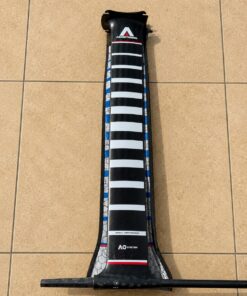
Mast Condition
The mast should be inspected along its complete length.
Look for impact marks, cracks, deep scratches, or unusual surface damage.
The connection areas at both ends deserve additional attention.
Fuselage Condition
The central structural component transfers loads between the mast and lifting surfaces.
Its mounting interfaces should remain clean and accurately shaped.
Damage around these areas can affect the integrity of the entire setup.
Rear Surface Condition
The smaller rear lifting surface should receive the same careful inspection as the larger front component.
Its leading edge, trailing edge, mounting interface, and wingtips can all experience damage.
Even small components influence overall handling.
Board Connection
The interface between the mast and board should remain structurally secure.
Mounting hardware should fit correctly.
The board’s attachment area should also be inspected according to its manufacturer’s recommendations.
Correct Assembly
Components should be assembled according to their intended design.
Forcing parts together can damage precisely fitted interfaces.
Clean surfaces and compatible hardware help maintain correct alignment.
Avoiding Overtightening
Excessive tightening does not automatically create a better connection.
It can damage threads, hardware, or surrounding material.
Appropriate manufacturer guidance should determine assembly practices.
Post-Session Inspection
A brief inspection after riding can reveal damage while the circumstances surrounding it remain clear.
Edges, interfaces, and hardware can be checked quickly.
Early identification can prevent a minor concern from becoming more significant.
Freshwater Rinsing
After marine use, appropriate freshwater rinsing helps remove salt residue.
Particular attention should be given to hardware and connection areas.
Components should then be allowed to dry properly.
Sand Removal
Sand can create abrasion and interfere with component fit.
Mounting surfaces should remain clean before assembly.
A component should never be forced into position when contamination prevents correct seating.
Drying
Equipment should be reasonably dry before extended storage.
Persistent moisture can affect hardware and encourage unwanted surface deterioration.
Drying is especially important before components are enclosed inside protective covers.
Protective Covers
Covers help prevent scratches and accidental edge impacts.
They are particularly valuable during vehicle transportation or when several components are stored together.
However, wet equipment should not remain sealed unnecessarily.
Transportation
Many composite components receive accidental damage away from the water.
Equipment can shift inside vehicles or contact other hard objects.
Secure positioning and appropriate padding significantly reduce these risks.
Avoiding Concentrated Impact
Carbon structures can withstand substantial distributed riding loads while remaining vulnerable to concentrated impacts.
Dropping a component onto a hard edge can therefore cause damage that normal water loading would not produce.
Careful handling remains important.
Heat Exposure
Equipment should not remain unnecessarily exposed to extreme temperatures for prolonged periods.
Vehicles can become exceptionally hot in direct sunlight.
A moderate storage environment is preferable.
Long-Term Storage
Components should be clean, dry, and protected before extended storage.
Heavy objects should not rest against lifting surfaces or delicate edges.
A dedicated storage position can reduce accidental damage.
Storage Between Seasons
Long periods without use provide an opportunity for a more thorough inspection.
Hardware can be checked, connection areas cleaned, and composite surfaces examined.
This preparation simplifies the return to regular use.
Evaluating Performance After Storage
The first session after prolonged storage should provide an opportunity to observe normal system behavior.
Unexpected vibration, movement, or unusual feedback deserves investigation.
Known mechanical problems should not be ignored.
Recognizing Unusual Vibration
Unexpected vibration can have several causes.
Surface damage, loose components, contamination, or setup changes may contribute.
A systematic inspection is preferable to assuming that one component is responsible.
Maintaining Hydrodynamic Surfaces
Smooth surfaces support predictable water flow.
Routine care should therefore avoid unnecessary abrasion.
Aggressive sanding or modification can alter the original geometry and should not be performed casually.
Resale Value
Well-maintained equipment generally retains stronger second-hand appeal.
Buyers often value clean connection areas, healthy hardware, documented repairs, protective storage, and transparent condition information.
Maintenance therefore contributes to both usability and resale potential.
Maintenance Records
Simple documentation can be useful.
Owners can record major repairs, replacement hardware, significant impacts, or professional inspections.
This history becomes particularly valuable when ownership changes.
Matching Equipment to Ability
Long-term satisfaction depends on choosing equipment that matches actual riding objectives.
A technically capable system may still feel inappropriate when selected purely because it represents a higher performance category.
Rider progression should guide setup decisions.
Knowing When to Change Setup
Component changes become useful when the rider’s goals evolve.
Greater glide, different turning characteristics, lower takeoff speed, or increased speed may eventually become priorities.
Changes should address a genuine performance objective rather than simply follow equipment trends.
Long-Term Durability
Composite equipment can provide extensive service when structural integrity is preserved.
Careful transportation, appropriate assembly, regular cleaning, sensible storage, and early attention to damage all contribute to longevity.
Age alone does not determine remaining usefulness.
Long-Term Ownership Value
Previously owned premium equipment can provide excellent value when purchased in sound condition.
The initial depreciation may already have occurred, while much of the practical performance remains available.
Condition and compatibility should therefore receive greater attention than model year alone.
Overall Ownership Assessment
A well-maintained used carbon hydrofoil system can continue delivering precise, responsive, and enjoyable performance across many recreational sessions. The most important ownership considerations are structural integrity, clean mechanical interfaces, healthy hardware, careful assembly, appropriate post-session cleaning, and protection during transportation and storage.
Cosmetic wear should be distinguished from genuine structural damage, while questionable cracks, delamination, significant impacts, or compromised mounting areas deserve professional assessment. With consistent care and a setup appropriately matched to the rider, previously owned equipment can retain substantial practical value, dependable performance, and strong long-term usability without requiring replacement simply because newer generations have entered the market.
Be the first to review “Use Armstrong HS1550 V2 A+ System”
Related products
Used Product
Used Product
Used Product
Used Product
Used Product
Used Product
Used Product
Used Product
Reviews
There are no reviews yet.