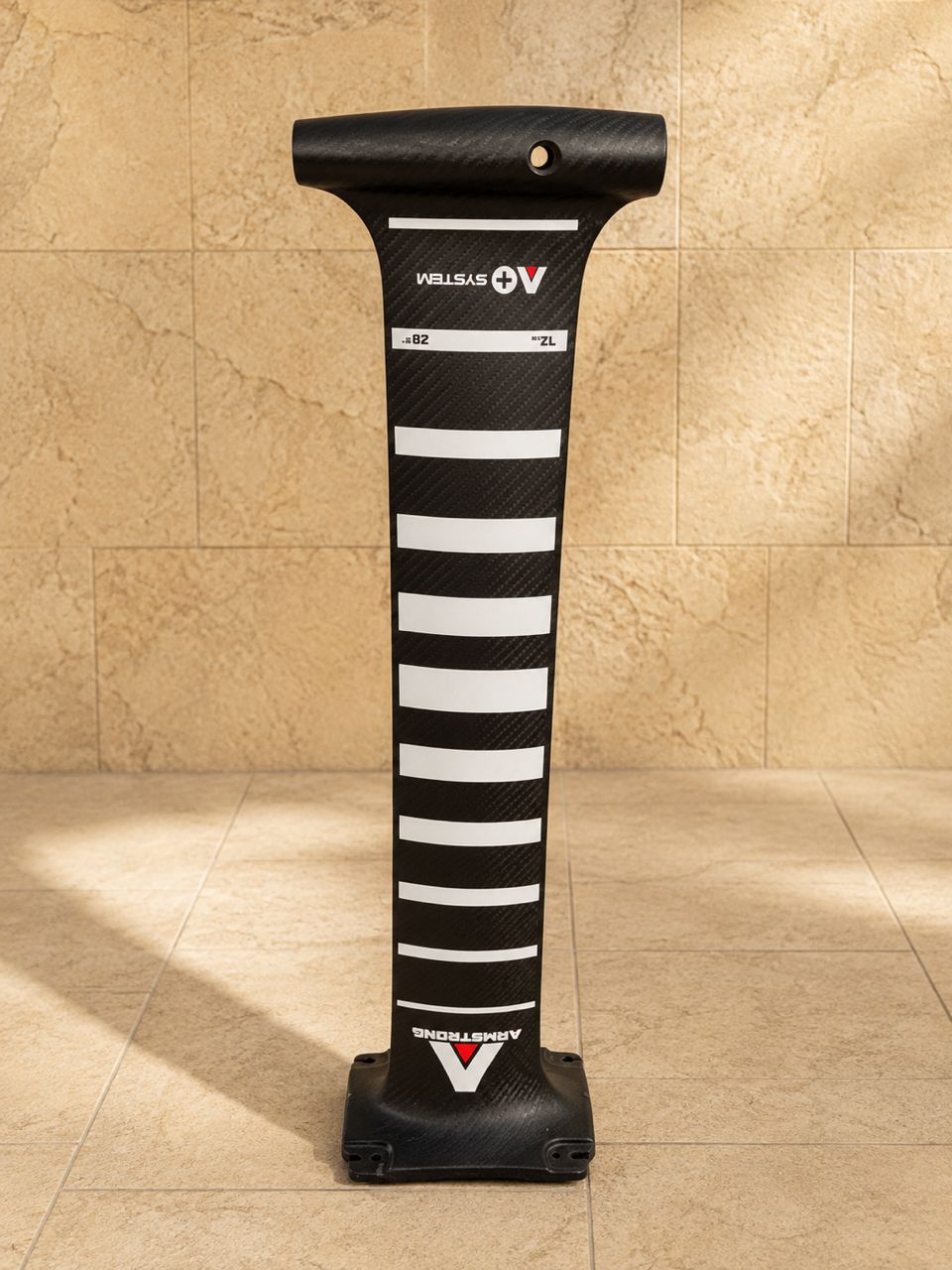
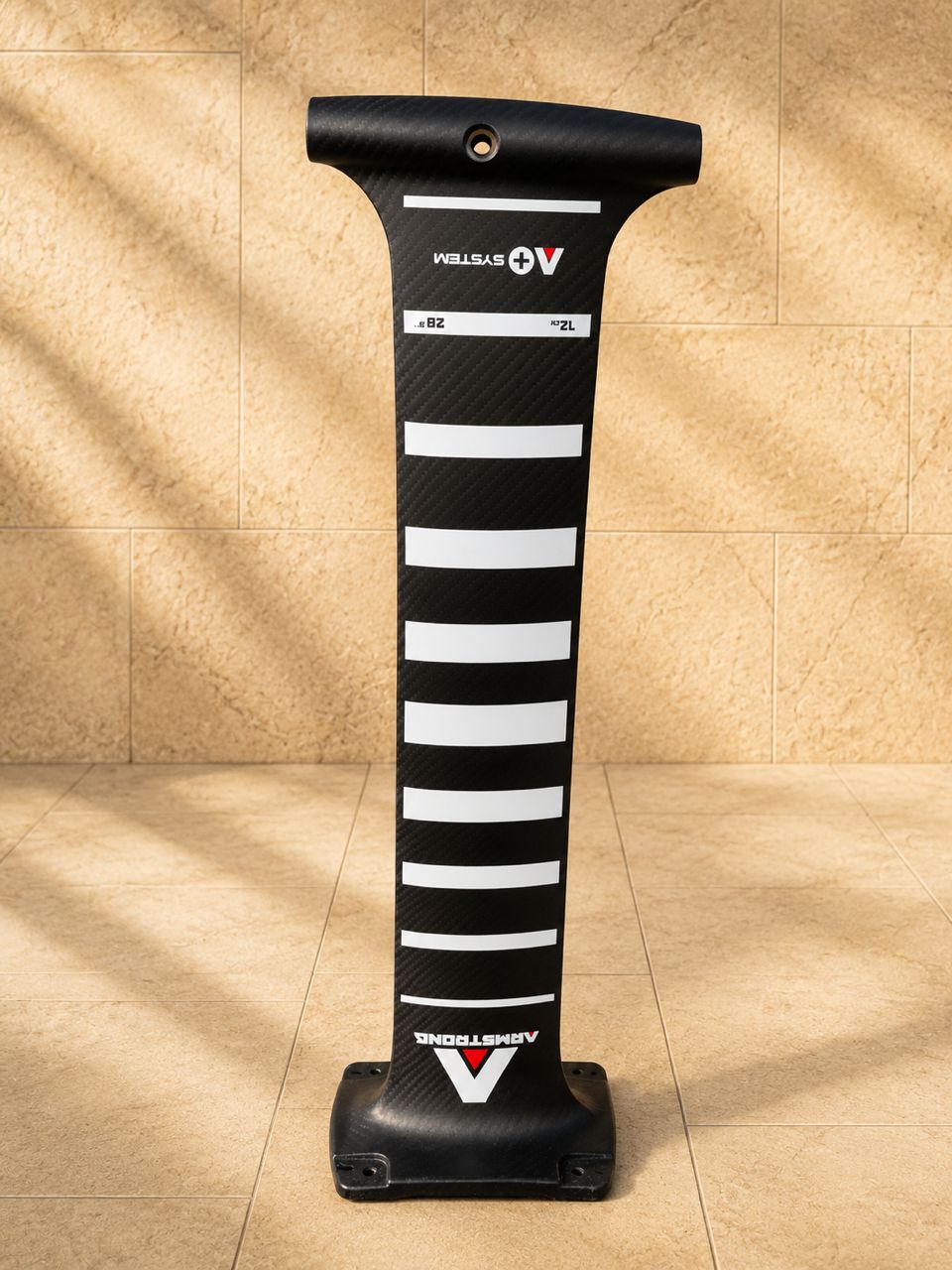
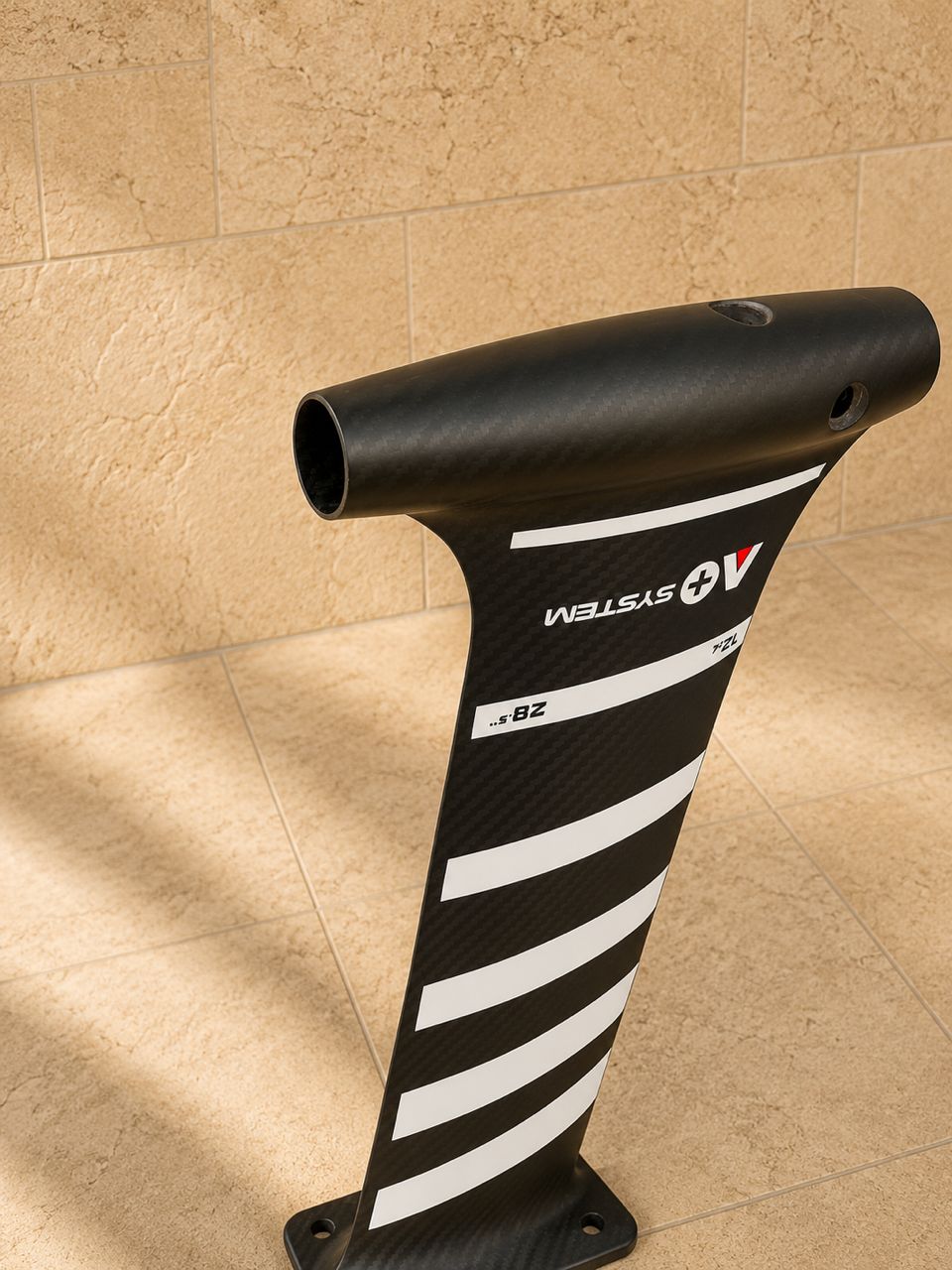
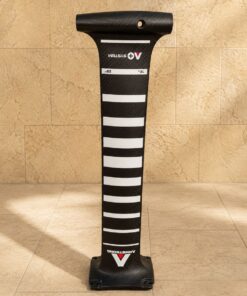
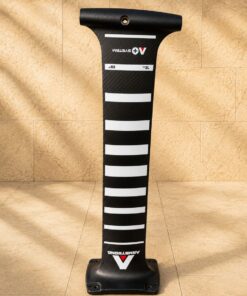
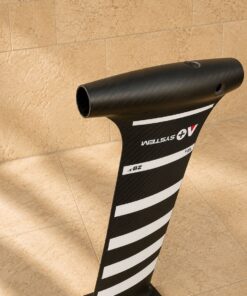
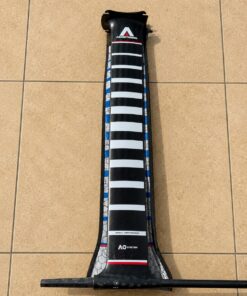
Used Armstrong A+ System Carbon 72cm Mast
€450.00
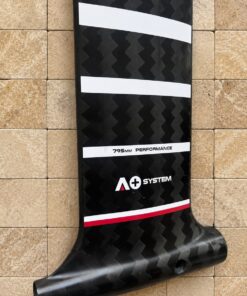
The Used Armstrong A+ System Carbon 72cm Mast is a lightweight, stiff, and responsive hydrofoil mast designed for surf, wing, pump, and general foiling. Its 72cm length offers a practical balance between maneuverability, ride-height control, and water clearance, while the carbon construction provides direct foil feedback with reduced flex. As a used component, the base plate, fuselage connection, leading edge, trailing edge, carbon laminate, mounting holes, hardware, and any previous repairs should be inspected carefully before use.
Used Armstrong A+ System Carbon 72cm Mast — High-Modulus Carbon Foil Mast for Surf, Wing, Pump, and Responsive Hydrofoil Control
Used Armstrong A+ System Carbon 72cm Mast Construction, Hydrodynamic Efficiency, Stiffness, Control, and Foiling Performance
The Used Armstrong A+ System Carbon 72cm Mast is a compact carbon hydrofoil mast designed to connect the rider, board, fuselage, front foil, and stabilizer through Armstrong’s proprietary A+ assembly system. Armstrong currently continues to list the original A+ Carbon Mast in 45cm, 60cm, 72cm, 85cm, and 100cm lengths, making the 72cm option a genuine factory size rather than an approximate aftermarket measurement.
Armstrong constructs this mast from a combination of intermediate- and high-modulus carbon fiber, with fiber orientation engineered to maximize stiffness relative to weight. The company describes the section as deliberately balancing stiffness with controlled compliance, allowing the mast to remain precise while still producing a smoother feeling through chop and changing water conditions. Premium titanium and 316L stainless-steel hardware are also used to reduce corrosion risk.
The 72cm length is particularly interesting because it sits between very short surf-oriented masts and longer 85–100cm options. Therefore, it can provide enough ride height for general foiling while remaining relatively compact and easier to control. For a used example, the carbon laminate, mast base, fuselage connection, leading edge, trailing edge, hardware, and any repaired areas should be inspected carefully.
HA Front Foil
An HA Front Foil can be paired with compatible A+ components to create a high-glide setup. Armstrong’s current HA series emphasizes low-speed lift, glide, turning flow, and pitch stability across surf, wing, and downwind foiling.
Armstrong Foils
Armstrong Foils manufactures complete hydrofoil systems including masts, fuselages, front foils, stabilizers, boards, hardware, and wings.
Armstrong Integrated Foil Masts Price
The current Armstrong integrated foil masts price is approximately $1,999.99 USD for Armstrong’s Foil Drive Foil Assist Integrated Carbon Mast and E-Foil Integrated Carbon Mast.
Armstrong Foil Board
An Armstrong foil board transfers rider input through the mast into the hydrofoil system. Mast stiffness therefore has a noticeable influence on how directly that input is transmitted.
Surf Foil Board
A surf foil board is usually compact and maneuverable. A 72cm mast can suit this style because it provides useful clearance without creating the leverage of a much longer mast.
Armstrong Downwind Board
An Armstrong downwind board uses a longer waterline and efficient hull shape to build speed before takeoff. Current Downwind designs emphasize paddling efficiency, stability, and early lift.
Armstrong Midlength
The Armstrong Midlength concept sits between short surf boards and long downwind shapes, offering a combination of glide, stability, and maneuverability.
Armstrong Downwind Foil
An Armstrong downwind foil setup generally prioritizes glide, efficient pumping, and the ability to connect moving swell energy.
Armstrong Mid Length Board
An Armstrong mid length board can work well with a stiff carbon mast because reduced mast flex helps preserve direct foil feedback during transitions and turns.
Armstrong Downwind Boards
Armstrong downwind boards use longer and narrower outlines than conventional wing boards to improve acceleration through the water before foil takeoff.
Wing Foil Front Wing
A wing foil front wing should be selected according to rider weight, skill, wind conditions, and preferred balance between lift, glide, speed, and maneuverability.
HA Front Foil for Sale
A current HA Front Foil for sale starts at approximately $799.99 USD through Armstrong’s official front-foil collection.
Kite Armstrong
The phrase kite Armstrong commonly relates to Armstrong equipment used for kite-powered hydrofoiling, where mast stiffness and reduced drag can become especially noticeable at speed.
Armstrong Foil Boards
Armstrong foil boards currently cover surf, wing, downwind, and other specialized disciplines, allowing different mast lengths and foil combinations to be matched to specific riding styles.
Surf Foil
Surf foil riding places strong emphasis on carving response, low swing weight, wave connection, and predictable foil height.
A 72cm mast can provide a practical balance between shallow-water usability and adequate clearance during turns.
Armstrong Foiling
Armstrong foiling is based around modular components that allow masts, fuselages, front foils, and stabilizers to be combined within compatible systems.
Foiling Board
A foiling board provides the structural platform for the rider and mast.
Because all foil loads ultimately pass through the mast connection, track condition and mounting hardware should always be checked carefully.
Armstrong Foils for Sale
When considering Armstrong foils for sale, system compatibility matters more than simply matching brand names.
The A+ System is specifically designed to connect compatible mast, fuselage, front foil, and stabilizer components into a rigid assembly.
Foiling Boards
Different foiling boards emphasize flotation, glide, compactness, pumping efficiency, or maneuverability.
Mast length should be matched with the board, rider experience, water depth, and intended discipline.
Surf Foilboard
A surf foilboard generally benefits from a mast that provides responsive turning without excessive leverage.
The 72cm size occupies a useful middle ground for this purpose.
Armstrong Performance Mast
The newer Armstrong Performance Mast range represents a higher-performance development beyond the original Carbon Mast.
The current Performance Mk II Carbon Mast starts at approximately $1,649.99 USD and incorporates significantly increased stiffness and torsional resistance.
Armstrong Wing
An Armstrong wing provides wind power during wing foiling.
The mast then transfers rider input and foil forces between the board and underwater foil system.
Surf Foil Boards
Surf foil boards are usually designed around compact outlines and reduced swing weight, allowing faster redirection on waves.
Armstrong Wings
Armstrong wings form the wind-powered side of the brand’s wing-foiling system and can be combined with compatible boards, masts, and foils.
Armstrong Fuselage
An Armstrong fuselage connects the mast to the front foil and stabilizer.
The mast-to-fuselage joint should remain firm and free from movement because any looseness can create vibration or delayed foil response.
Armstrong V1 Downwind Board
An Armstrong V1 downwind board belongs to an earlier generation of the brand’s dedicated long-waterline downwind equipment.
The newer generations have continued to refine hull speed, stability, and Forward Geometry track placement.
Armstrong Integrated Foil Masts Price 2025
For Armstrong integrated foil masts price 2025, historical retail pricing may differ according to market and launch date.
As of August 2026, Armstrong lists both current Foil Drive integrated carbon mast versions at approximately $1,999.99 USD.
Foil for SUP
A foil for SUP benefits from predictable mast stiffness because paddle-powered starts and downwind riding involve repeated changes in load while the rider accelerates and pumps.
Armstrong Wing Foil
An Armstrong wing foil system combines a board, mast, fuselage, front wing, stabilizer, and handheld wing.
The mast is central to this structure because every movement between rider and foil passes through it.
Armstrong Downwind Foil Board
An Armstrong downwind foil board typically uses an efficient displacement or planing-oriented hull to build enough speed for foil takeoff.
Current Armstrong Downwind models emphasize efficient acceleration and stability.
Hydrofoil Front Wing
The hydrofoil front wing generates most of the lift beneath the water.
The mast holds this lifting surface below the board while resisting bending and torsional loads.
Therefore, mast stiffness can influence how accurately the rider controls the front wing.
Front Foil
The front foil determines much of the system’s lift, glide, speed, and turning character.
A stiff mast helps transfer those characteristics to the rider without excessive structural delay.
Hydrofoil Lift Stability
Hydrofoil lift stability depends on front foil shape, stabilizer, fuselage length, mast stiffness, board position, rider stance, and speed.
No single component determines stability by itself.
Why the 72cm Length Matters
The 72cm mast offers a practical middle ground between short and long mast configurations.
A shorter mast can make starts and shallow-water riding easier because the foil sits closer to the board.
Meanwhile, a longer mast offers more vertical clearance for steep turns and rougher water.
At 72cm, the rider receives useful foil clearance while keeping leverage and overall setup height relatively manageable.
How Carbon Construction Improves Response
Carbon construction provides high stiffness without requiring the mass associated with a similarly rigid metal structure.
Armstrong specifically uses intermediate- and high-modulus carbon fibers with strategic fiber orientation to optimize stiffness relative to weight.
This matters because mast flex can delay rider input.
A sufficiently stiff mast allows pressure applied through the board to reach the foil more directly, which can improve turning feedback and pitch control.
Why Controlled Flex Can Be Useful
Maximum stiffness is not always the only design objective.
Armstrong describes the original A+ Carbon Mast as intentionally combining stiffness with selectively compliant areas to create a smooth feel through chop.
This approach can make the mast feel less harsh while still retaining enough rigidity for accurate control.
How the A+ System Works
Armstrong describes the A+ System as its proprietary assembly design joining the mast, fuselage, front foil, and stabilizer into one solid system.
A precise connection is important because movement at any joint can introduce play, vibration, or inconsistent foil response.
How Good Is the Mast for Precision and Control?
In hydrofoiling, precision means how accurately rider input is transmitted to the submerged foil.
The carbon construction, efficient hydrodynamic section, secure A+ interface, and compact 72cm length provide a strong foundation for predictable control.
However, actual handling also depends on board stiffness, mast-track security, fuselage condition, foil choice, rider weight, and technique.
Where the 72cm Mast Works Best
A 72cm mast can be particularly useful for surf foiling, wing foiling, pump sessions, wake riding, and conditions where a lower ride height is desirable.
It can also be practical in areas where water depth makes an 85cm or 100cm mast less convenient.
However, riders should always verify adequate depth before entering the water.
When a Shorter Mast Makes Sense
A shorter mast can make sense for riders prioritizing easier height control, reduced leverage, shallow-water operation, or surf-focused maneuverability.
It can also help newer riders develop consistent foil-height control before moving to longer equipment.
Why Hardware Condition Matters
The A+ Carbon Mast uses corrosion-resistant titanium and 316L stainless-steel hardware.
Even so, used hardware should be inspected carefully.
Salt accumulation, damaged Torx heads, bent fasteners, seized threads, or missing washers can affect assembly quality.
Freshwater rinsing after saltwater sessions remains important.
Important Information When Buying Used
A used 72cm carbon mast should be inspected carefully along the leading edge, trailing edge, mast plate, lower fuselage connection, carbon laminate, screw holes, and any previous repairs.
Minor scratches are common and may be purely cosmetic.
However, cracks, exposed fibers, white stress marks, crushed laminate, delamination, or unusual flex should be taken more seriously.
The lower A+ connection should fit firmly without noticeable movement.
The board-mounting surface should also remain flat and undamaged.
If hardware is included, inspect the threads and fastener heads for corrosion or excessive wear.
Long-Term Value and Practical Performance
The original A+ Carbon Mast remains part of Armstrong’s current lineup, with the official range still including the 72cm size and a current new retail price of approximately $874.99 USD for the Carbon Mast family.
That continued availability also makes the platform relevant for riders who already own compatible A+ components.
Overall, a structurally sound Used Armstrong A+ System Carbon 72cm Mast provides a versatile combination of carbon stiffness, manageable mast height, efficient hydrodynamics, smooth response, corrosion-resistant hardware, and broad compatibility within the A+ foil ecosystem. For riders seeking a compact mast for surf, wing, pump, or general foiling, the 72cm format remains a practical and technically capable choice.
Stiffness, Foil Control, Mounting Stability, Hydrodynamic Efficiency, and Practical Riding Reliability
Why Mast Stiffness Matters
The mast is one of the most important structural links in a foil setup because every rider input passes through it before reaching the submerged foil.
A sufficiently stiff mast helps reduce unwanted bending and twisting.
This can make carving, pitch control, and directional changes feel more immediate.
However, stiffness should not be considered in isolation.
Board stiffness, fuselage connection, front-wing size, rider weight, speed, and water conditions all influence how precise the complete system feels.
Torsional Control
Torsional stiffness describes how strongly the mast resists twisting under load.
This becomes particularly important during carving because the rider applies force through the board while the foil changes direction below the water.
If the mast twists excessively, the response can feel delayed.
A well-supported structure transfers rider input more directly.
That can make the foil feel predictable during repeated turns, transitions, and changes in riding speed.
Bending Resistance
The mast also needs to resist front-to-back and side-to-side bending.
Excessive flex can alter the position of the foil relative to the board.
A controlled amount of compliance can improve comfort in chop, but uncontrolled flex can reduce precision.
The mast should therefore feel consistent under normal load.
If a used mast begins showing unusual movement, visible cracking, or soft areas, it should be inspected before continued use.
Compact Mast Height
A medium-short mast provides a practical balance between ride height and control.
The foil remains sufficiently below the board for normal turns while the overall setup remains easier to manage than a very long mast.
Reduced height can also make it easier for the rider to understand foil elevation because changes happen closer to the board.
For surf-oriented riding and moderate conditions, this can contribute to a more connected feeling.
Shallow-Water Practicality
A shorter mast can be useful in areas where water depth is limited.
However, the foil still extends significantly below the surface, so riders should never assume that shallow water is automatically safe.
The full depth of the mast, fuselage, and front foil should be considered before entering the water.
Rock, reef, sandbars, and submerged objects can damage both the mast and the rest of the foil system.
Ride Height Control
Ride height describes how high the board is carried above the water while foiling.
A shorter mast reduces the available vertical range.
This can make height changes easier to understand for some riders because the board reaches the upper limit sooner.
However, it also leaves less clearance during aggressive turns or larger swell.
The correct mast height depends on experience, conditions, and riding discipline.
Carving Response
A compact mast can contribute to quick turning response because the foil sits closer to the board.
This reduces the vertical leverage between rider and foil.
The setup can therefore feel direct and lively during surf turns.
However, carving performance still depends heavily on front-wing span, stabilizer size, fuselage length, and rider stance.
The mast supports the response but does not determine the turning character by itself.
Pitch Control
Pitch control involves managing nose-up and nose-down movement.
A rigid mast helps maintain a clear connection between the rider and foil.
When pressure is applied through the front or rear foot, the submerged foil should respond without excessive delay.
Consistent mast behavior makes it easier to understand how much input is required.
This can improve confidence during pumping, touchdowns, and changes in speed.
Roll Control
Roll refers to side-to-side movement during carving.
The mast must transfer lateral rider pressure into the foil system.
A stable connection helps the rider bank progressively instead of feeling vague or delayed.
This becomes especially noticeable during repeated rail-to-rail transitions.
A mast that feels loose at either the board or fuselage connection can make roll behavior less predictable.
Mast Base Condition
The base plate should remain flat and structurally sound.
The mounting surface should sit correctly against the board without rocking.
Cracks, crushed laminate, or deformation around the base should be taken seriously.
Because foil loads pass directly through this area, even small structural problems deserve attention.
The plate should also remain free from excessive sand or debris before installation.
Track Connection
The board-to-mast connection should remain secure throughout the session.
Mounting hardware should be clean and correctly tightened.
Any movement at the track connection can create vibration and affect handling.
The board tracks should also be inspected because mast condition alone cannot guarantee a rigid setup.
Both sides of the connection need to remain structurally sound.
Fuselage Connection
The lower mast connection should fit firmly into the fuselage interface.
There should be no unwanted movement once the system is correctly assembled.
Salt, sand, or damaged hardware can prevent proper seating.
The connection should therefore be cleaned before assembly.
If the fit becomes loose over time, both the mast and fuselage should be checked for wear.
Hardware Condition
Fasteners should remain straight, clean, and free from excessive corrosion.
Threads should engage smoothly without being forced.
If a screw becomes difficult to install, the cause should be investigated rather than overcome with more torque.
Damaged threads can create bigger problems later.
After saltwater use, mounting hardware should be rinsed and dried.
Routine maintenance helps preserve smooth assembly.
Hydrodynamic Efficiency
The mast moves continuously through the water while foiling.
Its profile therefore affects drag and overall efficiency.
A smooth leading edge and clean surface help water flow evenly around the mast.
Deep scratches, chips, or poorly finished repairs can disturb this flow.
The mast does not need to look perfect cosmetically, but large surface irregularities can influence how cleanly it moves through the water.
Leading Edge Condition
The leading edge should remain smooth and structurally intact.
This is the first part of the mast to meet the water.
Deep chips, cracks, or exposed fibers should be inspected carefully.
Minor scratches are common on used equipment, but structural damage is more important than appearance.
Keeping the leading edge clean also makes new damage easier to identify.
Trailing Edge Condition
The trailing edge should remain straight and free from significant chips.
Because it is thinner than the rest of the mast, it can be more vulnerable during transport.
It should not be used as a carrying point.
Any crack extending into the carbon structure should be evaluated before continued use.
A padded mast cover can help protect this area.
Carbon Surface Inspection
The full carbon surface should be checked under good lighting.
White stress marks, exposed fibers, raised sections, bubbling, or unusual flex can indicate structural damage.
Cosmetic scratches may be acceptable, but delamination should not be ignored.
The mast should feel uniformly rigid from top to bottom.
A used component can remain reliable for many seasons when the laminate remains structurally sound.
Previous Repairs
A previous repair is not automatically a reason to reject a used mast.
A professional carbon repair can remain durable.
However, the repaired area should feel firm and smoothly integrated into the surrounding structure.
Cracks around the repair, soft laminate, uneven flex, or visible separation may indicate that further work is needed.
Repairs near the base or fuselage connection deserve extra attention.
Board Compatibility
The board should use a compatible track system and provide adequate structural support for the mast.
The mounting bolts and plate should sit correctly without interference.
Track spacing, screw length, and hardware condition should all be correct.
Improvised mounting solutions should be avoided because they can damage the board or mast base.
A proper connection helps maintain both control and structural reliability.
Foil Compatibility
The mast should be paired only with compatible fuselage and foil components.
Even when two parts appear physically similar, the mounting geometry may differ.
A secure factory-compatible connection helps preserve alignment and load distribution.
Compatibility should be verified before assembly rather than assumed.
This is particularly important when combining used parts from different generations.
Rider Weight and Flex Feel
Rider weight influences how much load passes through the mast.
Heavier riders may notice flex more easily, especially with large front wings or higher speeds.
Lighter riders may experience the same mast as extremely stiff.
However, riding style matters too.
Aggressive carving, jumping, and powered riding can create much greater loads than relaxed cruising.
Surf Conditions
In surf foiling, a compact mast can feel responsive because the rider is closer to the foil.
This can help with quick directional changes and wave connection.
However, steep waves can also increase the chance of ventilation if the foil approaches the surface during a turn.
Riding height should therefore be managed carefully.
The rider should avoid excessive banking close to the surface.
Wing Conditions
During wing foiling, mast height affects both control and clearance.
A shorter mast can feel manageable in moderate conditions, while larger chop may make additional height useful.
The rider should consider local water texture and wind strength.
A compact mast can still perform well when conditions are matched appropriately.
Pumping Performance
Pumping places repeated bending and torsional loads through the mast.
A stiff structure helps translate rider movement directly into the foil system.
The rider should use smooth rhythm rather than large uncontrolled movements.
A lighter, rigid mast can make the setup feel responsive.
However, front-wing efficiency and stabilizer choice remain major factors in pumping performance.
Ventilation Awareness
Ventilation can occur when air reaches the foil or mast near the surface.
A shorter mast provides less vertical clearance, so riding height becomes important.
If ventilation happens repeatedly, the rider may be flying too high or banking too aggressively.
Component condition should also be checked because damaged edges can disturb water flow.
Freshwater Rinsing
After saltwater sessions, the mast should be rinsed thoroughly with fresh water.
Salt can remain around mounting surfaces, screw holes, and hardware.
The mast should then be dried before storage.
This simple routine helps reduce corrosion and makes inspection easier.
Harsh cleaning chemicals are usually unnecessary.
Transport Protection
The mast should be protected during transport because edges and mounting surfaces can be damaged by other foil components.
A padded cover is useful.
Tools, bolts, fuselages, and front wings should not be allowed to move freely against the carbon surface.
Careful packing helps prevent unnecessary scratches, chips, and impact damage.
Storage Conditions
Storage should take place in a dry environment away from excessive heat and direct sunlight.
Heavy objects should not be placed on the mast.
The base and lower connection should remain protected.
Hardware should be kept clean and organized.
If the mast is stored vertically, it should be positioned securely so it cannot fall.
Long-Term Practical Reliability
Long-term reliability depends on structural integrity, secure mounting, clean hardware, protected edges, and regular inspection.
The mast base, lower connection, leading edge, trailing edge, carbon laminate, mounting holes, and any previous repair areas should all be monitored over time.
Changes in flex, vibration, mounting fit, or foil response should not be ignored.
When the mast remains structurally sound, correctly assembled, rinsed after saltwater use, protected during transport, and stored carefully, it can continue to provide responsive carving, stable pitch control, efficient water flow, and dependable foil feedback across many riding sessions.
Glide Efficiency, Carving Precision, Flex Control, Mounting Integrity, and Long-Term Structural Care
Understanding Glide Efficiency
Glide efficiency depends on how cleanly the mast moves through the water while supporting the complete foil system.
A smooth mast profile helps reduce unnecessary drag and allows more of the rider’s energy to reach the front wing and stabilizer.
However, overall glide is also affected by foil shape, fuselage length, board balance, rider stance, and water conditions.
For consistent performance, the mast surface should remain clean, structurally sound, and free from major chips or rough repairs.
Why Low Drag Matters
Every part of the foil that moves through the water creates resistance.
The mast contributes significantly because it has a relatively large vertical surface area.
A clean hydrodynamic profile can help the system maintain speed more efficiently.
This becomes particularly noticeable during pumping, long glides, and lower-power sections.
Deep scratches, damaged edges, or irregular repair work can disturb water flow and make the setup feel less smooth.
Carving Precision
Carving precision depends on how directly rider input is transferred through the board and into the foil.
A stiff mast reduces unwanted twisting and can make directional changes feel more immediate.
This allows the rider to understand how much pressure is needed through the feet during turns.
However, carving still depends strongly on front-wing span, stabilizer size, fuselage geometry, and board position.
The mast supports control but does not determine the full turning character on its own.
Roll Response
Roll response describes how quickly the foil reacts when the rider leans from side to side.
A stable mast helps transfer this movement efficiently.
If the mast twists excessively, turning input can feel delayed or vague.
A solid board connection and tight fuselage interface are equally important because movement at either end can reduce precision.
The complete structure should therefore feel rigid without unnecessary play.
Pitch Response
Pitch response refers to nose-up and nose-down movement.
The mast transmits pressure between the rider and the foil while the front wing and stabilizer manage lift.
A rigid structure helps the rider feel changes in pitch more clearly.
This can improve confidence during takeoffs, pumping, transitions, and touchdowns.
If the mast develops unusual flex, pitch behavior may become less predictable.
Flex Control
Controlled flex can contribute to a smoother ride in chop, but excessive bending can reduce precision.
The mast should return consistently after loading rather than feeling soft or unstable.
Rider weight and riding style influence how much flex is noticeable.
A heavier rider or someone using a large front wing may load the mast more aggressively than a lighter rider.
The component should therefore be evaluated under the conditions in which it will actually be used.
Torsional Stability
Torsional stability is especially important during hard carving and powered riding.
The mast must resist twisting while the foil changes direction beneath the board.
If the structure twists significantly, the rider may feel a delay between input and response.
A stiff carbon structure can help maintain better alignment between the board and foil.
Any sudden change in torsional feel should be investigated for damage or loose connections.
Board-to-Mast Connection
The mast base should sit flat against the board mounting surface.
The track system, bolts, washers, and plate should all remain clean and secure.
Movement at this connection can create vibration and reduce control.
Before assembly, sand and salt should be removed.
Mounting bolts should tighten smoothly.
If the mast rocks when correctly installed, both the base plate and board tracks should be inspected.
Fuselage Interface
The lower connection should remain firm and correctly seated.
There should be no unwanted play between the mast and fuselage.
Any movement here can affect pitch, roll, and turning response.
The contact surfaces should remain clean because trapped sand can prevent proper alignment.
Repeated looseness may indicate wear, damaged hardware, or deformation around the connection.
Hardware Integrity
Fasteners should remain straight, clean, and free from significant corrosion.
Threads should engage smoothly without excessive force.
If a bolt repeatedly becomes difficult to install, the thread condition should be checked.
Forcing damaged hardware can create larger problems.
Freshwater rinsing after saltwater sessions helps reduce buildup and makes inspection easier.
Worn hardware should be replaced before it begins damaging the mounting interfaces.
Leading Edge Smoothness
The leading edge should remain clean and free from deep damage.
This area meets the water first and has a strong influence on hydrodynamic flow.
Minor scratches are common on used equipment, but deep chips, cracks, or exposed fibers should be examined carefully.
A damaged leading edge may also weaken the carbon structure.
Regular inspection makes it easier to notice new marks before they become more serious.
Trailing Edge Condition
The trailing edge should remain straight and structurally sound.
Because it is thin, it can be damaged easily during transport or storage.
It should never be used as a carrying point.
Large chips or cracks can affect water release and may eventually spread through the laminate.
A padded protective cover helps reduce the risk of accidental damage.
Carbon Laminate Inspection
The mast should be inspected from top to bottom under good lighting.
White stress marks, raised areas, exposed fibers, cracks, bubbling, or unusual softness can indicate structural damage.
Cosmetic scratches may not affect performance, but delamination should be treated more seriously.
The mast should feel uniformly rigid.
Any section that feels noticeably different from the surrounding structure deserves closer examination.
Previous Repair Areas
A repaired carbon mast can remain reliable if the work was completed correctly.
However, the repaired area should feel firm and smoothly integrated into the surrounding material.
Cracking around the edges, soft laminate, or unusual flex may indicate that the repair has weakened.
Repairs near the mast base or fuselage connection deserve extra attention because these areas experience concentrated load.
Water Depth Awareness
A medium-short mast can be practical in shallower conditions, but the rider should still account for the full depth of the foil system.
The fuselage and front wing extend below the mast and can strike submerged objects.
Water depth should therefore be checked before riding.
Rock, reef, sandbars, and submerged debris can cause significant damage if the foil contacts them at speed.
Shallow-Water Starts
A shorter mast can make launching in limited depth easier, but safe clearance remains important.
The rider should avoid forcing the foil upright before there is enough water beneath it.
Dragging the front wing or fuselage across the bottom can damage the foil surfaces or mast connection.
Careful entry and exit reduce unnecessary wear.
Surf Use
In surf-oriented conditions, a compact mast can feel lively because the foil sits closer to the rider.
This may support quicker directional changes and more direct feedback.
However, the reduced ride height means the foil can approach the surface more easily during aggressive turns.
The rider should manage height carefully and avoid excessive banking when close to ventilation.
Wing-Foiling Use
During wing foiling, the mast must handle changing loads as wind strength varies.
A gust can increase speed rapidly, while a lull can reduce lift.
The mast should remain stable across these changes.
A medium-short length can feel manageable in moderate conditions, but larger chop may require more careful height control.
Pumping Response
Pumping places repeated bending and torsional loads through the mast.
A rigid structure allows rider movement to reach the foil more directly.
This can improve rhythm and reduce energy loss.
However, pumping efficiency also depends heavily on front-wing design, stabilizer size, and rider technique.
Smooth movements generally produce better results than large uncontrolled motions.
Ventilation Awareness
Ventilation occurs when air reaches the foil system near the surface.
A shorter mast gives the rider less vertical margin before the foil approaches the air-water boundary.
If ventilation happens frequently, riding height or turning angle may need to be reconsidered.
Damaged edges should also be checked because irregular surfaces can disturb water flow.
Vibration Monitoring
Unexpected vibration can indicate a problem somewhere in the foil system.
Possible causes include loose hardware, damaged edges, poor mating surfaces, or structural wear.
If vibration appears suddenly, the mast, fuselage, front wing, stabilizer, and mounting connections should all be inspected.
The cause should be identified before continued high-speed riding.
Saltwater Care
After saltwater use, the mast should be rinsed thoroughly with fresh water.
Special attention should be given to mounting holes, hardware, the base plate, and fuselage connection.
Salt buildup can interfere with fasteners and promote corrosion on metal components.
The mast should be dried before long-term storage.
Routine freshwater care is one of the simplest ways to preserve overall condition.
Cleaning Routine
Routine cleaning should remain gentle.
Fresh water and a soft cloth are generally sufficient.
Harsh abrasives or aggressive chemicals should be avoided because they can damage the finish.
Sand should be removed carefully from mounting areas.
Keeping the mast clean also makes structural inspection much easier.
Transport Protection
The mast should be protected from impact during transport.
A padded cover or separated compartment is useful.
Front wings, fuselages, tools, and loose bolts should not be allowed to move freely against the carbon surface.
The base plate and lower connection should also be protected.
Careful transport reduces the chance of chips, cracks, and cosmetic damage.
Storage Position
The mast should be stored in a dry environment away from excessive heat and direct sunlight.
Heavy objects should not be placed on top of it.
If stored vertically, it should be positioned securely so it cannot fall.
Hardware should be kept clean and organized.
Good storage practices help preserve both structural integrity and mounting condition.
Long-Term Structural Reliability
Long-term reliability depends on sound carbon construction, secure connections, clean hardware, smooth edges, and regular inspection.
The base plate, leading edge, trailing edge, fuselage interface, mounting holes, and previous repair areas should all be monitored over time.
Changes in flex, vibration, mounting fit, or riding response should not be ignored.
When the mast remains structurally sound, properly assembled, rinsed after saltwater use, protected during transport, and stored carefully, it can continue to provide efficient glide, responsive carving, controlled pitch behavior, and dependable foil feedback over many riding sessions.
Be the first to review “Used Armstrong A+ System Carbon 72cm Mast”
Related products
Used Product
Used Product
Used Product
Used Product
Used Product
Used Product
Used Product
Used Product
Reviews
There are no reviews yet.